
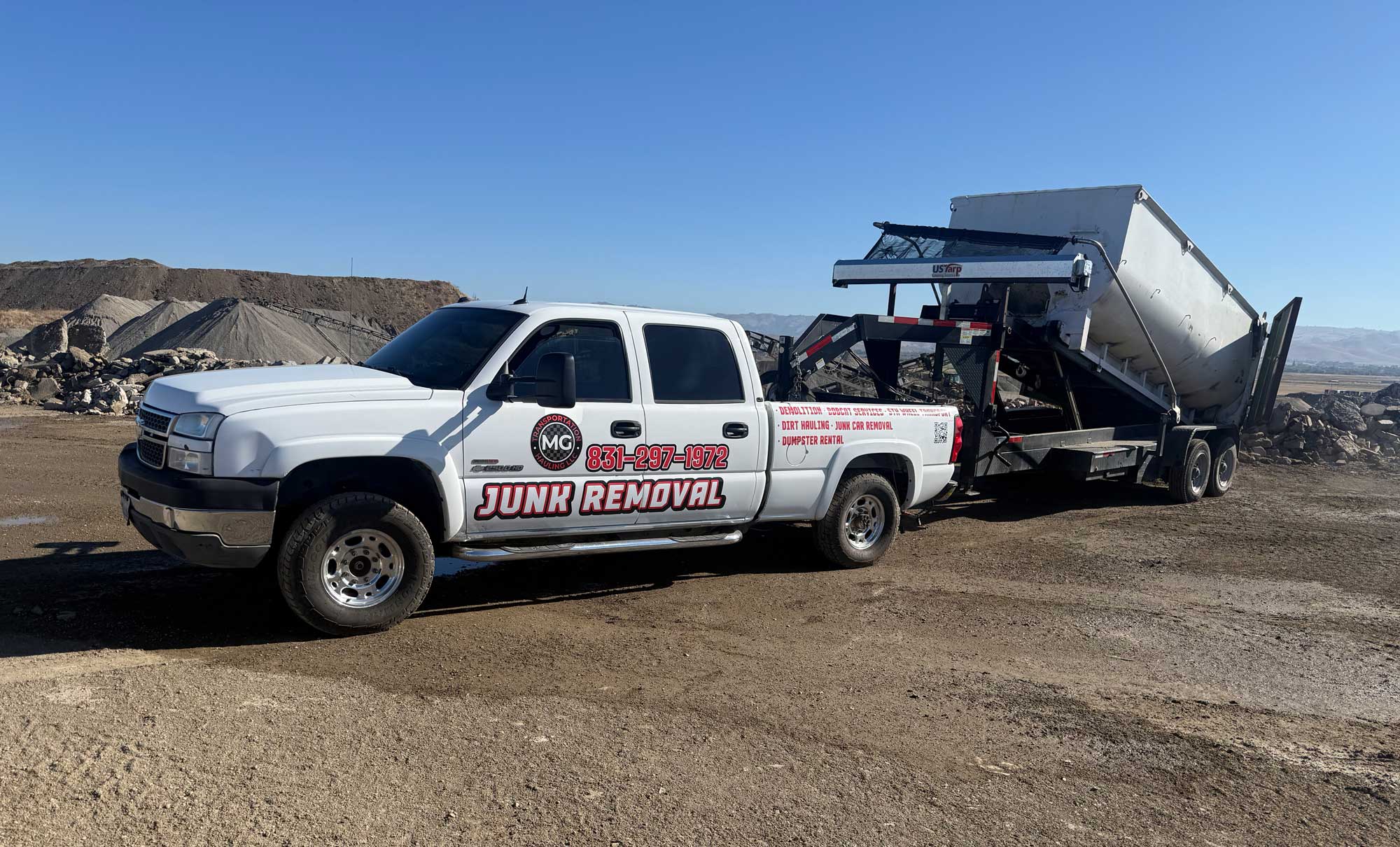
Direct Answer: Demo debris is billed by weight and access, not by how the pile looks. Rain soaks lumber and drywall, adds weight, and softens the ground, so the same pile costs more after the first storm.
You pulled out the deck yourself in September. The boards, the drywall from the bathroom, a busted chunk of patio slab, and a pile of dirt are still sitting along the fence, and you’ve told your family you’ll deal with it “this weekend” about eight weekends in a row.
Here’s the part most people on the Central Coast don’t know until the bill shows up. Demo debris is priced against weight and access, not against how big the pile looks in your yard. Rain changes both of those things, and it changes them fast.
I’ve loaded a lot of these piles in Hollister, Gilroy, and across the Monterey County, CA area, and the difference between an October pile and a February pile is real money. This article is only about that: what weather does to a pile that already exists, and to the cost of hauling it.
Water Is Heavy, and the Scale Doesn’t Care That You Didn’t Order the Rain
Almost every question I get about demolition debris removal is some version of “what’s this going to cost me.” Fair question. The honest answer starts with how disposal itself works.
Heavy demo material gets weighed. When we take a load to the John Smith Road Landfill, the transaction is based on tonnage, not on how neat the pile looked when we arrived. That means anything that adds weight to your pile adds cost to your job.
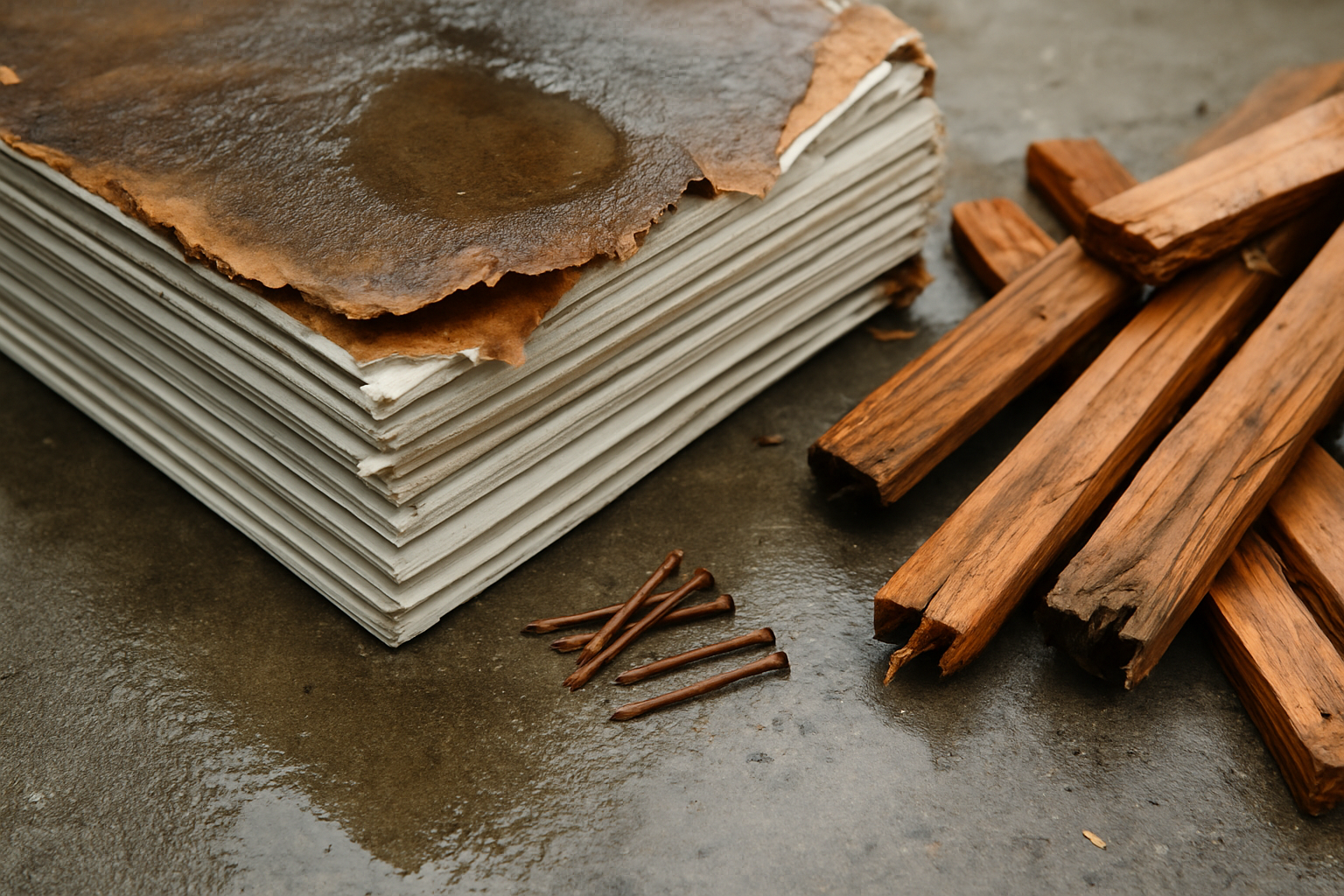
Dry lumber, drywall, particle board, carpet, and loose dirt all soak up water and hold it. Drywall is the worst offender. It acts like a sponge, and it stays heavy for weeks after the storm passes.
Hollister’s wettest stretch runs December through February, with December alone averaging around 63mm of rain across roughly 11 rainy days. That’s not one soaking. That’s eleven separate chances for your pile to gain weight.
A few things that get noticeably heavier once they’ve been rained on:
- Drywall and plaster that has been stacked flat and holds standing water between sheets
- Dirt and sod piles, which can gain serious weight and turn into mud
- Carpet and pad, which hold water longer than almost anything else in a teardown
- Particle board and OSB, which swell, delaminate, and never dry out right
Same pile. Same driveway. Different number at the scale.
Rain Turns One Clean Load Into Two Messy Ones
Weight is only half of it. The bigger surprise is what water does to sorting.
A demo pile is never one material. It’s usually three or four stacked on top of each other, and where each one can legally go is different. San Benito County’s own disposal categories separate clean construction wood, meaning lumber, pallets, clean wood debris, logs, and wood crates, from general trash. Particle board, stained wood, painted wood, and treated wood are handled as general trash, not as wood waste.
So a stack of clean 2x4s is one thing. That same stack after a few storms, mixed with soaked drywall crumbs and walked through by the dog, is not sortable in any practical way anymore. What could have gone out as one clean, separated load turns into mixed debris.
This matters more if your project ran through a permit. California asks most permitted construction and demolition projects to divert at least 65 percent of nonhazardous debris away from the landfill, which is why CalRecycle’s construction and demolition diversion guidance exists and why cities including Gilroy track it through the Building Division. Separated, dry material is what makes that number achievable. Mush is not.
If you want the longer version of where each material actually ends up, I wrote about where construction debris goes after a remodel separately.
A tarp and two hours of separating before the weather turns is worth more than most homeowners expect.
How a Storm Changes Where Your Demo Material Can Go
This is the practical version of what happens to a typical backyard teardown pile between a dry October and a wet January.
| Material | Dry and separated | After sitting through storms |
|---|---|---|
| Clean framing lumber | Can go out as clean construction wood | Often mixed and stained, gets handled as general trash |
| Drywall | Manageable weight, stacks tight | Heavy, crumbling, contaminates everything under it |
| Particle board / OSB | Already general trash, but stays light | Swollen and much heavier for the same volume |
| Concrete and slab chunks | Heavy but predictable | Heavy plus caked in mud, harder to load by hand |
| Dirt and sod | Shovel and go | Mud, more weight, slower loading |
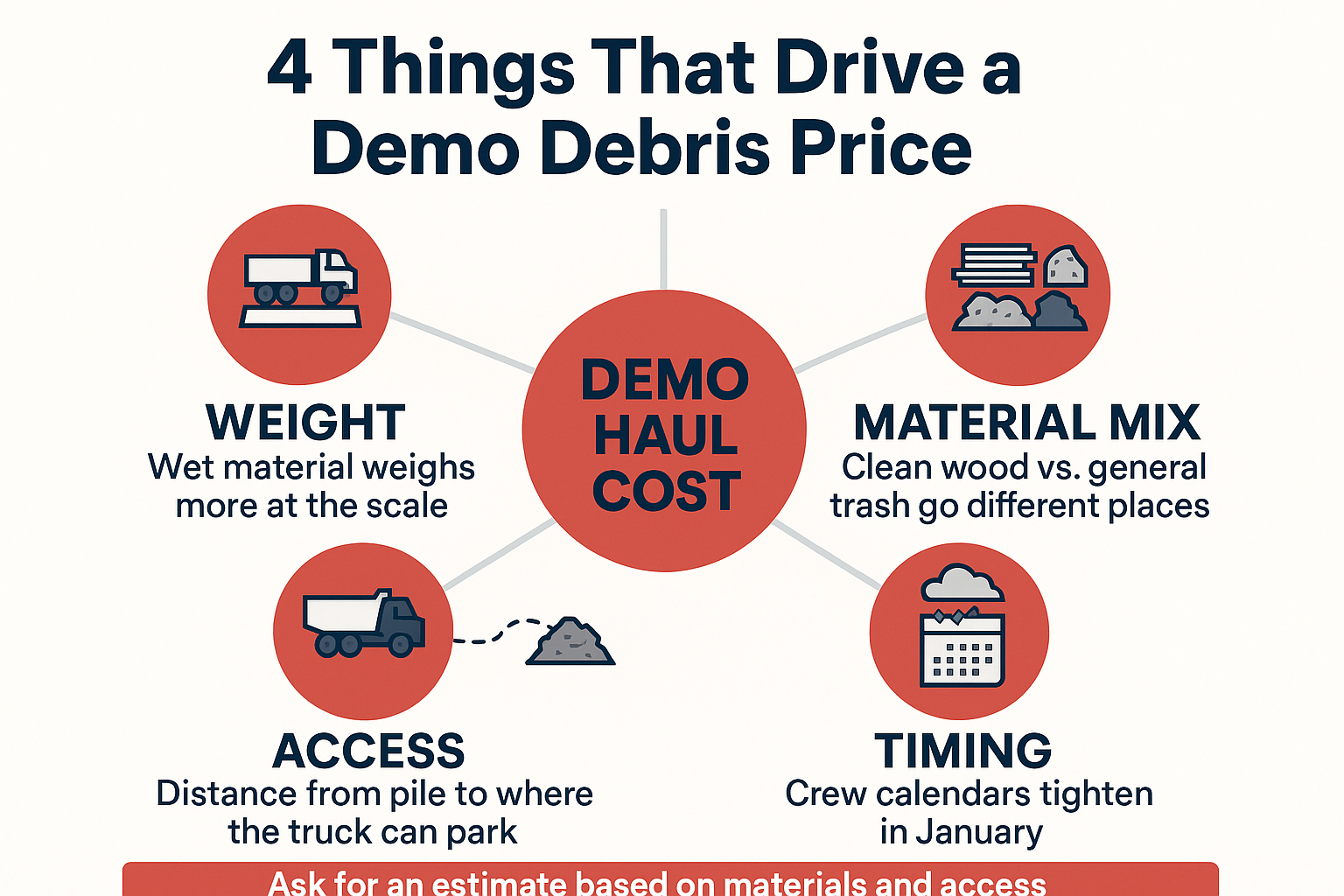
The Four Things That Actually Move Your Demo Haul Price
Pile size is what people focus on. These four factors are what really set the number.
Access Is the Cost Driver Nobody Plans For
Most people think of a haul as “just come get it.” The truth is that the distance between your pile and where my truck can physically stop is one of the biggest levers on labor hours, and labor hours are most of what you’re paying for.
In October, I can back down a lot of Hollister driveways or pull onto firm dirt in a side yard and load straight into the truck. In January, that same yard is soft, and putting a loaded truck on it means ruts, a stuck vehicle, or damage to your property. So we park at the curb and hand carry every single board, sheet, and bucket of dirt out.
That’s the same pile taking two or three times longer.
Before you call anybody for a quote, walk it and look at three things:
- Where can a truck actually stop? Street, driveway, alley, or a gravel pad
- What’s the path? Pavement and gravel hold up. Lawn and bare dirt do not, once it rains
- Is the pile behind a gate? Gate width and a tight corner change the plan more than pile size does
Tell whoever quotes you those three details up front. It’s a big part of why two hauling jobs in Hollister can cost completely different amounts for piles that look identical in photos.
Everybody in the County Has the Same Idea on January 2
There’s a scheduling reason to move a demo haul into fall, and it isn’t manufactured urgency.
Local search demand in the Monterey and Salinas market tells the story clearly. “Demolition contractor” runs at roughly 10 to 30 searches a month most of the year, then spikes to around 1,300 in January. Junk removal searches jump from a few hundred a month in the fall to roughly 3,600 in January.
That’s the whole county deciding to deal with its debris in the same four weeks. Crew calendars tighten right when the ground is at its softest and the material is at its heaviest.
One of the most common fears I hear from callers is not about price at all. It’s about no-shows and about crews that book you and then push you a week. That risk goes up in any month when everyone is calling at once.
October and November are the easier scheduling window. Not a deadline, just a better one. If you’re deciding what to move now and what can sit, this breakdown of pre-rain cleanout timing covers the same logic for garages and side yards.
Container On Site, or One Trip at the End?
If your project is still in progress, this is the real decision, and rain changes the math in a way most people miss.
A container makes sense for multi-weekend teardowns. You work at your own pace and throw material in as you go. Our rentals start at $500 for a two-day rental, with 10, 15, and 25 yard sizes, and we’ve had customers keep one for a week while they worked through a garage and backyard.
A crew and a truck make sense for a one-day teardown, or for a pile that’s already finished and just sitting there. We load it, sweep up, and it’s gone in one trip.
Here’s the rainy-season wrinkle. An open container left out through a storm collects standing water and soaks everything in it. That water becomes weight you pay to move. If a container is going to sit through December, keep it covered or shorten the rental window.
And if your pile is unusual, mixed with soil or concrete, or hard to get to, ask for an estimate instead of guessing. Pricing comes down to material, weight, and access, which is also why a quote and a final bill sometimes don’t match when the pile turns out to be different than described. The full tradeoff is laid out in dumpster rental vs. full-service junk removal.
Frequently Asked Questions About Demolition Debris Removal
How much does it cost to remove construction debris around here?
There’s no flat number, and anybody who gives you one over the phone without asking questions is guessing. Cost comes down to weight, material type, and access. A pile of clean lumber you can reach from the driveway prices very differently than the same volume of wet drywall and dirt behind a gate. Free estimates are standard, and describing the materials honestly is how you get a number that holds.
What’s the cheapest way to get rid of rubble?
Keep it separated and keep it dry. Clean concrete, clean wood, and general trash all get handled differently, and once they’re mixed and soaked you lose that advantage. A $20 tarp and a couple hours of sorting before the first storm does more for your bill than anything else you can control.
Does rain really make that much of a difference to the weight?
Yes, especially with drywall, carpet, particle board, and dirt. Those materials hold water for weeks. Concrete and clean lumber gain less, but they still come out muddy, which slows loading down.
Do you take concrete, dirt, and heavy demo material?
We do. Heavy loads are regular work for us, including slab chunks, soil, and mixed teardown debris. That’s usually where lighter operators say no, and it’s not because they don’t want the job, it’s equipment and disposal knowledge.
My pile has been sitting since summer. Is it too late?
Not at all. It just means the estimate needs to account for what the weather already did to it. The sooner it goes, the less it gains.
Thinking About That Pile Before the Next Storm?
Heavy demo debris, dirt, and mixed teardown loads are regular work for us in Hollister, Gilroy, and the surrounding San Benito and Monterey County, CA area, including the jobs other haulers pass on. One customer put it simply: “They hauled away dirt we needed removed and cleaned up our walkway and driveway before they left.” If you want an accurate estimate, a short conversation about your materials and your access is how we build it. MG Transportation & Hauling can be reached at (831) 297-1972 or at mgtransportationhauling.com.
