
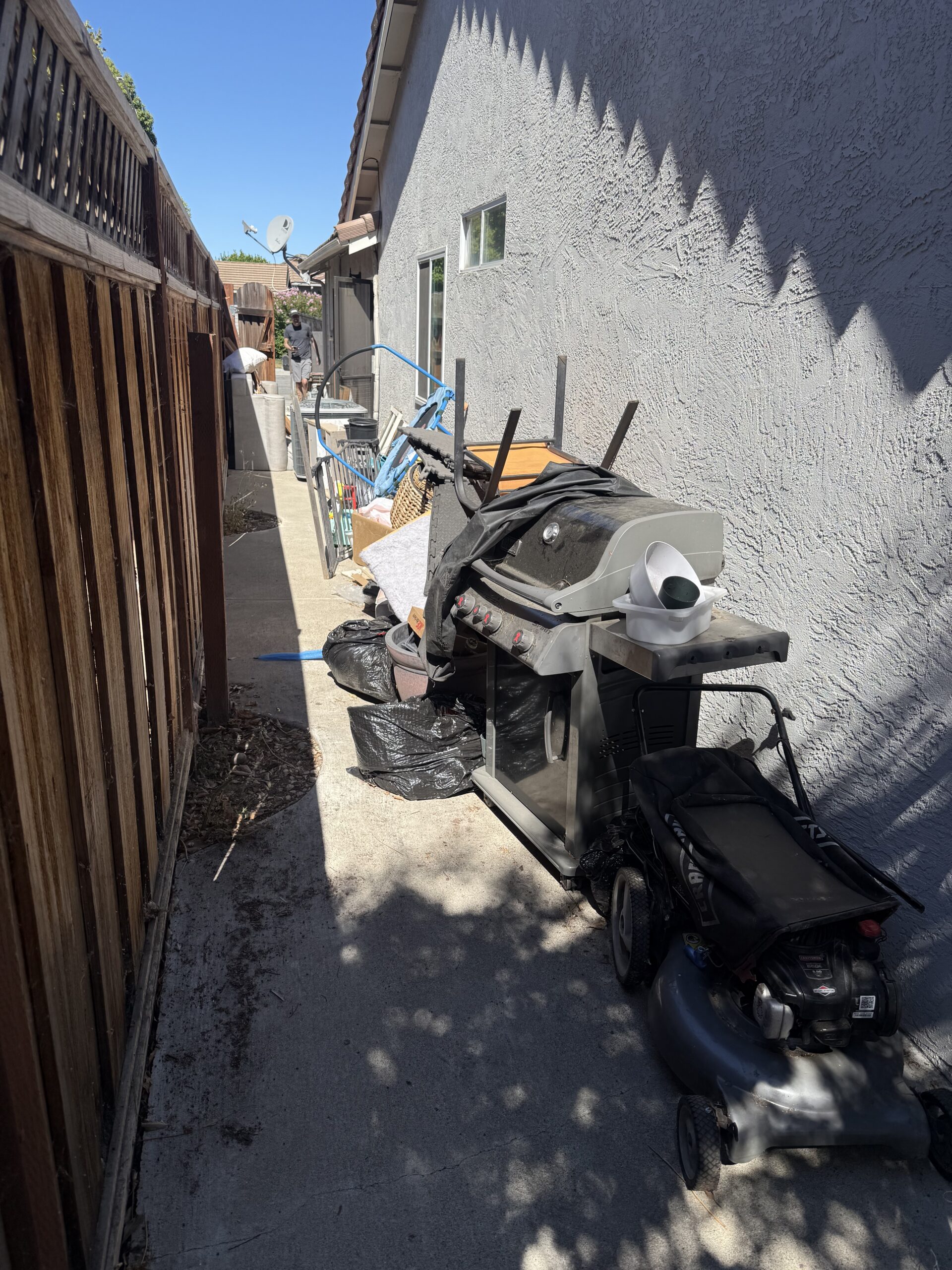
Direct Answer: A garage cleanout comes down to four things: how much volume you have, how heavy it is, how far the crew has to carry it, and how many disposal categories the load splits into.
At some point the garage stopped being a garage. Now it is half storage unit, half graveyard for the last move and the last remodel, and the car has been living in the driveway for years.
I see this every week in Hollister, Gilroy, and out through the Monterey County, CA side of our route. The pile is never the hard part. The hard part is that a garage holds paint cans, a dead washer, warped lumber scraps, bikes the kids outgrew, and boxes nobody has opened since the truck was unloaded, and every one of those things needs a different answer.
So this is the honest version of what a garage cleanout takes. What is actually in there, where it all goes, and what makes a job big or small once somebody looks at it in person.
Why a Garage Cleanout Stalls (It Is Rarely About Muscle)
Most people who call me have already tried a Saturday on it. They got two hours in, made three piles, and quit because every item raised a question.
That is the real bottleneck. A garage is a decision problem before it is a hauling problem, because a single 20 foot wall can hold five or six different disposal categories at once:
- Household junk: boxes, broken furniture, toys, holiday bins
- Appliances: washers, dryers, old fridges, water heaters
- Construction leftovers: lumber, tile, drywall scrap, half bags of mortar
- E-waste: old TVs, monitors, printers, dead power tools
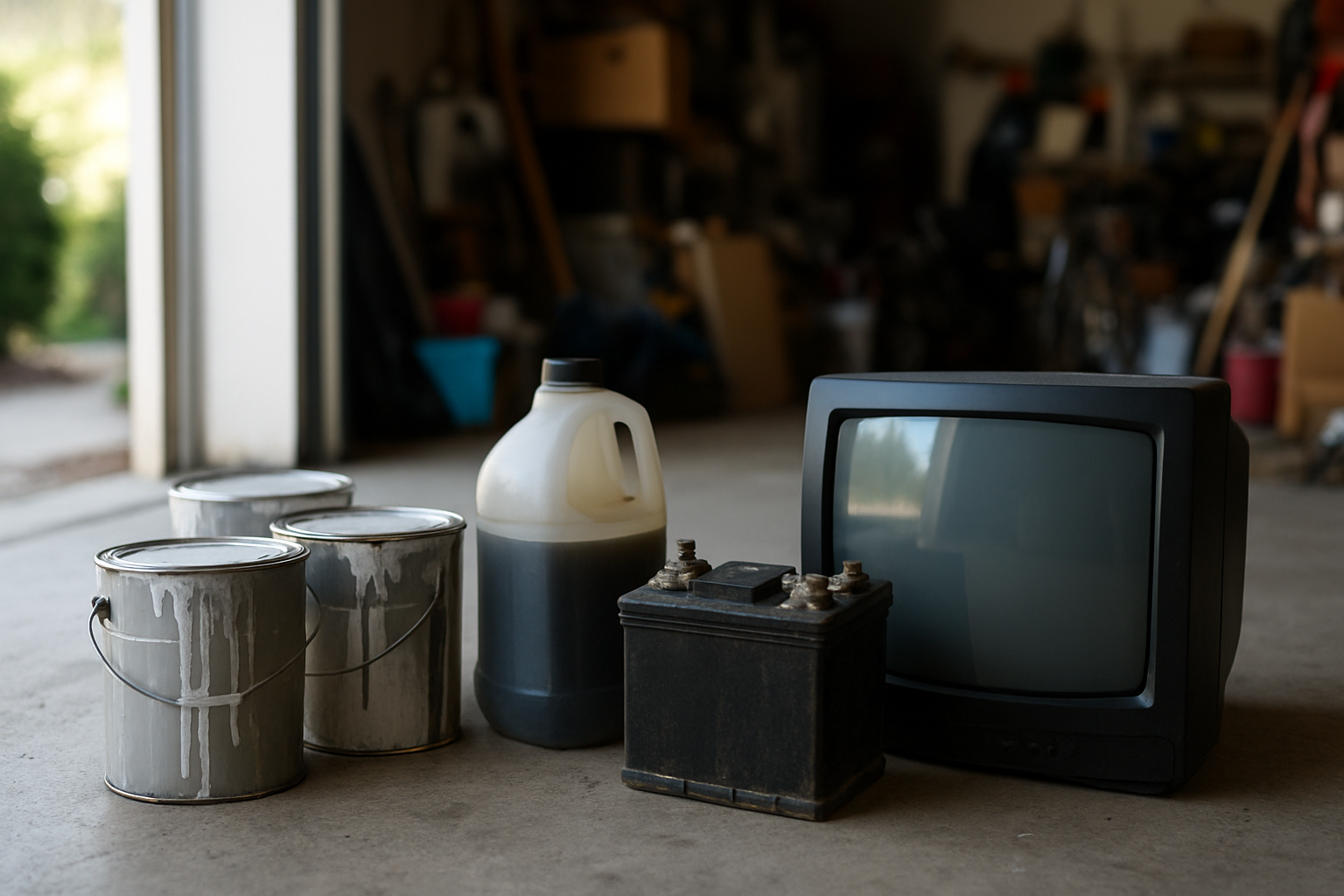
- Household hazardous waste: paint, motor oil, solvents, car batteries
- Scrap metal and vehicles: rims, a non-running car or an old trailer
Once you see it as six categories instead of one pile, the stalling makes sense. Nobody wants to start a job where four of the six routes are unclear.
My short answer for most homeowners: make the keep or toss calls first, let a crew handle the volume and the weight, and pull the hazardous items aside so they never get loaded in the first place. That is the whole sequence. The rest is logistics.
What Actually Drives the Price of a Garage Cleanout
Everyone wants a number before they call, and almost nobody explains the math behind it. Here is the math.
Four things move the price on a garage job:
- Total volume. How many truck loads or what size dumpster the pile fills.
- Weight. Tile, dirt, wet lumber, and soaked cardboard weigh far more than the same visual pile of boxes.
- Access. How close a truck can get to the door.
- Disposal categories. How many separate places the load has to be split between.
Access matters more on garages than on any other job I do. A crew that can back up to an open door works at a completely different pace than a crew carrying items 60 feet around a car parked in the driveway, and that time shows up in the price.
Weight is the part that surprises people. The John Smith Road Landfill charges based on the net weight dumped, so two garages with identical looking piles can land at different numbers once you factor in old tile, a bed of dirt-caked lumber, or cardboard that has been sitting under a leak.
That is why I do not quote garages over the phone with any confidence. An on-site look is what turns those four factors into a real number, and it is also how we catch the stuff that changes scope, like a second load or whether one truck is even enough for the job.
If you would rather load it yourself over a weekend, a roll-off is the other path. Dumpster rentals in this market commonly start in the $500 range for a two day rental, and the trade-off between that and a full-service crew is covered in dumpster rental vs. full-service junk removal.
The Items No Hauling Crew Should Take, and Where They Go Instead
Every garage I walk into has a shelf of things that do not belong on a junk truck. Paint, motor oil, solvents, pesticides, and car batteries are handled through the county program, not by a hauler.
For San Benito County residents, household hazardous waste collection runs the third Saturday of each month, 9am to 12pm, at the John Smith Road Landfill, and you need proof of residency to drop off. You can confirm the current schedule on the San Benito County household hazardous waste program page.
Accepted e-waste goes to the same landfill during regular hours, Monday through Friday 8am to 4pm and weekends 9am to 3pm, also with proof of residence.
So before anyone shows up, walk the shelves and pull these to one side:
- Paint, stain, thinner, and spray cans
- Used motor oil, oil filters, antifreeze, brake fluid
- Car and marine batteries
- Pool chemicals, weed killer, pesticides
- Propane cylinders and old fuel cans
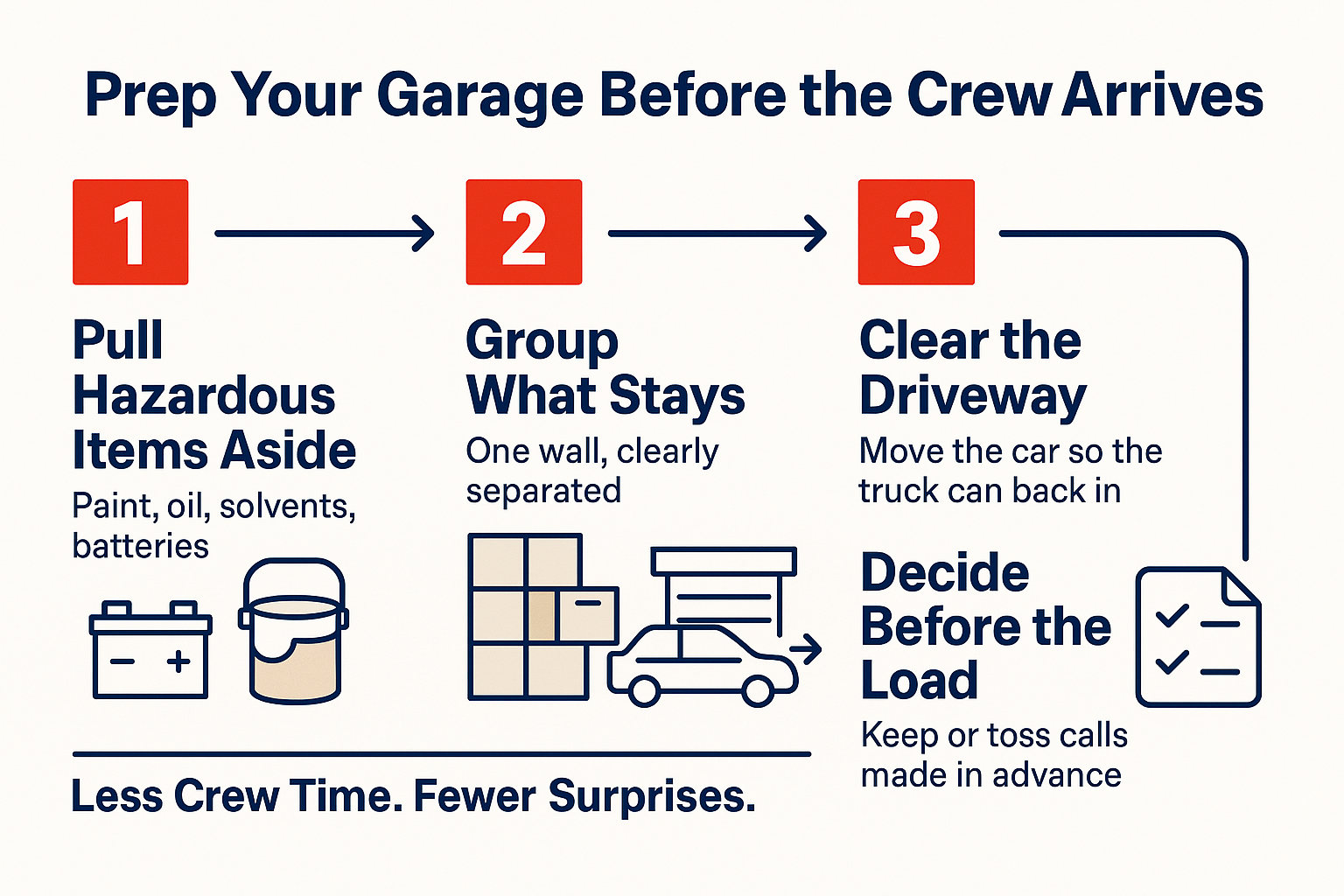
That one step keeps the load clean and keeps the estimate from shifting mid-job. And it takes about ten minutes.
Where Common Garage Items Actually End Up
This is the routing map I run through in my head while walking a garage. It is also the reason a single pile turns into several stops.
| What’s in the garage | Where it goes | Who handles it |
|---|---|---|
| Boxes, broken furniture, toys, carpet | Landfill or transfer station by weight | Hauling crew |
| Washer, dryer, old fridge | Appliance and metal recycling | Hauling crew |
| Lumber, tile, drywall, remodel debris | Construction debris disposal | Hauling crew or dumpster |
| TVs, monitors, printers, dead tools | Landfill e-waste drop, weekday 8am to 4pm | You, or added to a crew load |
| Paint, oil, solvents, batteries | County HHW event, third Saturday 9am to 12pm | You, with proof of residency |
| Non-running car, trailer, RV | Junk car removal or transport | Towing and hauling |
The Free Local Programs, and Exactly Where They Stop Working
I always tell people to use the free options first. They are real, and for a small job they are enough.
Here is what residents get locally:
- Two free curbside bulky pickups per year, covering roughly two cubic yards of reusable material, up to five e-waste items, or two appliances. A fridge with freon counts as two items.
- Free quarterly bulky drop-off days at the landfill, with a two item limit per household and an ID check. Businesses are not eligible.
Now the catch for a garage. Curbside means curbside, so nobody is walking into the back corner, moving the shelving, and carrying out the dead washer for you. You still have to get all of it to the street yourself.
And a two item limit does not touch a twenty year accumulation. If your garage has one couch and one fridge in it, use the program. If it has nine boxes, a bed frame, a dryer, and a stack of lumber, you are past it, which is also why small pickups still carry a floor price when a crew does come out.
The Four-Step Prep That Keeps Your Estimate From Drifting
This is the prep sequence I give people when they book. It shortens crew time and keeps the number they were quoted close to the number they pay.
Why Timing Matters More Here Than People Think
Garage cleanouts have a season, and it is not the one people expect.
Search demand for junk removal across the Monterey and Salinas area sits low through the fall, then jumps roughly nine times over in January when everybody decides at once. Calendars tighten right when people finally get motivated, which is a rough combination if you are trying to book on short notice.
The weather side is worse. Hollister gets nearly all of its 15 or so inches of rain between December and February, and a garage with a leak or a side yard staging area that floods changes the material itself.
Cardboard, mattresses, and untreated lumber all soak up water. That means:
- Heavier loads, and weight is what the landfill charges on
- Messier handling and slower carry times
- Items that could have been donated in October going straight to disposal
Waiting does not only delay the job. It changes what the job is. I wrote more about that in what to clear out before the December rain, and the short version is that October and November are the cheapest months to do this.
What Makes a Local Crew Handle This Differently
Garages are a judgment job. You are guessing at weight through a wall of boxes, figuring out carry paths, and deciding on the spot whether the load splits into two stops or three.
What homeowners here tell us they care about is pretty consistent: the price explained up front, the crew showing up when they said, and the slab swept before anyone leaves. That last one comes up constantly as the thing people did not expect and appreciated most.
One customer put it simply after a weekend project: “We rented a 25 yd dumpster to tackle our garage and backyard clean-up, and they nailed it” – Jerry R.
That is really the whole difference between a local operator and a dispatch center three states away. Somebody who knows the landfill hours, knows the HHW schedule, and has been down your street before. If you want a sense of what to screen for, what separates a reliable hauling crew from a bad one walks through the questions worth asking anybody you call.
Frequently Asked Questions About Garage Cleanouts
How long does a two-car garage cleanout usually take?
Most packed two-car garages are a half day job for a crew once the decisions are already made. What stretches it out is sorting on the fly, long carry distances, or a load that splits between the landfill, metal recycling, and an e-waste drop.
Do I need to be home while the crew works?
For the walkthrough and the estimate, yes, because that is when we confirm what stays and what goes. After that, plenty of people hand over the plan and go back to work. Just make sure anything you are keeping is clearly separated, ideally against one wall.
What if I can’t tell whether something is hazardous?
Set it aside and ask. Anything liquid, anything with a flame or poison warning, and anything with a battery in it is worth pulling out of the pile. It is much easier to hand you a plan for those items than to discover them halfway through loading.
Can you take the old fridge and washer that have been sitting in there?
Appliances are routine on a full-service junk removal job and go to the right recycling stream rather than a general load. Worth knowing: if you were planning to use your free curbside bulky pickup instead, a fridge with freon counts as two items against your allowance.
Is it cheaper to rent a dumpster or have a crew load everything?
It depends on whether your time or your back is the limiting factor. A dumpster makes sense when you want to work through it over several days and can carry things yourself. A crew makes sense when access is tight, the items are heavy, or you want it done in one visit.
Do you sweep up afterward?
Yes. Sweeping the slab and cleaning the work area is part of the job, not an add-on. It is the single thing customers mention most in reviews.
Thinking Through a Garage Cleanout This Season?
If you are somewhere between Hollister, Gilroy, and the Monterey County, CA coast and trying to figure out what your garage would actually take, an on-site look is how that number gets settled instead of guessed. MG Transportation & Hauling does free estimates on site, and fall is the easier half of the calendar to get on. You can reach us at (831) 297-1972 or at mgtransportationhauling.com whenever you are ready to talk it through.
