
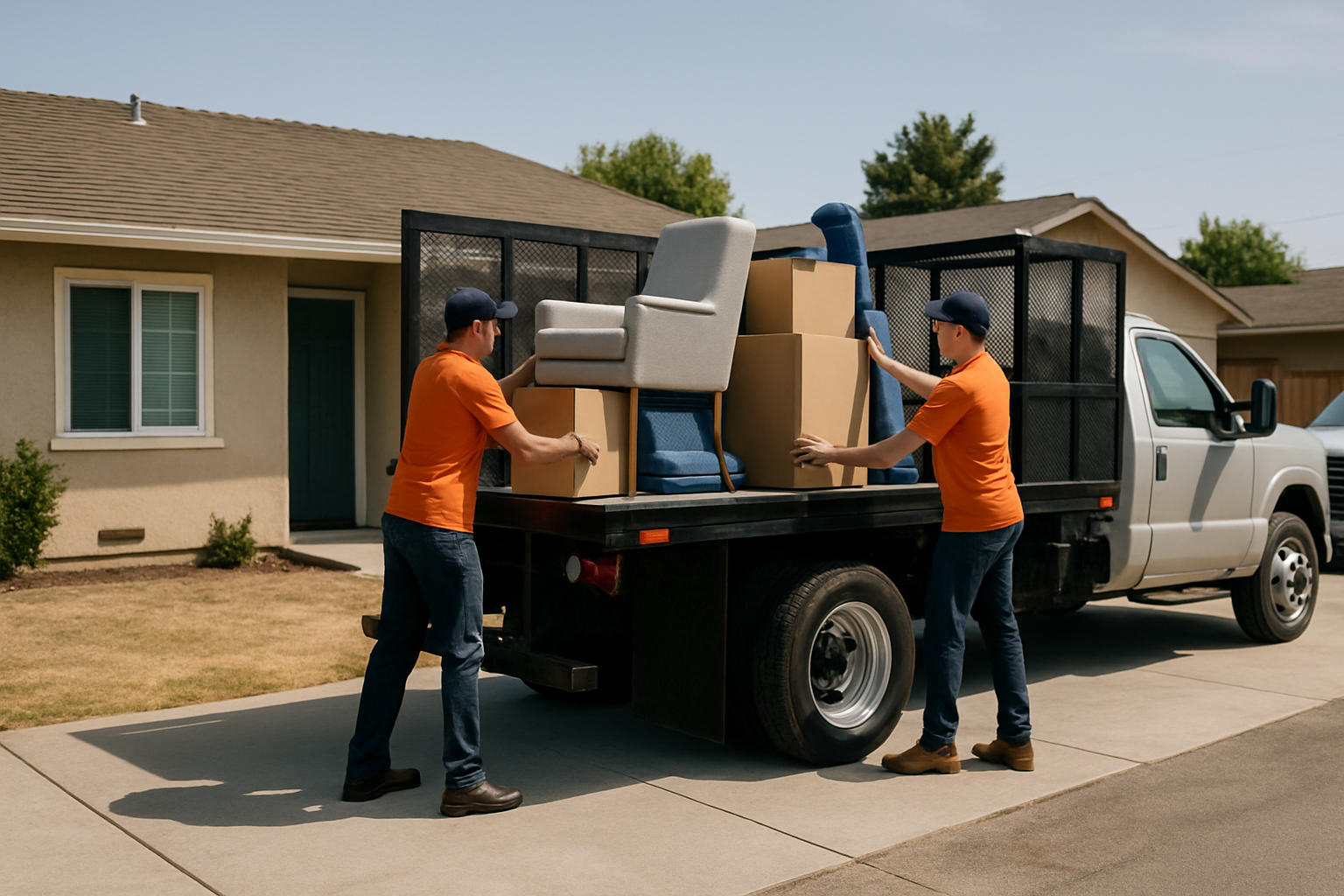
Direct Answer: It depends on the volume and type of junk. Most full-home or estate cleanouts require at least two truckloads. Large properties, hoarder situations, or mixed debris almost always need more.
A lot of cleanout jobs start the same way — someone eyeballs the garage, the spare rooms, or a whole house and says, “It won’t take that long.” Then the crew shows up, starts pulling things out, and the pile grows twice as fast as expected. Suddenly one truck doesn’t look like nearly enough.
This is one of the most common planning mistakes we see in San Benito County and South Santa Clara County. Underestimating volume doesn’t just slow down the job — it can mean a second trip fee, a longer wait for disposal, or a crew that has to make multiple hauls to the John Smith Road Landfill in Hollister when one organized run could have done it.
The question of whether one truck is enough isn’t just about square footage. It comes down to what’s in the space, how dense the material is, and whether the job has complications most people don’t account for.
What Actually Determines How Much Truck You Need
Square footage is a starting point, not an answer. A 1,200-square-foot house that’s been mostly cleared out might fit in a single large truck. A 500-square-foot garage packed with 20 years of tools, furniture, and scrap metal might fill two.
The real variables are volume, density, and item type. These are the factors that separate a one-truck job from a multi-load project:
- Furniture volume — couches, mattresses, and bed frames take up space fast even before you add anything else
- Appliance count — refrigerators, washers, dryers, and water heaters are bulky and often require special handling; washer and dryer removal alone can eat a quarter of a truck
- Construction debris — drywall, tile, lumber, and concrete are dense and heavy; they fill a truck by weight long before they fill it by volume
- Bagged material — clothes, linens, and soft goods look manageable but compress poorly and take up significant space
- Outdoor items — sheds, hot tubs, swing sets, and lawn equipment add weight that gets estimated wrong almost every time
A good crew does a walkthrough before quoting. If someone is giving you a price over the phone without asking about specific items in each room, the estimate is probably not accurate.
The Jobs That Almost Always Need More Than One Truck
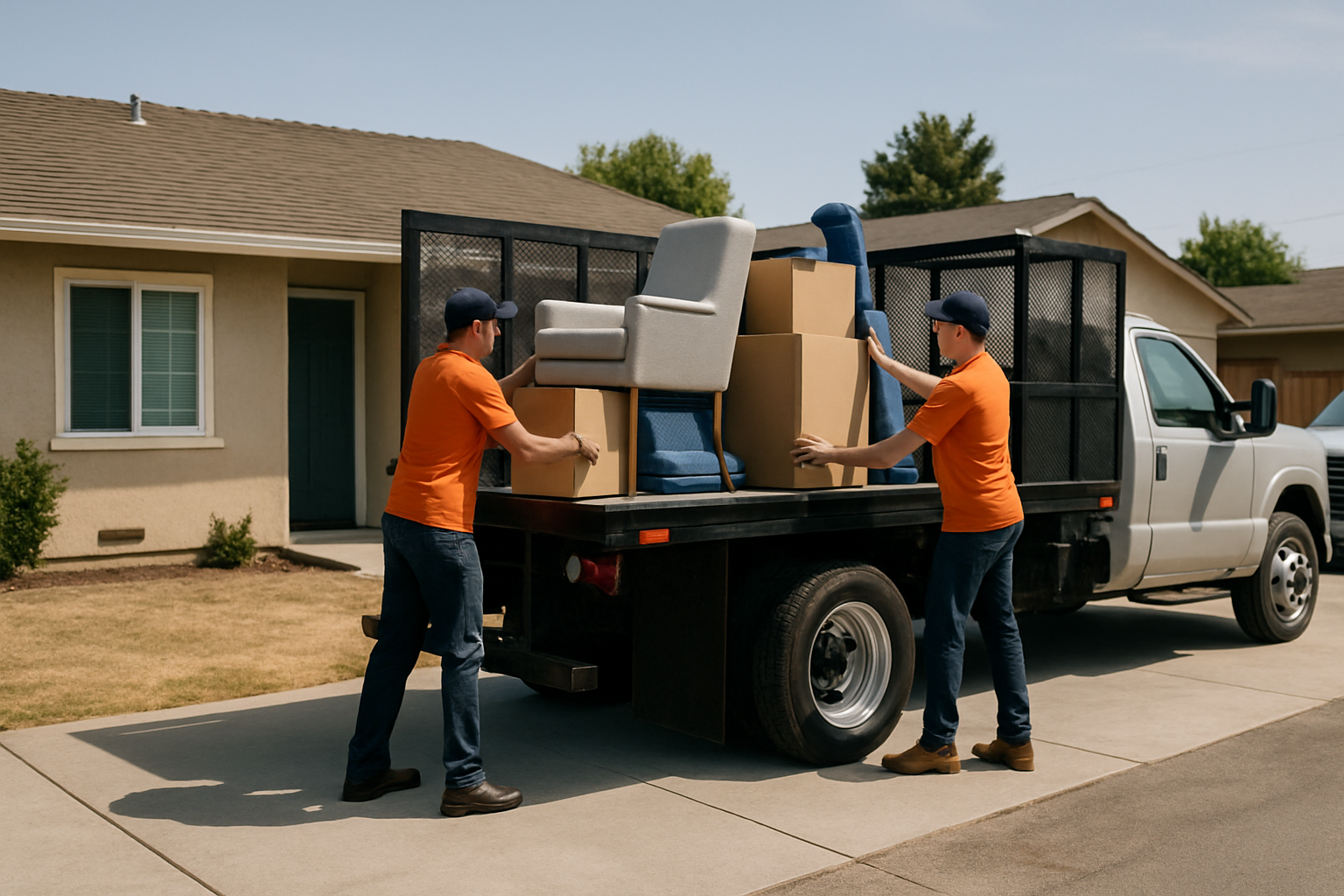
Some cleanout types consistently run larger than people plan for. Knowing which category you’re in before scheduling helps you avoid the surprise of a crew that runs out of room halfway through.
Full-home estate cleanouts are the most common example. When a family is clearing out a parent’s house in Hollister after a death or move to assisted living, it’s rarely a quick job. Decades of accumulated belongings — in closets, under beds, in the garage, in the attic — add up fast. Most full-home cleanouts we handle run two to three truckloads minimum.
Hoarder house cleanouts are in a category of their own. The volume of material is often double or triple what the square footage would suggest, because items are stacked floor to ceiling and fill every walkable path. These jobs require multiple trips, careful debris management, and usually multiple crew members just to maintain safe working conditions.
Post-renovation debris is another one people underestimate. If you’ve done a kitchen or bathroom gut, you’re looking at tile, drywall, cabinetry, and fixtures — all of it heavy. If that material has been sitting for a while, you may have more of a problem on your hands than you realized. Dense construction debris hits weight limits before it fills a truck by volume, so the math works differently than it does with furniture.
Landlord and property manager turnovers in Gilroy and Hollister vary a lot, but when a tenant leaves behind furniture, appliances, and bags of belongings, it’s rarely a one-truck situation.
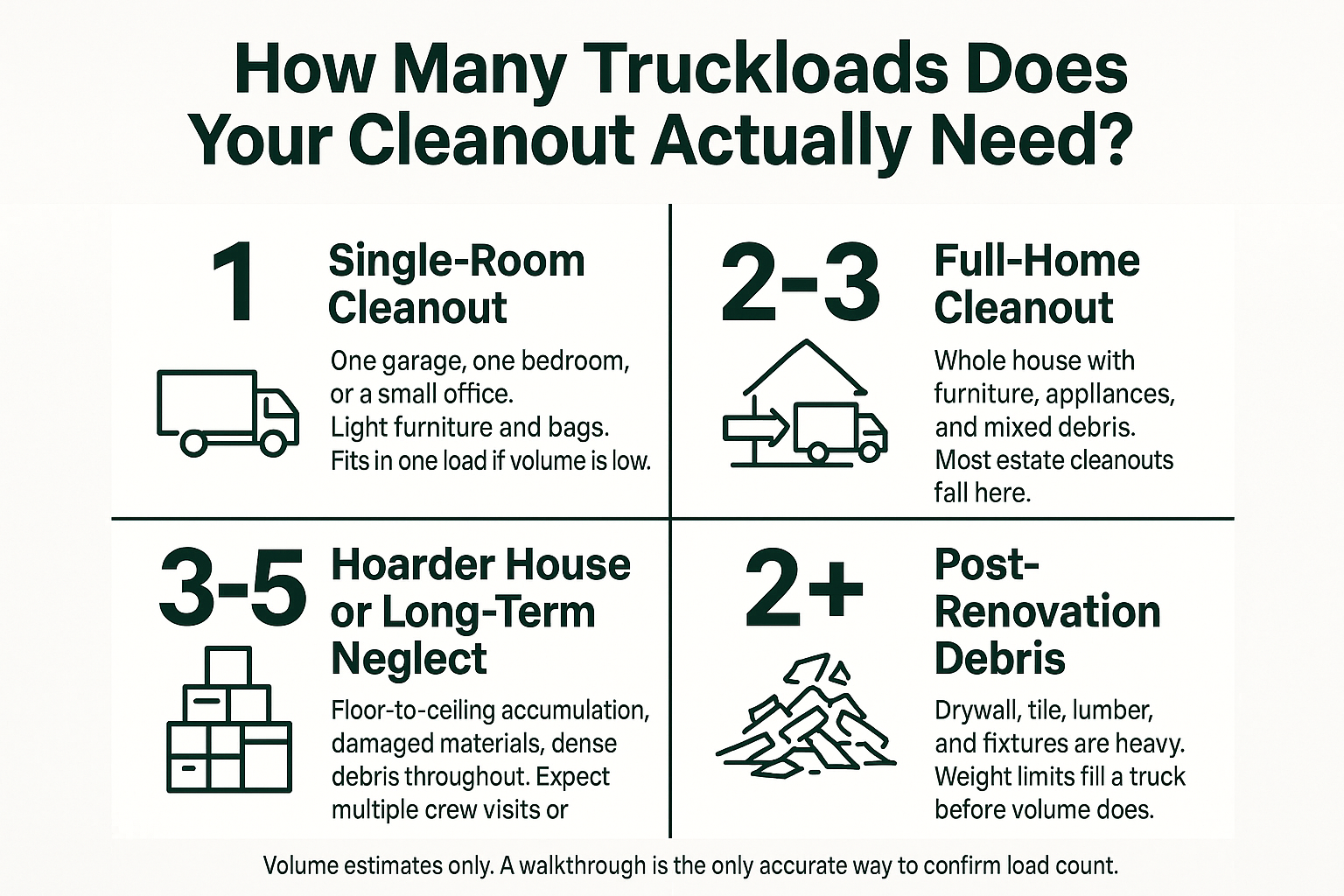
How Cleanout Size Matches Up to Truck Loads
This gives you a quick reference for how different property types and situations typically translate to hauling volume — before you pick up the phone.
Why the Walkthrough Matters More Than the Square Footage
The most accurate thing a hauler can do before quoting a cleanout is walk the property. Photos help, but they miss depth, density, and what’s behind closed doors. A good full property cleanout starts with an honest assessment — not a number pulled from a general size estimate.
Here’s what a walkthrough actually reveals that a phone estimate can’t:
- Whether items need to be disassembled before they’ll fit through doors
- If there’s a second story, a narrow hallway, or access issues that slow the job
- Whether heavy items like safes, pianos, or hot tubs are in the mix
- How much of the material is loose vs. bagged — loose debris takes more space
- Whether anything requires a separate disposal stream, like electronics or oversized appliances
For larger jobs in San Benito County, we typically recommend scheduling a same-day or next-day site visit before confirming the crew size and truck count. It keeps the price accurate and prevents the job from stalling halfway through because the wrong equipment showed up.
If a company is quoting you a flat rate for a large cleanout without seeing the property first, ask how they’re arriving at that number. If the answer is vague, that’s something to take seriously before you commit.
One Truck vs. Multiple Loads: Quick Reference by Job Type
Use this as a starting point when you’re trying to figure out what size job you’re dealing with. Actual load counts depend on what’s in the space — this is a planning guide, not a quote.
| Job Type | Typical Load Count | Key Complication to Watch For |
|---|---|---|
| Single garage cleanout | 1 truck | Dense tools, metal scrap, or appliances push volume up fast |
| Full-home estate cleanout | 2–3 trucks | Furniture + appliances + accumulated goods in every room |
| Hoarder house cleanout | 3–5+ trucks | Floor-to-ceiling debris, damaged materials, access issues |
| Post-renovation debris | 2+ trucks | Heavy material hits weight limits before it fills volume |
| Landlord unit turnover | 1–2 trucks | Depends heavily on what the tenant left behind |
| Commercial property cleanout | Varies widely | Office furniture and equipment can be deceptively bulky |
What Happens When You Underestimate the Load
Getting the truck count wrong usually means one of three things, none of them good.
First, the crew fills the truck and has to stop mid-job. Some haulers charge a second trip fee on top of the original price — and if they need to drive out to the John Smith Road Landfill in Hollister and come back, that’s real time and real money added to a job you thought was done.
Second, the crew starts prioritizing what fits and leaves the harder or bulkier items behind. That means you’re dealing with the leftovers on your own, or scheduling a follow-up — which costs more and takes more of your time.
Third, and this one catches people off guard: if a hauler lowballs the truck count to win the job, you might be facing an unexpected fee on pickup day that wasn’t in the original conversation. Getting clear pricing before the crew arrives is the only way to protect yourself from that situation.
The fix is straightforward — get a walkthrough quote, ask how many loads are included, and confirm what happens if the volume runs over. A hauler who won’t answer those questions directly probably isn’t the right choice for a large job.
Frequently Asked Questions About Cleanout Truck Capacity
How do I know if my cleanout needs one truck or two before calling?
Count your large items first — furniture pieces, appliances, and anything that won’t fit in a standard box. If you have more than 10 to 15 large items plus bags and miscellaneous debris filling more than one room, you’re almost certainly past one-truck territory. When in doubt, describe each room to the hauler when you call. A good operator will tell you honestly what they think you’re looking at.
Does a second truckload always mean a second trip to the landfill?
Not necessarily. Some haulers run large enough equipment that a second load just means packing the same truck more efficiently, or loading a trailer. But if the material is heavy — like post-renovation debris — a second haul to the landfill may be unavoidable due to weight limits. This is worth asking about directly when you get your quote.
What’s the most common thing people forget to mention when booking a cleanout?
Outdoor items. People walk the hauler through every room inside and then say “oh, and there’s some stuff in the backyard” — and the backyard has a riding mower, a shed worth of contents, a broken spa, and three years of piled lumber. Items like hot tubs and large outdoor equipment can take up as much space as an entire room of household furniture.
Will adding more crew members reduce how many truck trips I need?
More crew speeds up how fast the truck gets loaded, but it doesn’t change how much fits in the truck. If the volume is there, the trips are there. What a larger crew does do is get the whole job done faster — fewer hours on-site, less disruption to your day.
Is a dumpster rental a better option than multiple hauling trips for a big cleanout?
Sometimes. If you’re working on a DIY renovation or can fill the dumpster over several days, rental makes sense. But for a full-service cleanout where you want a crew to handle everything in one visit, multiple truck trips handled by the crew is usually faster and less disruptive than managing a dumpster on your own. This breakdown walks through when each option actually works better.
Not Sure What Your Cleanout Actually Needs?
If you’re in Hollister, Gilroy, or anywhere in San Benito County and trying to figure out what size job you’re dealing with, MG Transportation & Hauling can walk the property and give you a straight answer. No pressure, no vague estimates. Call (831) 297-1972 or reach out at mgtransportationhauling.com/ to set up a site visit and get a quote that actually reflects what you have.
