
Direct Answer: In Hollister, MG Transportation & Hauling handles both sides: we tear out the old shed and patio and haul every piece away, including the concrete. One crew, one quote, nothing left behind.
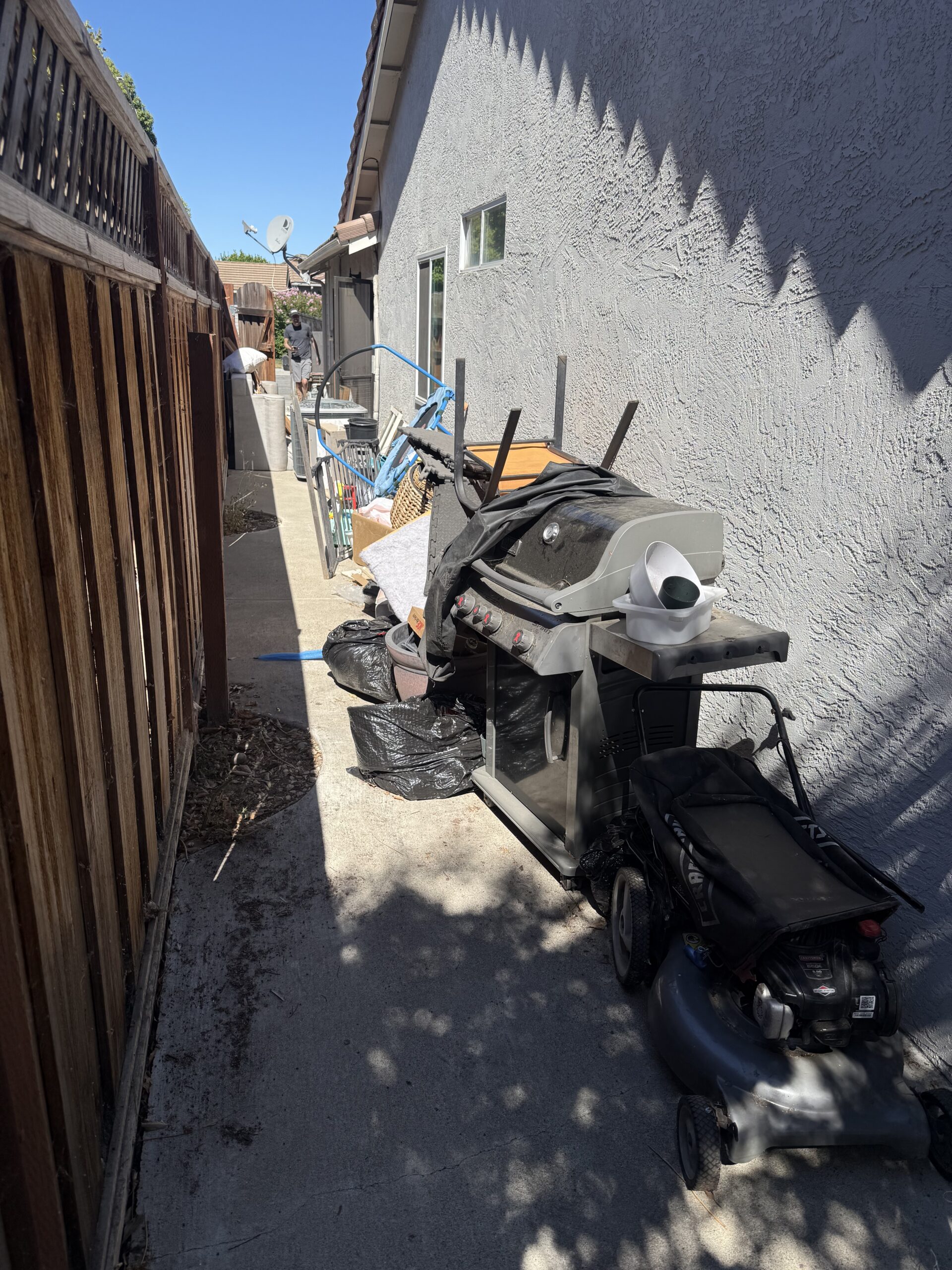
You have a shed that is one storm away from falling down on its own, and a patio that cracked years ago and never got better. The teardown part feels doable. It is the pile afterward that stops most people.
Here is the position I will defend for the rest of this article: book the teardown and the haul-off as one job, with one crew. Most homeowners around Hollister and Gilroy picture two vendors, one to knock it down and one to take it away, and that gap between visits is where the cost and the headaches show up. At MG Transportation & Hauling we run both halves together because the debris volume is a guess until the structure is actually down.
Below I will cover what the job includes, why weight and not volume sets the price on a concrete patio, what you need to pull out of the shed before anybody swings a bar, and what the day looks like start to finish.
I’m tearing out an old shed and patio in Hollister. Who handles the demolition and hauls away the debris?
We do. A small to midsize teardown with full debris removal is a normal day for us, and we work Hollister, Gilroy, San Benito County, South Santa Clara County, and out toward Salinas and Monterey County.
On a job like this, the scope usually covers:
- Hand demolition of the shed, including roofing, siding, framing, and the floor
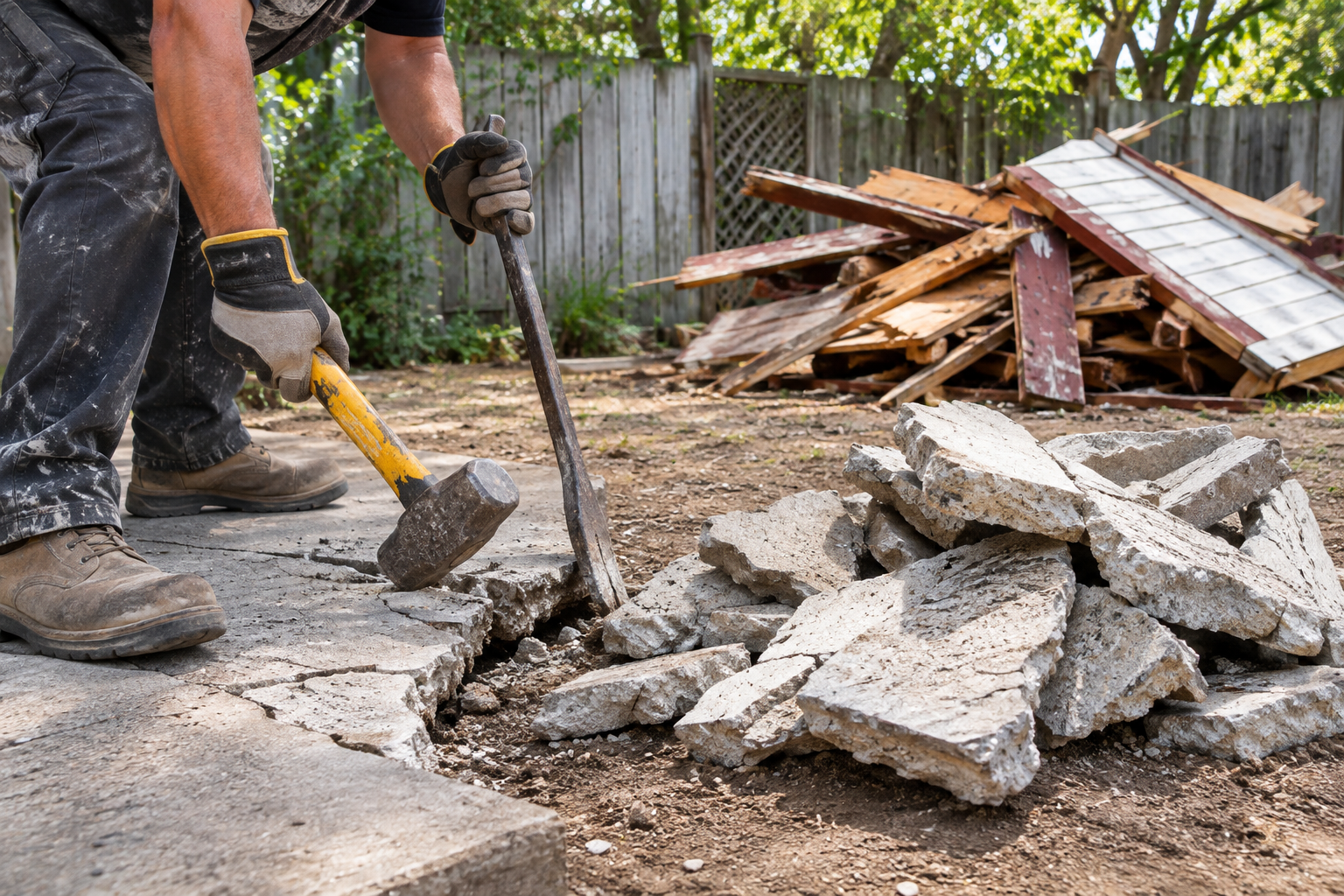
- Breakout and removal of the concrete slab, patio pavers, or both
- Pulling nails, screws, and hardware out of the dirt so the pad is safe to walk
- Staging a container or truck where it will not crack your driveway
- Loading, sorting, and hauling everything to the right disposal site
- A raked and broom clean finish on the area we worked
Price is driven by a few things: the size and build of the shed, whether the slab is plain concrete or has rebar through it, how far the crew has to carry debris to the truck, and total weight at the scale. Timing depends on access and the weather window more than anything else.
We book quotes by phone or online and schedule seven days a week, with same-day work possible when you call before noon and the calendar allows it. Most single shed and patio jobs are a one-day job.
Why Splitting the Teardown and the Haul Usually Costs You More
The common advice is to get a demo guy for the knock-down and then call a hauler once you can see what you have. That sounds careful. In practice it is the expensive route.
Nobody can size the load accurately before the structure is down. A 10×12 shed can hide a second layer of roofing, a plywood floor over sleepers, and a slab twice as thick as the edge suggests. When the demo crew leaves, you are the one guessing which container size to order.
Then there is the gap itself. A pile sitting in the yard for a week:
- Gets rained on, which adds weight you pay for at the scale
- Gets picked through, so somebody else’s junk ends up in your load
- Mixes together, which turns clean concrete into a mixed load
- Becomes a nail and splinter hazard if you have kids or dogs
When the same crew does both, we size the container from what we are actually tearing out and sort as we go. I wrote more about that handoff problem in who handles the debris after a demolition project.
On a Patio, Weight Sets the Price, Not Volume
This is the part that surprises people. A homeowner looks at a small backyard patio, assumes a small bill, then finds out concrete runs well over a ton for even a modest slab.
Disposal around here is weighed, not eyeballed. So a load of clean broken concrete and a load of concrete mixed in with shed lumber, roofing felt, and insulation are two very different invoices for the same cubic yards.
Clean concrete with no wood, no dirt clods, no trash, and nothing but rebar pulled out can often go to a site that takes clean fill or inert material. Mix a pallet of rotten siding into that same pile and the whole load gets charged as mixed debris.
That is why you will see my crew keeping two piles going during a teardown. We are not being fussy about tidiness. We are protecting the number at the bottom of your invoice. The same logic shows up on dirt jobs, which I broke down in clean fill, mixed loads, and why weight sets the price.
Costs vary a lot by slab thickness, rebar, and access, so I will not throw a number at you here. Call with the dimensions and we will quote it straight, with upfront pricing and no hidden fees.
What Comes Out of a Shed and Patio Job, and What Drives the Cost
Here is how the typical materials on this job break down. Every line item moves the price for a different reason.
| Material | What drives the cost | How we handle it |
|---|---|---|
| Concrete slab or pavers | Weight at the scale, slab thickness, rebar | Broken out and kept as a separate clean load where possible |
| Shed framing, siding, plywood | Volume and moisture content | Loaded as construction debris, kept off the concrete pile |
| Asphalt shingles or roof panels | Weight, and it cannot go in curbside carts | Hauled in the debris box with other C and D material |
| Metal shed panels, hardware, rebar | Sorted volume | Pulled and kept separate for metal recycling |
| Insulation, drywall scraps | Contaminates a clean load fast | Separated on site before the slab gets loaded |
| Old paint, solvents, pesticides, propane | Not legal for any hauler to take | You handle these before demo day, see below |
How a One-Day Teardown Actually Runs
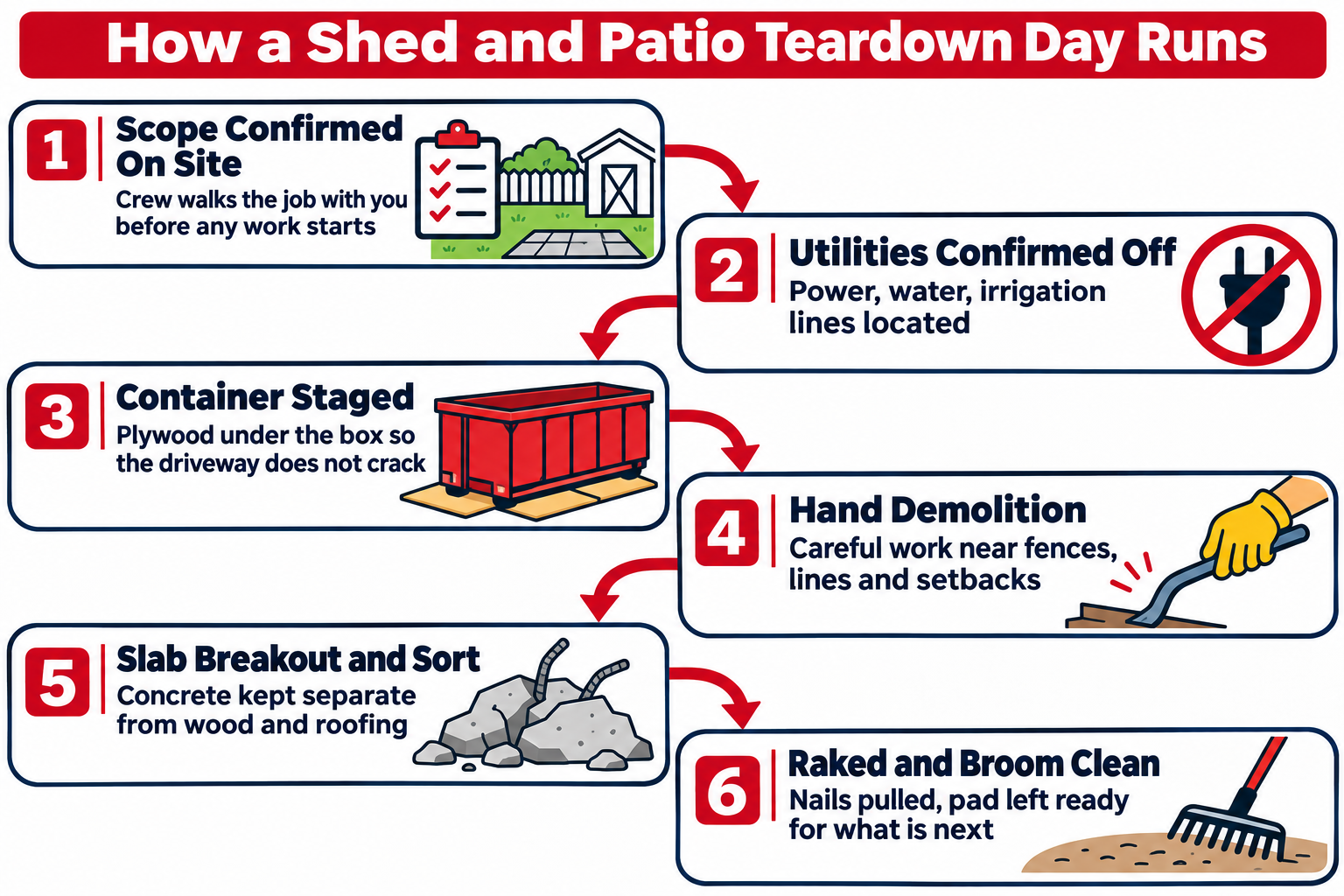
Most of the worry I hear is about a crew starting a teardown and leaving it half finished. Here is the order we work in.
Empty the Shed First. That Is the Step That Saves Your Day.
The shed is rarely what slows a job down. The contents are. Old sheds in this valley are usually holding half a garage worth of chemicals.
No licensed hauler in California can take any of these, and that includes us:
- Old paint, stain, and thinner
- Pesticides and weed killer
- Motor oil, gas cans, and antifreeze
- Propane bottles, including the small camping ones
- Pool chemicals
- Car batteries
San Benito County residents have a straightforward option. Household hazardous waste collection runs the third Saturday of each month at the John Smith Road Landfill, 9am to noon, with a limit of 15 gallons or 125 pounds per trip. Check the county’s current schedule before you load up, since holiday weekends shift things.
Also worth knowing: construction and remodel debris cannot go in your regular carts. Shingles, lumber, and broken concrete have to ride in a debris box or a truck. CalRecycle explains how construction and demolition material is handled statewide, and the penalties for dumping it in the wrong spot went up sharply this year.
Sort the shed the weekend before. Then the crew walks in and the whole day is demolition instead of triage.
October Through Mid-November Is the Window Around Here
This is scheduling math, not pressure. Hollister gets roughly 15 inches of rain a year, and almost all of it lands between December and February, with December averaging around eleven rainy days.
That matters for two reasons. Wet lumber, drywall, and insulation weigh more, and you pay by weight. A soaked backyard also limits what equipment can get in, which pushes a one-day hand job into something slower.
A dry pad is also easier to rake out clean at the end. If a pile does end up sitting through the first storm, I covered what that actually costs in demo debris left through the first rain.
One quick note on permits, because it comes up every time. A detached shed under the local size threshold often does not need one, but a slab, a structure with power or plumbing run to it, or anything sitting near a setback can change that answer. Call the City of Gilroy Building Division or San Benito County to confirm before you schedule, and read when a permit gets involved in a teardown if you want the longer version.
Frequently Asked Questions About Shed and Patio Teardowns
I’m tearing out an old shed and patio in Hollister. Who can handle the demolition and haul away all the debris?
We handle both halves as one job. Our crew tears out the shed, breaks up the patio slab, sorts the concrete from the wood and roofing, loads everything, and leaves the pad raked clean. We serve Hollister, Gilroy, San Benito County, and South Santa Clara County, with scheduling seven days a week and same-day work possible when you call before noon. Price depends on slab thickness, shed size, access, and total weight, so call with the dimensions for an exact quote.
Do I need a dumpster, or will your truck handle it?
Depends on the job. A single small shed with a thin slab often fits in a truck load. Bigger patios, or jobs where you want to pull items out over a couple of days, usually run better with a container. Our dumpster rentals start at $500 for a two-day rental and come in 10, 15, and 25 yard sizes, though weight and material type can change the total.
Can you take the concrete if I already broke it up myself?
Yes, and if you kept it clean with no wood, dirt, or trash mixed in, that usually helps your number. Pull any plastic sheeting or landscape fabric out of it before we arrive.
What if there is more under the slab than we expected?
It happens, usually old footings, a second slab, or buried irrigation. We confirm scope on site before work starts and we will tell you what changed before we keep going, not after. Nobody likes a surprise line item.
How long does a shed and patio teardown take?
Most are a single day. A larger structure, a thick reinforced slab, or a backyard with no truck access can push it to two.
Thinking Through a Teardown This Fall?
When one local operator handles the teardown, the container, and the disposal, the debris never becomes somebody else’s problem between visits, and the crew that scoped the job is the crew that finishes it. We work out of Hollister and cover Gilroy, San Benito County, and down into Monterey County. If you want the dimensions looked at and a straight quote, MG Transportation & Hauling can be reached at (831) 297-1972 or at mgtransportationhauling.com.
