
Direct Answer: Household junk is priced by the space it fills in a truck. Dirt, rock, and broken concrete are priced by weight at the scale, so a small pile can cost more than a full living room.
You tore out the lawn, dug a trench for a new line, or broke up an old patio. Now there is a pile sitting on your driveway, and it is not going anywhere on its own.
Most people call expecting it to be quoted like a couch. It isn’t. Household junk is priced by the space it takes up in the truck. Dirt, rock, and rubble are priced by what they weigh at the scale.
I have hauled a lot of soil out of Hollister, Gilroy, and down into Monterey County, and the same two questions decide the number almost every time: how heavy is it, and is it clean. Below I’ll walk through what clean fill actually means, why a mixed load costs more, and why the pile you leave through the winter gets more expensive, not less.
Why Dirt Hauling Gets Priced by Weight, Not by the Load
A truck bed full of furniture is bulky and light. A truck bed full of wet soil can hit the legal road weight limit before the sides are even covered.
That is the whole reason the pricing rule changes. With couches and boxes, the limit is room. With soil, rock, and broken concrete, the limit is the scale and the axle rating.
So when I ask “is it dirt, or is it dirt plus concrete,” I am not stalling. I am figuring out how many trips it takes and which facility will accept it. Those two answers set the price.
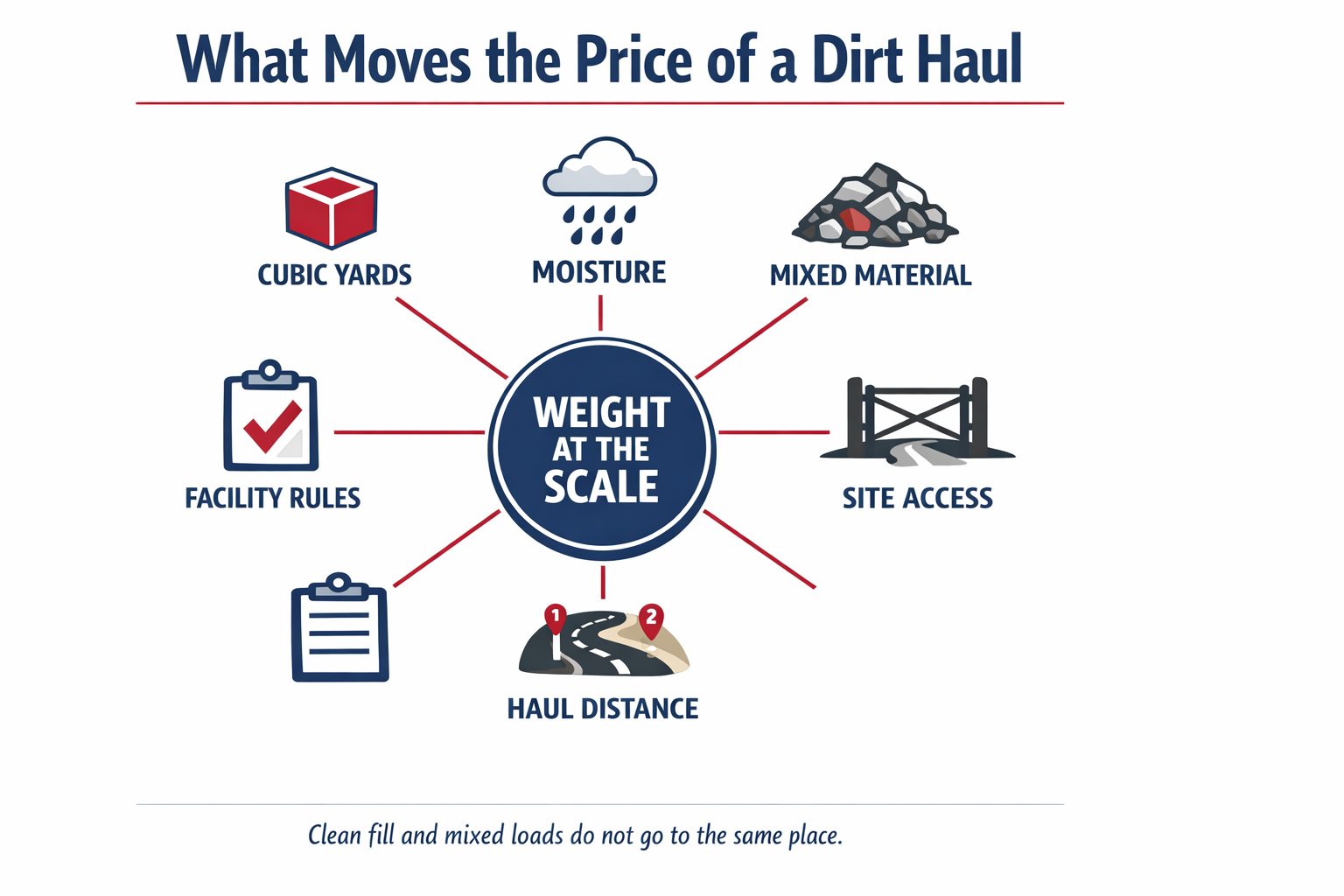
The things that actually move the number:
- Cubic yards. Volume still matters for planning trips, it just isn’t the pricing unit.
- Moisture. Wet soil can run noticeably heavier than the same pile dry.
- What’s mixed in. Rock, roots, sod, asphalt, lumber, and plastic all change the disposal path.
- Access. A pile a truck can back up to loads very differently than one behind a side gate.
- Distance to the right facility. Clean soil and mixed debris don’t always go to the same place.
If you want the broader picture on how local hauling gets quoted, I covered it in what junk hauling actually costs in Hollister. For a dirt pile specifically, the only honest number comes after a short conversation about the material.
Clean Fill vs. Mixed Load: The Sort That Decides Everything
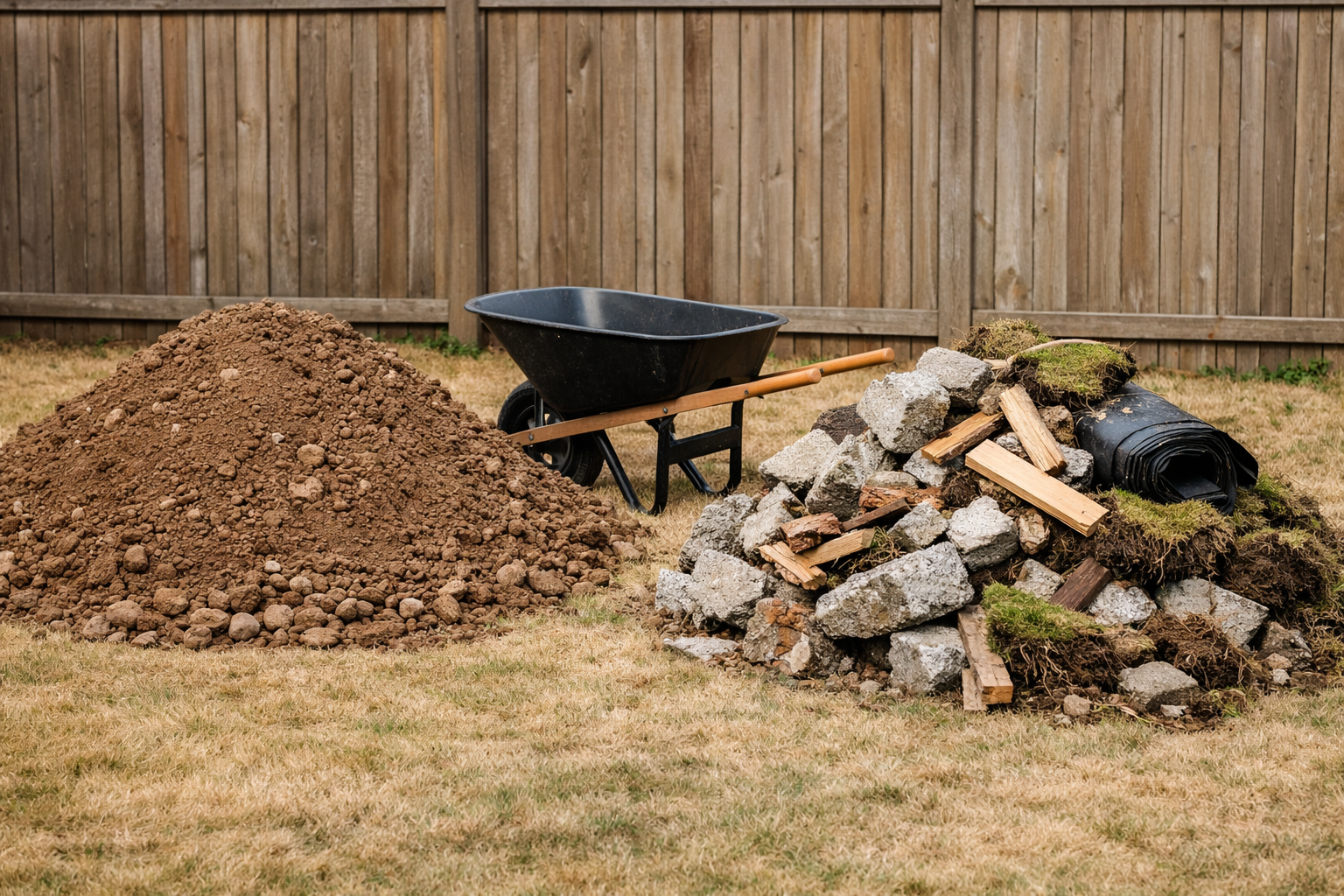
Clean fill is soil and the rock that came out of the ground with it. Nothing else. The second sod, roots, lumber scraps, broken concrete, asphalt, or plastic sheeting rides along, it stops being clean fill and gets handled on a different path, usually a more expensive one.
This is not a hauler preference. It is written into the acceptance rules facilities use. A Central Coast county’s published waste and soil acceptance criteria excludes paper, plastic, metal, trash, asphalt, and concrete from clean soil entirely, and caps weeds, roots, and rocks over an inch at roughly one percent by volume.
Here is the part that saves you real money. Keeping two piles separate during the project takes about five minutes a day. Combining them and sorting later takes hours, and nobody ever does it.
And before any of it leaves, ask whether you need it. Clean fill is often wanted on site for:
- Backfilling a trench once the line is in
- Raising a low spot that holds water every winter
- Regrading a yard away from the foundation
- Building up a planting bed or berm
On the Hollister side, loads generally end up routed through the John Smith Road Landfill or handled under San Benito County Integrated Waste Management rules. In Gilroy and South Santa Clara County the receiving options differ, which is another reason the material question comes before the price question.
What Counts as Clean Fill and What Doesn’t
This is roughly how I sort a pile when I walk up to it. If anything in the right-hand column is in there, plan on it being handled as a mixed load.
| Material | Clean fill? | What it usually means for the haul |
|---|---|---|
| Native soil from a trench or excavation | Yes | Straightforward, priced by weight, may be reusable on site |
| Rock that came out of the ground with the soil | Usually, in small amounts | Large or plentiful rock can push it out of the clean category |
| Sod, roots, and weeds | No, past about 1% by volume | Often needs to be separated as green material |
| Broken concrete or asphalt | No | Different disposal path and different pricing |
| Lumber scraps, drywall, plastic sheeting | No | Turns the whole pile into mixed construction debris |
| Soil from near an old tank, shop, or drum storage | Not without testing | Needs a certified environmental professional before any facility takes it |
What Actually Moves the Price of a Dirt Haul
Six factors come up on nearly every dirt call I take. None of them is the size of your driveway.
Mid October Through Mid November Is Your Last Clean Window
Hollister gets roughly 15 inches of rain a year, and almost all of it lands between December and February. December alone averages around 11 rainy days.
That matters because wet soil is heavier soil. Same pile, same cubic yards, bigger bill at the scale.
Rain also closes the door on the receiving end. Published clean soil criteria used in this region refuse loads brought in during rain or within 48 hours before a forecasted storm, and set a moisture ceiling for soil to qualify as clean and dry. So the storm doesn’t just make your pile heavier, it can stop the load from being accepted at all.
There is a physical side too. A dirt pile left through the winter does not shrink. It soaks up water, slumps into the lawn, spreads under its own weight, and turns a backhoe-and-truck job into a two-person wheelbarrow job in the mud.
I wrote about the same pattern with construction debris in demo debris left through the first rain. Soil follows the exact same curve, just faster.
If you have been telling yourself the pile can wait until spring, the honest math is that spring costs more than fall for the identical material.
Why the Biggest Dumpster Is the Wrong Tool for Dirt
We rent 10, 15, and 25 yard boxes, and for a garage or backyard cleanout, people reach for the 25 yard. For couches, boxes, and old patio furniture, that is the right call.
For soil, it is the wrong one. A box sized for bulky household junk hits the truck’s legal road weight long before it looks full of dirt. You end up with a box you can only use a third of and a driver who can’t legally pull it.
With heavy inert material, the question is not how much room you need. It is how much weight the truck can legally carry down the road.
So heavy material usually gets planned one of three ways:
- A smaller box that fills out at a legal weight
- A fill line on a larger box, loaded partway and no further
- A dump truck load, which is often the cleanest fit for straight soil
If a hauler asks what the material is before recommending a size, that is them doing you a favor. If they just quote the biggest box, you are set up for a conversation about overage later, which I covered separately in how dumpster weight charges work.
This section is about avoiding that conversation entirely by picking the right plan up front. The same logic applies if you are weighing doing it yourself, which I broke down in your pickup truck vs. a rented dumpster.
When Dirt Is a Lab Question, Not a Pricing Question
Most soil is just soil. But a hauler is expected to know the history of the ground a load came from, and some properties come with a past.
Expect these two questions before anyone quotes a pile near an old structure:
- What was on this ground before, a shop, a barn, a fuel tank, drums?
- Has anything ever leaked, spilled, or been dumped here?
Ground near old fuel storage, long-term vehicle work, or heavy chemical use gets sent for testing by a certified environmental professional before any facility will accept it. We move clean soil and ordinary inert rubble. Soil with a suspicious history needs a different path.
If a crew tells you “this one needs testing first,” that is not a brush-off. That is somebody who knows the rules, and it saves you from a rejected load or worse. California has also been tightening penalties around where construction material ends up, which I touched on in the illegal dumping law changes.
The Part Nobody Mentions Until It’s Over: The Driveway
Dirt tracks. It gets ground into concrete, smeared down a walkway, and pressed into the seams by every tire that rolls over it.
Running dump trucks and roll off boxes instead of a pickup is part of why we take these jobs, but honestly the part customers bring up afterward is the cleanup. One review put it plainly: “They hauled away dirt we needed removed and cleaned up our walkway and driveway before they left.”
That is the standard I’d want at my own house. The pile is gone and the driveway looks like nothing happened.
Frequently Asked Questions About Dirt Hauling and Clean Fill Disposal
What is the cheapest way to get rid of a pile of dirt or rubble?
Reuse it on site if you can. Backfill, grading, or filling a low spot costs nothing in disposal fees. If it has to leave, the cheapest version is clean, dry, and unmixed, hauled before the winter rain adds weight to it.
How much does it cost to haul away dirt in Hollister or Gilroy?
There is no flat number, and anyone who gives you one over the phone without asking about the material is guessing. Cost tracks weight, moisture, what’s mixed in, access, and which facility will take it. A short call and a few photos gets you a real figure.
Can I put dirt in a regular dumpster?
Sometimes, but usually not a large one, and usually not all the way to the top. Heavy material hits legal truck weight limits long before the box looks full, so dirt is normally planned as a smaller container, a marked fill line, or a dump truck load.
What makes a load stop being clean fill?
Anything that didn’t come out of the ground with the soil. Sod, roots, lumber, plastic, metal, trash, asphalt, and broken concrete all push it into the mixed category. Regional criteria cap weeds, roots, and rocks over an inch at about one percent by volume.
Does rain really change the price?
Yes, two ways. Wet soil weighs more, so the same pile costs more at the scale. And facilities operating under clean soil criteria can refuse loads brought in during rain or within 48 hours of a forecasted storm, which means the haul may not happen at all that week.
What if the dirt came from near an old fuel tank?
Then it needs testing by a certified environmental professional before any facility will take it. That is outside normal hauling, and a crew telling you so is following the rules rather than dodging the job.
Have a Dirt Pile and No Idea How It Gets Quoted?
We haul soil, rock, and inert rubble across Hollister, Gilroy, San Benito County, and down into Monterey County, CA, and dirt work has been part of what we do for years. If you want to know what your specific pile looks like in terms of weight, sorting, and the right equipment for it, a short conversation and a couple of photos will tell you more than any online estimate. You can reach us at (831) 297-1972 or at mgtransportationhauling.com when you’re ready to ask.
