
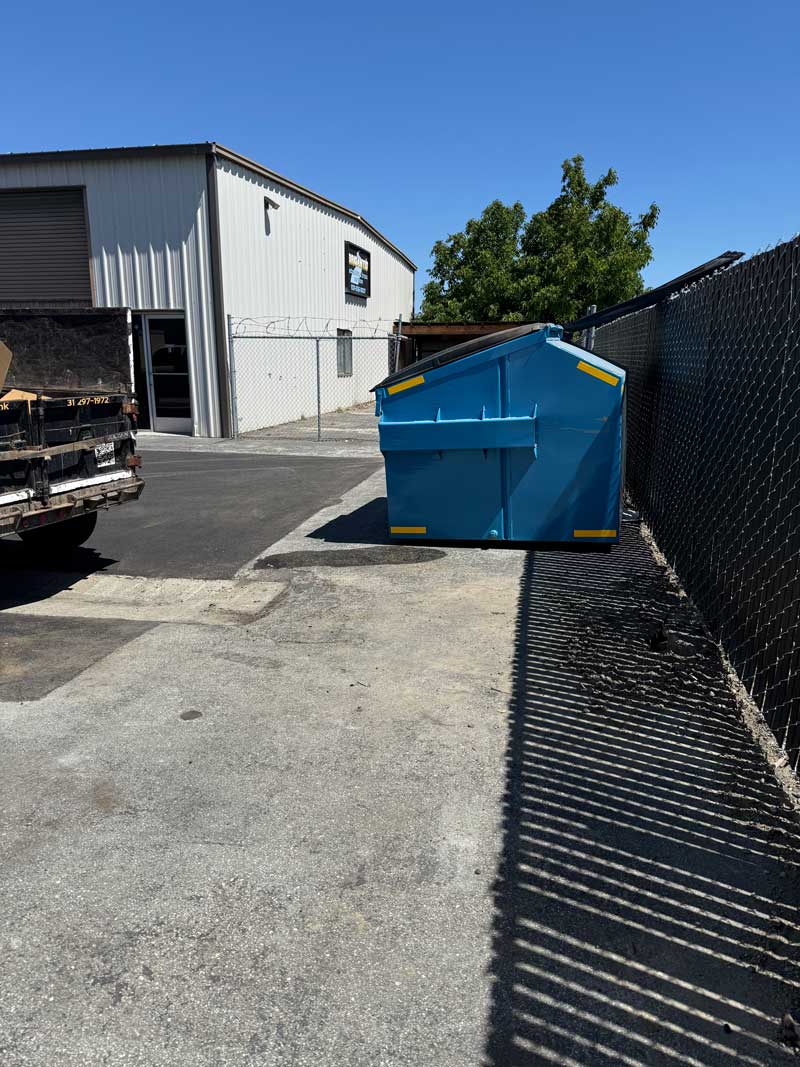
Direct Answer: A dumpster rental covers a set weight allowance in tons, not just a volume of space. Go over that allowance and the extra tonnage is billed by the scale at the disposal facility.
The box is two thirds full. The garage is clear, the driveway is swept, and the job feels finished. Then the final invoice shows a number higher than the rental rate you were quoted.
I get this call a lot. A homeowner in Hollister or a contractor in Gilroy sized the dumpster by looking at the pile, filled it partway, and assumed space was the only limit that existed. It isn’t. A rental rate covers a set weight allowance measured in tons, and anything past that allowance gets billed by the scale at the landfill.
This one misunderstanding is behind most of what people later call hidden fees. So let me walk you through how weight actually drives the cost, where your load gets weighed around here, and the questions to ask before a box ever hits your driveway.
Your rental rate buys space and a weight allowance, not unlimited weight
Every roll-off rental has two limits working at the same time. One is volume, the cubic yards the box holds. The other is weight, usually written as a tonnage allowance included in the base rate.
Hit either one and you’re done filling. Most people only ever think about the first one.
Here is what a rental quote is usually paying for:
- Delivery of the box to your property
- A set rental period, often a few days
- Pickup at the end
- Disposal of the load up to a stated tonnage
That last line is where the surprise lives. Weight allowances in this area commonly land somewhere in the 1 to 3 ton range depending on the box size and the provider, and the tons above that get charged at a per ton rate.
When I quote a job, I want to know what the material is before I pick a box. A 25 yard box full of couch cushions and cardboard may never get close to its limit. That same box with half a bathroom tear out in it can blow past the limit while it still looks half empty from the street.
If you’re still deciding between a box in the driveway and a crew doing the loading, dumpster rental versus full-service junk removal breaks down which one fits which job.
Why weight, not volume, is the real cost driver
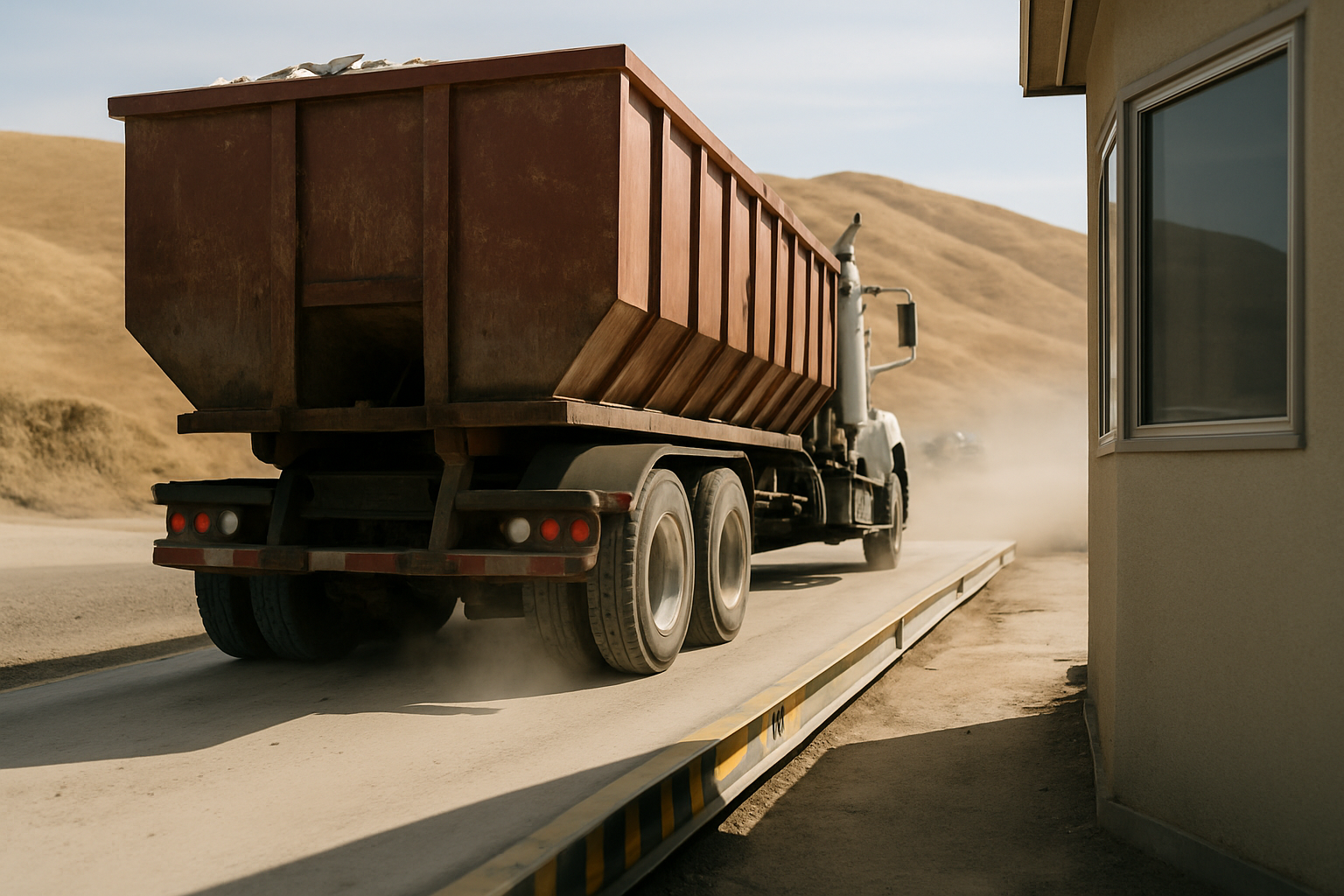
Disposal facilities charge by net weight dumped. They don’t care how tall your pile is. They care what the scale says when the truck rolls off.
That’s why a box loaded halfway with roofing tile, plaster, and old bathroom fixtures can cost more to dump than a box packed to the rails with moving boxes and closet clutter.
Here’s the mental model I use on the phone:
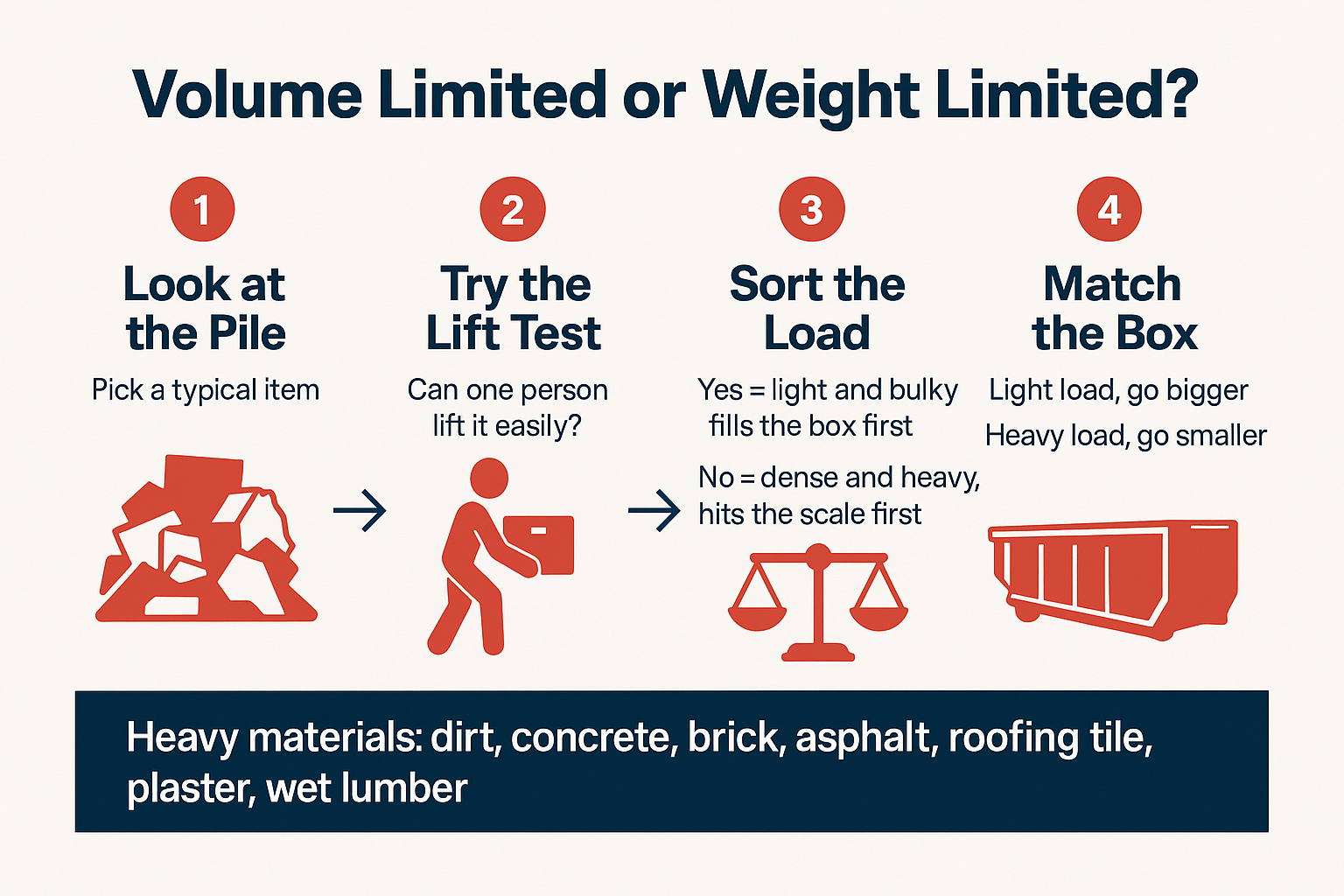
- Light and bulky fills the box first. Mattresses, patio furniture, empty totes, cardboard.
- Dense and heavy hits the scale first. Dirt, concrete, tile, plaster, wet lumber.
- Mixed remodel debris does both. Cabinets, drywall, flooring, and fixtures all in one load.
Want a quick way to guess your category before you book? Look at a typical item in the pile and ask whether one person can lift it off the ground without much effort. If most of the pile passes that test, you’re probably volume limited. If a lot of it takes two people or a wheelbarrow, you’re weight limited, and the box should be smaller than your eye wants it to be.
How different materials behave in a box
This is the rough sorting I do in my head when someone describes their pile over the phone. Actual results depend on how much you have and how wet it is.
| Material | What limits you first | Practical box choice |
|---|---|---|
| Cardboard, clothing, closet clutter | Volume | Larger box, weight rarely an issue |
| Furniture, mattresses, patio sets | Volume | Larger box, load tight to save space |
| Mixed remodel debris (cabinets, drywall, flooring) | Both | Mid size box, watch the scale |
| Bathroom tear out (tile, tub, plaster) | Weight | Smaller box, fill part way |
| Dirt, concrete, brick, asphalt, roofing tile | Weight, by a lot | Small box, often kept as a separate clean load |
Where your load actually gets weighed: Hollister versus Gilroy
This is the part a national booking site can’t tell you, because the destination facility changes the math.
San Benito County jobs typically end up at the John Smith Road Landfill east of Hollister, where the county’s Integrated Waste Management program oversees the landfill operator agreement and rates are based on net weight.
Gilroy and South Santa Clara County jobs usually route through the San Martin Transfer Station under the Recology South Valley franchise. Different facility, different fee categories, different scale.
So a Gilroy job and a Hollister job with the exact same pile can price differently. Nothing shady about it. The material just goes to two different places with two different rate sheets.
There’s another wrinkle worth knowing. Many facilities put construction and demolition debris in a separate rate category from household junk. Toss a clean load of broken concrete in with general trash and you can change what the whole load costs.
When you call anyone for a quote, describe the material by type, not by how many rooms it came out of. “Two bedrooms and a garage” tells me almost nothing about weight. “Mostly furniture plus about a pickup bed of broken patio concrete” tells me everything.
The quick weight check before you book
A simple four step way to figure out whether your load is volume limited or weight limited before a box gets delivered.
Heavy material is where overage charges actually happen
Almost every overage call I’ve taken traces back to the same short list of materials:
- Dirt and sod
- Concrete, brick, and block
- Asphalt
- Roofing tile and shingles
- Plaster and stucco
- Wet or pressure treated lumber
These hit a weight limit long before they fill a 25 yard box. That’s why a 10 yard box is often the right call for a small demolition or a bathroom tear out, even though it looks too small next to the pile.
I’d rather drop a small box and swap it than watch someone fill a big one to the rails with tile and get stunned by the ticket. A second small box on a clean concrete load is frequently cheaper than one mixed load that gets billed at the higher category.
One more thing people miss: the rental clock and the weight limit are separate issues. Taking longer doesn’t make the load lighter. If you’re planning a phased project, how long you should actually keep a dumpster covers the timeline side of it.
Rain season quietly adds weight to your load
This one is specific to us, and almost nobody warns customers about it. Hollister gets roughly 15 inches of rain a year, and nearly all of it falls between December and February.
Absorbent material soaks that up and gets measurably heavier at the scale. The worst offenders are cardboard, mattresses, upholstered furniture, carpet, and untreated lumber.
A pile that sat dry in an October side yard is a different load in February. Same stuff, more tons.
What I tell people during storm season:
- Tarp the box between loading sessions, even overnight
- Keep carpet, cardboard, and mattresses off the bottom of the box where water pools
- Load absorbent material last, so it spends the least time exposed
- Schedule outdoor and side yard cleanouts before the first storms if you have the choice
And if part of your pile is paint, tires, batteries, or electronics, that’s a different problem entirely. What can’t go in a rented dumpster covers where those items have to go instead.
What to ask before the box gets dropped
You don’t need to become an expert on tipping fees. You just need four answers in writing before delivery:
- How many tons are included in the base rate?
- What is the per ton rate above that allowance?
- Are delivery, pickup, and disposal all inside the quoted number, or billed separately?
- Does heavy material need a smaller box or a separate clean load?
Any provider who handles this work locally can answer all four in about a minute. If the answers get vague, that tells you something.
I won’t quote you a flat dollar figure in an article, because the honest answer depends on the material and which facility the load goes to. What I can tell you is which factors move the number: material type, total tonnage, box size, rental length, and destination.
One customer put it about as plainly as it gets: “They disclosed all information upfront and there were no hidden fees.” That’s the whole standard. Upfront pricing, explained before the truck rolls, not after.
If your job is closer to a full clear out than a single project, what happens during a full property cleanout walks through how those get scoped.
Frequently Asked Questions About Dumpster Weight Limits
Why did I get charged extra when the dumpster wasn’t even full?
Because the load went over the weight allowance included in your rate. Disposal facilities bill by net weight on the scale, so dense material like tile, plaster, or concrete can pass the tonnage limit while the box still looks half empty.
How many tons come with a rental around here?
It varies by provider and box size, and it should always be stated in your quote. In this market the included allowance often lands somewhere in the 1 to 3 ton range, with anything above that billed per ton. Ask for the exact figure before delivery.
Can I put dirt or concrete in a regular dumpster?
Sometimes, but you usually shouldn’t mix it. Many facilities charge construction and demolition debris under a different rate category than household junk, so a clean separate load is often the cheaper route. A 10 yard box handles most small concrete and dirt jobs.
Does a Gilroy job cost the same as a Hollister job?
Not always. San Benito County loads generally go to the John Smith Road Landfill, while Gilroy and South Santa Clara County loads typically route through the San Martin Transfer Station. Two facilities, two rate structures, so the same pile can price differently.
Does rain really make a difference at the scale?
Yes, on absorbent material. Cardboard, carpet, mattresses, upholstered furniture, and untreated lumber pick up real water weight during our December through February wet stretch. Tarping the box between loading sessions is the easiest fix there is.
Thinking through box size for a heavy load?
Hauling to the same Hollister and Gilroy facilities week after week means we can usually tell you over the phone which box size and material mix will stay under the limit, before anything gets delivered. We handle dumpster rentals, junk removal, and property cleanouts across Hollister, Gilroy, San Benito County, and the surrounding Central Coast and Monterey County, CA area. If you want to talk through a load, call (831) 297-1972 or visit mgtransportationhauling.com.
