
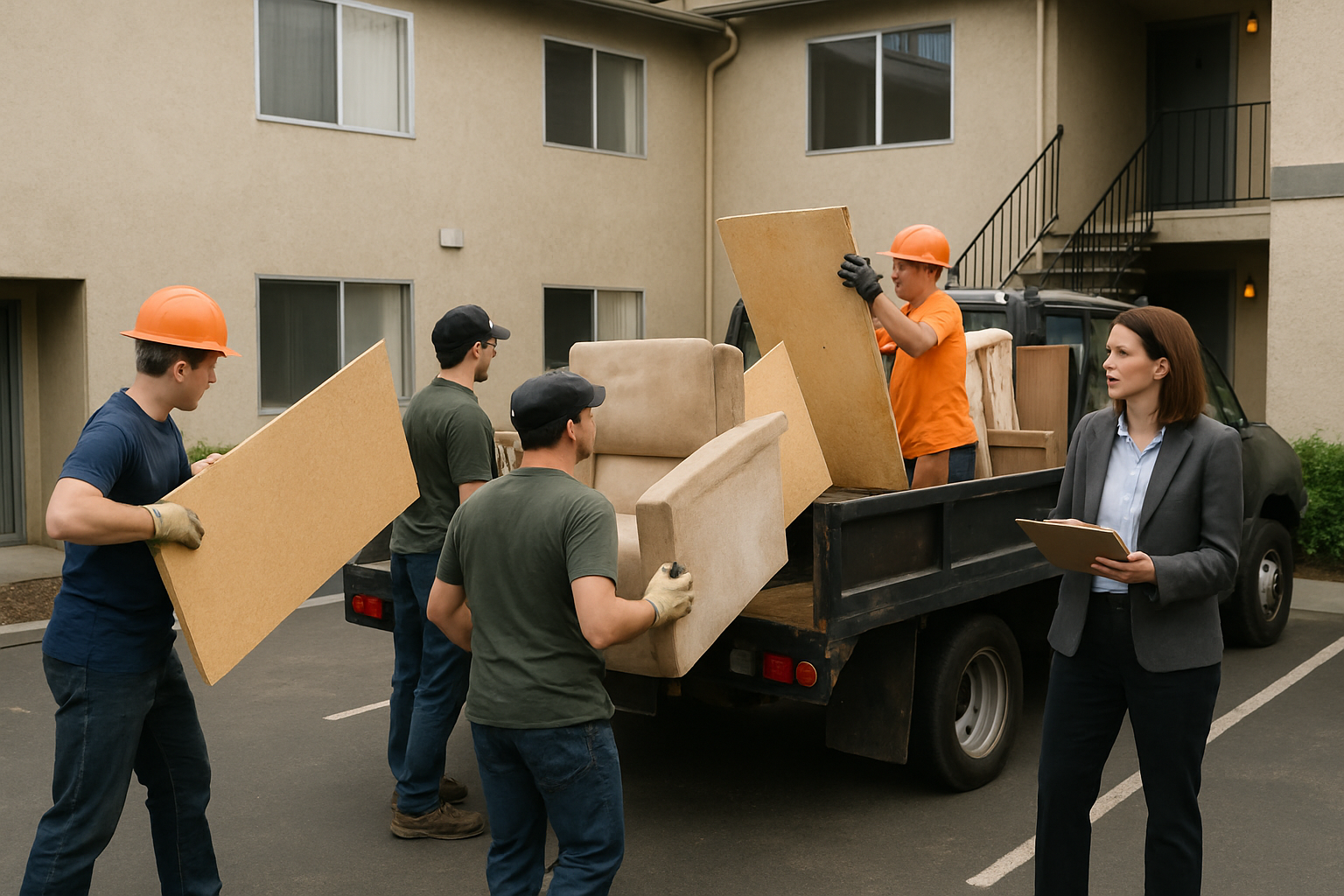
Direct Answer: Contractors and property managers need a hauling crew that shows up on time, confirms scope before loading, knows local disposal rules, and communicates clearly, not just a truck that eventually arrives.
Hauling debris off a jobsite or turning a rental unit sounds like a simple task. But if you’ve ever had a crew cancel the morning of, show up without the right equipment, or leave half the load behind, you already know it’s not simple at all. For contractors and property managers in Hollister and Gilroy, a hauling crew isn’t just a vendor, it’s a scheduling dependency that can hold up every other part of a project.
I’ve worked with enough landlords, contractors, and property managers in San Benito and South Santa Clara County to know that their frustrations are almost always the same. They’re not upset about price. They’re upset because they had to chase someone down for a confirmation, or because the crew showed up without knowing the full scope, or because the job sat half-finished when the next trade was supposed to be walking in. Those aren’t minor inconveniences. They’re real delays with real costs attached.
This article breaks down what I’ve seen actually matter to commercial and property-management customers, the operational stuff that most hauling companies never talk about, and the local disposal knowledge that separates a crew worth keeping on speed dial from one you call once and regret.
Hauling Is a Scheduling Dependency, Not Just a Cleanup Task
Most homeowners think of junk removal as the last step. Call when you’re ready, haul it away, done. But for a contractor or property manager, hauling sits in the middle of the timeline, and everything else depends on it moving on schedule.
If a demo crew leaves behind concrete, drywall, and framing material, the flooring subcontractor can’t come in. If a tenant leaves furniture, appliances, and debris in every room, the unit can’t be photographed, priced, or shown. The hauler isn’t doing cleanup, they’re clearing the path for the next step to happen at all.
That changes what you need from a crew entirely. You’re not just looking for someone with a truck. You need someone who:
- Confirms the appointment the day before, not just when you call to book it
- Gives you an arrival window you can actually plan around, not a vague “morning” or “sometime Tuesday”
- Has a direct number you can text if anything changes
- Shows up with enough crew and capacity to handle the full scope in one visit
- Doesn’t disappear between booking and arrival
I’ve heard this same frustration from property managers across Hollister and Gilroy: the hauler sounded great on the phone, confirmed everything, and then either cancelled or showed up without nearly enough hands to do the job. When that happens, you lose a day minimum, and in a tenant turnover, that day costs money.
For more on what slows these jobs down from the crew’s side, What Speeds Up a Same-Day Haul (and What Slows It Down) is worth a read before your next booking.
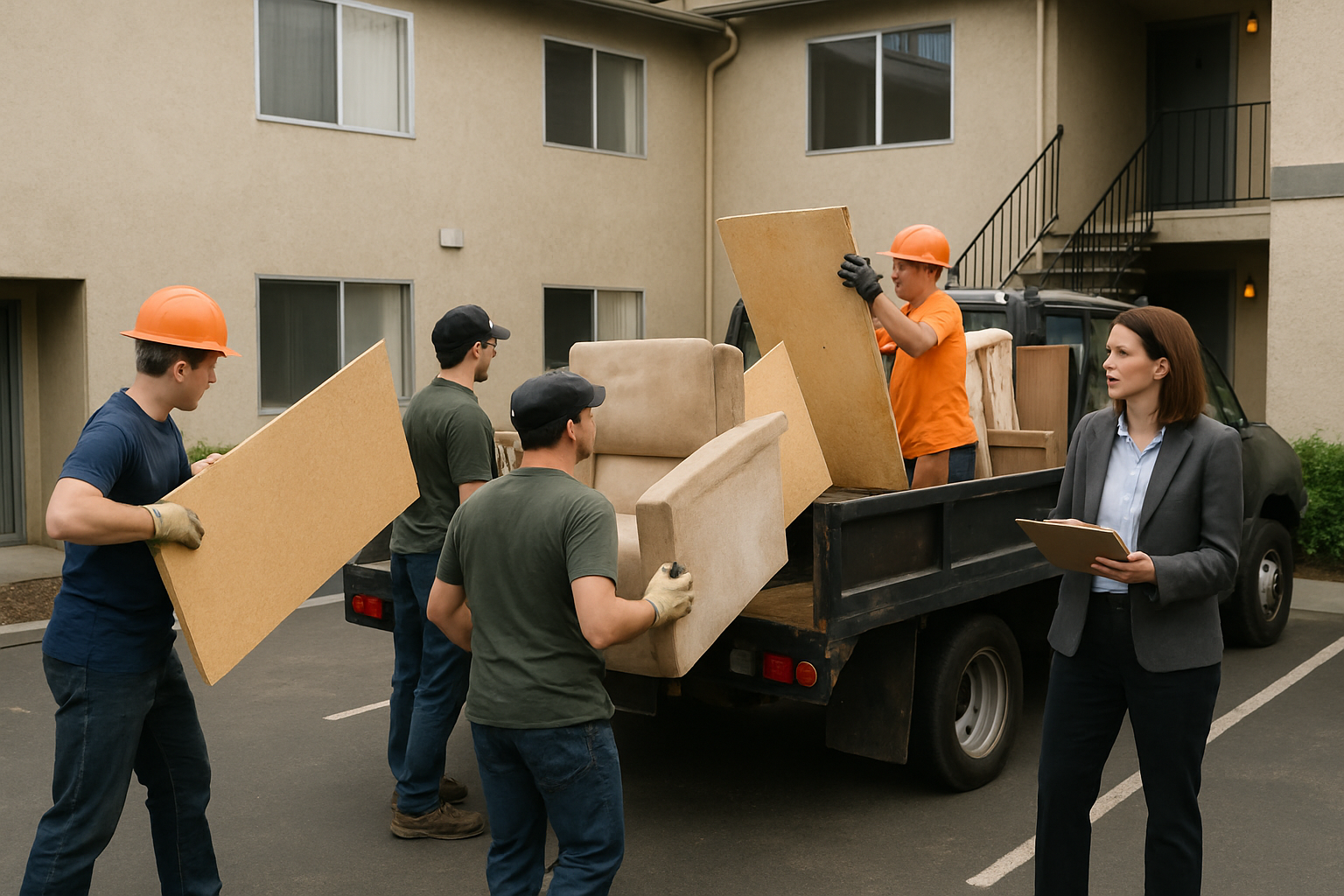
What a Landlord Actually Loses When a Hauler Doesn’t Deliver
Let me walk through what a typical tenant-turnover cleanout looks like, because it’s more involved than most people outside of property management expect.
A messy move-out in Hollister or Gilroy can leave behind:
- Furniture, couches, mattresses, dressers, bed frames left in multiple rooms
- Appliances, microwaves, small fridges, broken washers that a tenant was supposed to remove
- Outdoor debris, trash bags, broken furniture, and miscellaneous junk in carports, patios, or back yards
- General trash and small items scattered throughout that have to be manually gathered before any real hauling can start
A landlord who loses two weeks of rent waiting on a hauler who cancelled once, showed up understaffed a second time, and couldn’t fit the appliances on a third visit isn’t just frustrated, they’ve lost real income. In a San Benito County rental market where average rents can run from the high hundreds into the mid-thousands depending on unit size, even a short delay adds up fast.
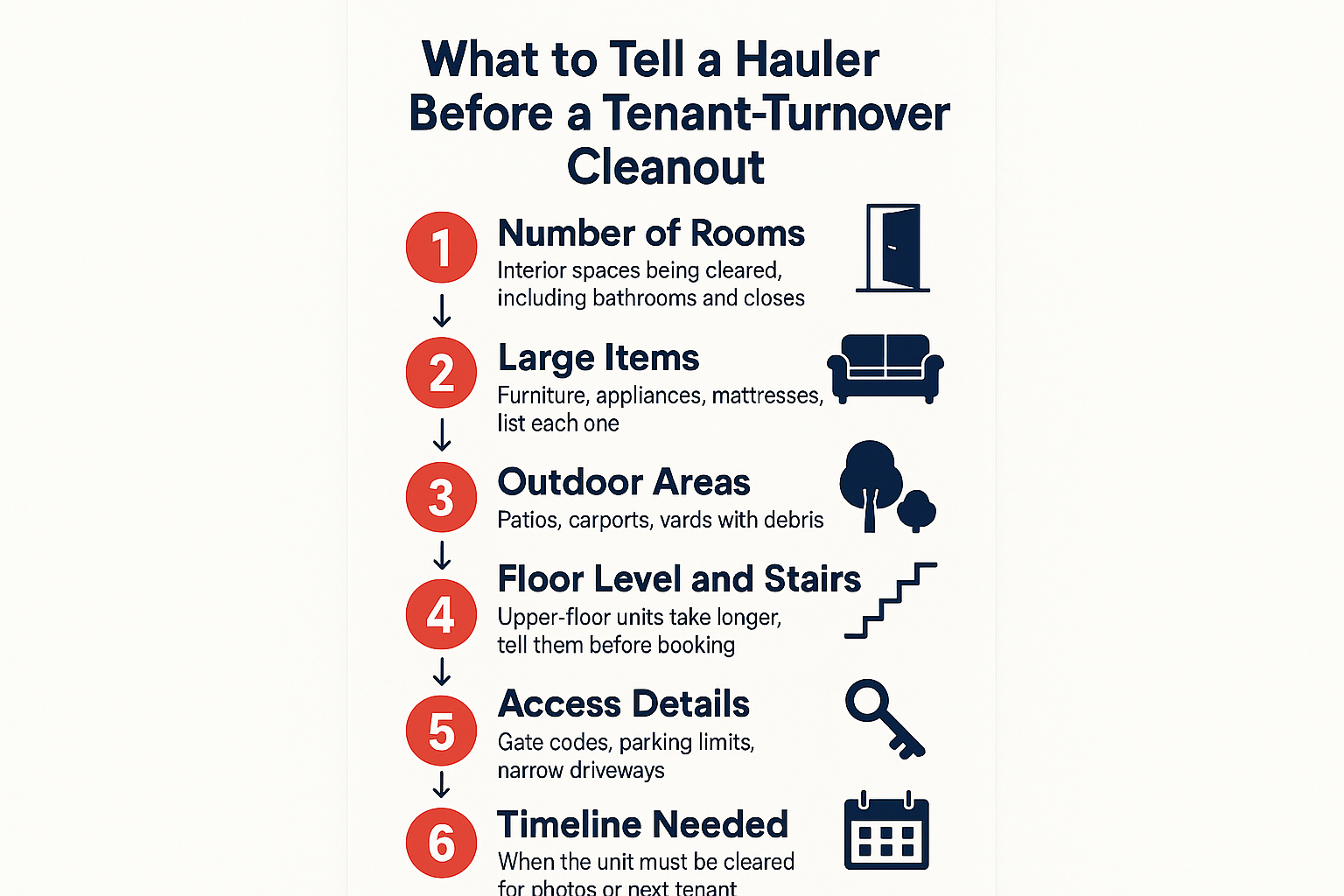
When you call to book a cleanout, the information that actually helps a crew give you an accurate quote on the first call includes:
- How many rooms are involved
- Whether there are appliances or large furniture pieces
- If there’s an outdoor area with debris in addition to the interior
- Whether the unit is on an upper floor with stair carries involved
- Access restrictions, gate codes, parking, or limited driveway space
The more of that you share upfront, the more accurate your estimate will be, and the less likely there is to be a scope surprise when the crew arrives. Why Your Junk Removal Quote and Your Final Bill Don’t Always Match explains that gap well if you’ve run into it before.
What to Tell a Hauler Before a Tenant-Turnover Cleanout
Before calling to book a cleanout between tenants, have this information ready. It helps the crew give you an accurate quote and show up prepared.
Local Disposal Knowledge Is Not Optional on a Jobsite
This is the part that separates a crew with real local experience from one that just has a truck and a willingness to show up.
Construction and demolition debris in Hollister and Gilroy is not all handled the same way. General solid waste, C&D debris, and materials like concrete, drywall, and treated wood can have different routing requirements. The California Department of Resources Recycling and Recovery (CalRecycle) maintains facility-level guidance on what types of material each transfer station and disposal facility is permitted to accept.
In practice, what this means for a contractor is straightforward: if you hire a crew that doesn’t understand the difference between general junk and C&D material, they may try to load everything together and hit problems at the gate at John Smith Road Landfill in Hollister, or end up making a second trip that you didn’t budget for.
A crew that’s done this work in San Benito County knows:
- C&D debris often needs to be separated from general solid waste at the point of disposal
- Concrete, clean wood, and mixed load material may have different tipping fees and acceptance windows
- Loads that arrive mixed without proper sorting can be rejected or assessed at a higher rate
For contractors in Gilroy, the same awareness applies to routing through South Santa Clara County facilities versus taking material south toward the Hollister area. It’s not complicated once you know the local landscape, but a hauler who doesn’t know it can create compliance headaches and schedule gaps you didn’t see coming.
If you’re dealing with post-renovation debris, What Happens to Construction Debris After Your Renovation? breaks down the disposal chain in plain terms.
Hauling Needs by Customer Type: What Actually Matters Most
Contractors, property managers, and landlords all use hauling services, but what they need from a crew is different. Here’s how those priorities break down in practice.
| Customer Type | Primary Need | Biggest Risk if the Hauler Fails |
|---|---|---|
| Contractor | Jobsite cleared before next trade arrives | Work stoppage, delayed project milestones |
| Property Manager | Scope confirmed, crew shows up staffed and on time | Missed unit turnover window, owner complaints |
| Landlord (tenant turnover) | Full cleanout in one visit, fast turnaround | Lost rent income, delayed photos and listing |
| Real Estate Agent | Property cleared before listing photography | Delayed listing, reduced sale price perception |
| Demo Contractor | C&D debris separated and routed correctly | Disposal rejection, extra trips, compliance issues |
What Reliability Actually Looks Like in Practice
I want to be direct about something: words like “reliable” and “professional” are on every hauling company’s website. They don’t mean anything without specifics.
From where I sit, working with commercial and property-management customers in Hollister and Gilroy, reliability isn’t a personality trait, it’s a set of behaviors you either do or you don’t do consistently. One of our customers, Jason M., put it plainly in a review: “This company is on time, reliable and puts their customers first every time I work with them.” That’s not a one-time thing. It’s the standard you should expect on every job.
For a contractor or property manager, reliability means:
- Arrival confirmation the evening before or morning of, not radio silence until the truck pulls up
- Scope walkthrough before loading starts, so there are no disputes about what was and wasn’t included
- A point of contact who responds to texts within a reasonable window on job day
- A crew that does the full scope without being chased, reminded, or asked to come back for what they left
- An upfront price that doesn’t shift without a real conversation first
The commercial customers I’ve worked with are not shopping for the cheapest crew. They’re shopping for a crew they can hand a job to without having to manage it themselves. That’s a different thing entirely, and it’s the thing that makes or breaks a working relationship in this market.
If you’re weighing whether a full-service crew makes sense versus a dumpster rental for your next project, Dumpster Rental vs. Full-Service Junk Removal: How to Pick the Right One walks through exactly that decision.
Frequently Asked Questions About Commercial Junk Hauling in Hollister
Do you carry insurance, and can you provide proof before the job?
Yes. Any legitimate commercial hauling company operating in California should carry general liability insurance and be able to confirm that before they show up on your property. If a hauler hesitates or can’t produce proof of insurance when you ask, that’s a real flag, especially for contractors and property managers with site liability considerations.
How should I describe a job to get an accurate quote on the first call?
The more specific you are, the more accurate the number. Tell us the number of rooms or areas involved, what large items are present (appliances, mattresses, furniture), whether there are outdoor spaces with debris, the floor level if it’s an upper-unit, and any access restrictions like gates or narrow driveways. A vague description leads to a vague quote, and that’s where surprise charges come from.
Can you handle a full property cleanout that includes both indoor debris and an outdoor area in one visit?
In most cases, yes, but it depends on the volume and the crew configuration. When you call, walk us through the full scope so we can show up with the right crew size and equipment. Splitting a job across two visits because the scope wasn’t clear upfront wastes everyone’s time.
How does construction debris from a Hollister jobsite get disposed of properly?
C&D material, drywall, concrete, lumber, mixed renovation debris, has specific disposal routing in San Benito County. In Hollister, the John Smith Road Landfill handles much of this material, but mixed loads and specific material types can be subject to different acceptance requirements and fees. A crew that understands local disposal routing handles this correctly without passing unexpected charges back to you after the fact.
What’s the fastest a tenant-turnover cleanout can realistically be completed?
For a standard single-family rental or apartment unit in Hollister or Gilroy, a well-staffed crew handling furniture, appliances, and general debris can usually complete the job in a single visit. Calling before noon gives you the best shot at same-day service depending on the current schedule. Larger multi-unit or multi-area jobs may need a next-day or scheduled appointment to do properly.
Do you work with property managers on a recurring basis, or only one-off jobs?
Both. Property managers in the Hollister and Gilroy area who need reliable hauling on a unit-by-unit basis as vacancies turn over are exactly the kind of customer we work well with. Consistency matters on both sides, you need a crew that knows how you operate, and we need enough lead time to staff jobs correctly.
Ready to Work With a Crew That Handles the Full Scope?
If you’re a contractor, property manager, or landlord in Hollister, Gilroy, or the broader San Benito County area, MG Transportation & Hauling is available seven days a week for commercial junk hauling, property cleanouts, and jobsite debris removal. Call (831) 297-1972 to talk through your scope and get an upfront quote, or visit mgtransportationhauling.com to submit a request.
