
Direct Answer: Construction debris goes to one of three places: a landfill, a materials recycling facility, or a salvage yard — depending on what it is and who hauls it.
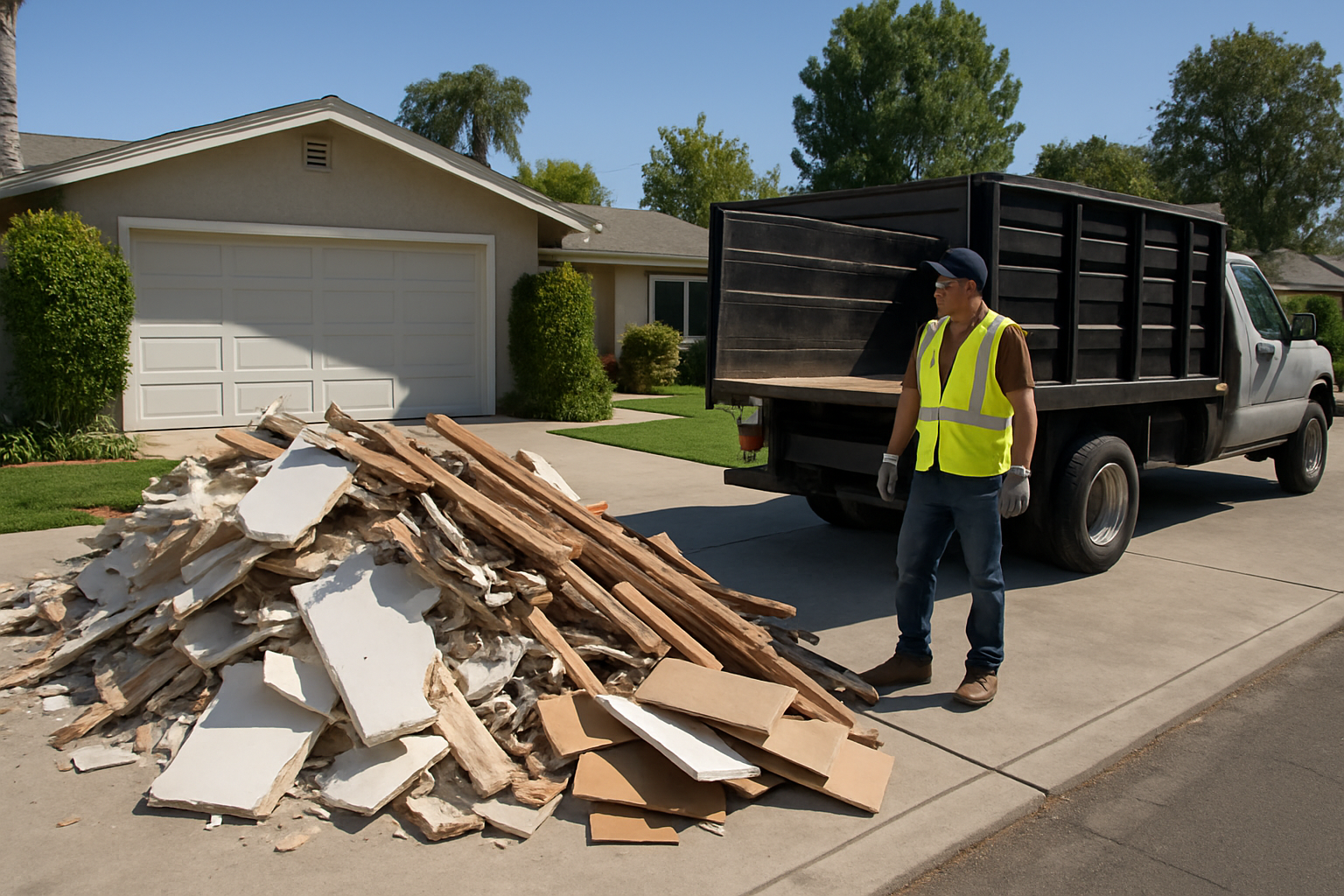
You finish the demo. The crew clears out. And suddenly there’s a pile of broken drywall, old lumber, busted tile, and miscellaneous debris sitting in your driveway or garage. The question most homeowners ask right about then: where does all this stuff actually go?
It’s a fair question — and not one that gets answered clearly very often. In San Benito County and South Santa Clara County, local disposal rules, landfill fees, and what’s actually recyclable all factor into what happens to your renovation debris after it leaves your property.
This article breaks down the two things that matter most: what kinds of materials go where, and what your hauler should be doing with them. If you understand those two things, you’ll know whether the crew you hired is handling the job responsibly — or just burying everything at the dump.
Where Construction Debris Actually Ends Up
Most renovation debris doesn’t have one destination — it gets split based on material type. A responsible hauler is sorting as they load, or sorting at the facility afterward.
Here’s how the main categories break down:
- Drywall (gypsum): Often accepted at C&D (Construction and Demolition) recycling facilities. Gypsum can be reprocessed into new wallboard. Not everything accepts it, but it shouldn’t automatically go to landfill.
- Clean wood and lumber: Untreated wood can go to a green waste or wood recycling facility. Painted or treated lumber typically goes to landfill.
- Concrete and masonry: Heavy but highly recyclable. Crushed concrete gets reused as road base and fill. Most concrete recyclers in the region accept clean loads.
- Metal: Copper pipe, steel beams, aluminum framing — almost always salvageable. Scrap metal has value, and a good hauler knows it.
- Mixed debris: When materials are tangled together — insulation wrapped in drywall wrapped in cardboard — the whole load often ends up at a transfer station or landfill because sorting becomes impractical.
The where construction debris actually goes after a remodel is more nuanced than most people expect. The hauler’s practices — and their disposal connections — make a real difference in the outcome.
What the Landfill Actually Costs — and Why It Affects Your Quote
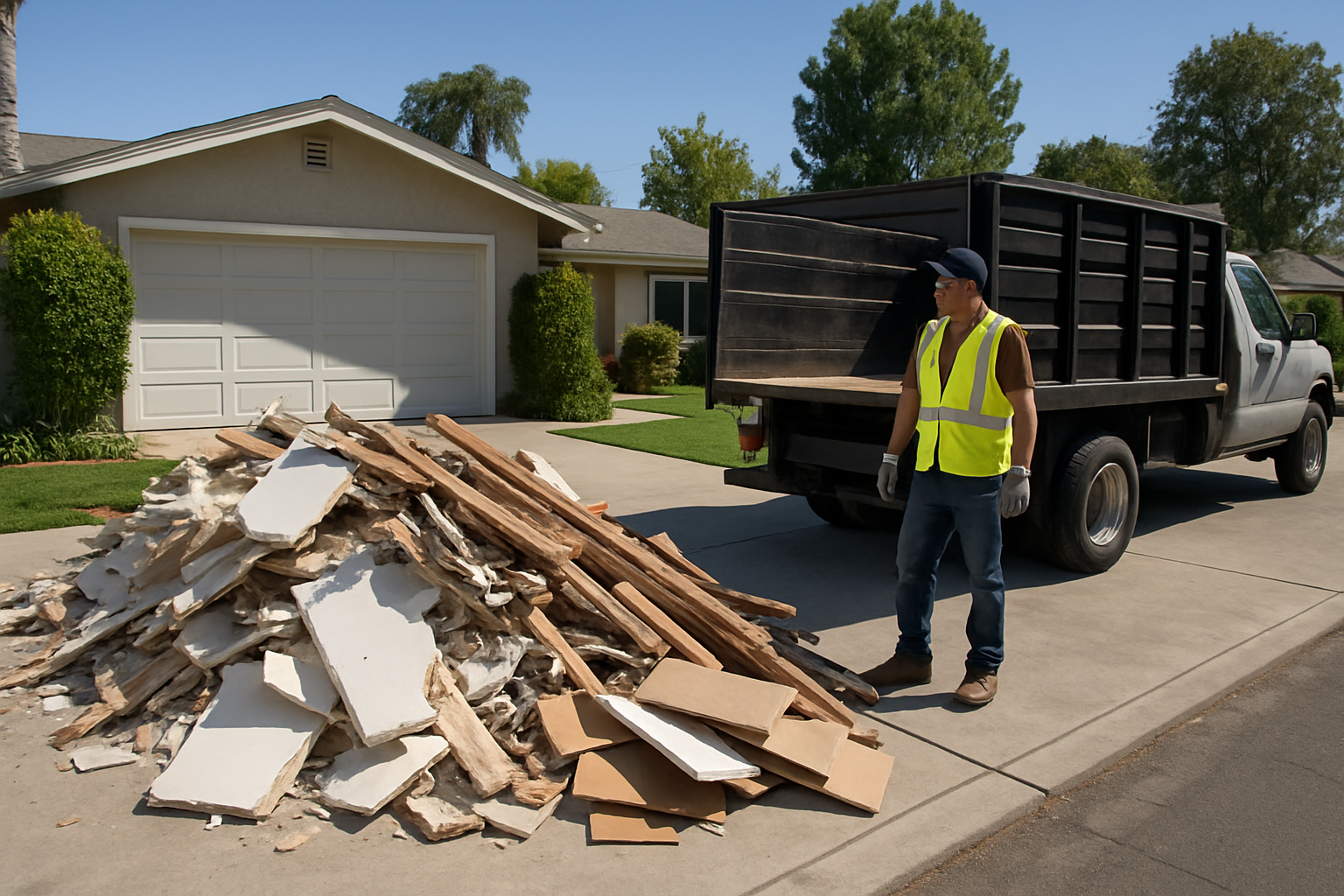
Landfill tipping fees are a real line item. In this region, John Smith Road Landfill in Hollister handles a lot of San Benito County disposal. Tipping fees there have risen steadily, and in 2025–2026 most haulers are paying $60–$90 per ton for mixed C&D debris, depending on load composition and current rate schedules.
That fee flows directly into what you pay for debris removal. A hauler quoting you a flat rate for a full truck of demo debris is already calculating those tipping costs into their number.
A few things that affect final disposal cost:
- Weight of materials — concrete and tile are extremely heavy; drywall is lighter but bulky
- Whether the load is sorted or mixed — clean, separated loads often get lower rates at recycling facilities
- Distance to disposal site — a crew driving from Hollister to a recycling facility in Gilroy adds fuel and time
- Current landfill fee schedules — these change, and higher landfill fees in 2026 are already affecting pricing across the region
If a quote seems unusually low, it’s worth asking how disposal fees are being handled — and whether they’re included or billed separately afterward. Hidden fees in hauling are common in this industry, and debris disposal is one of the most frequent places they show up.
Common Renovation Materials: Where They Go and Rough Weight
Use this as a quick reference when estimating what your renovation debris includes. Weight and destination affect both hauling logistics and your final cost.
| Material Type | Typical Destination | Approx. Weight per Unit |
|---|---|---|
| Drywall / Gypsum | C&D recycler or landfill | ~2 lbs per sq ft |
| Untreated lumber | Wood recycler or green waste | Varies widely |
| Painted/treated wood | Landfill | Varies widely |
| Concrete / Masonry | Concrete recycler | ~150 lbs per cubic foot |
| Scrap metal (pipe, framing) | Scrap yard / salvage | Heavy but high value |
| Roofing shingles | Landfill (most cases) | ~235 lbs per square |
| Mixed insulation + drywall | Transfer station / landfill | Light but bulk-heavy |
| Tile / ceramic | Landfill | ~6–8 lbs per sq ft |
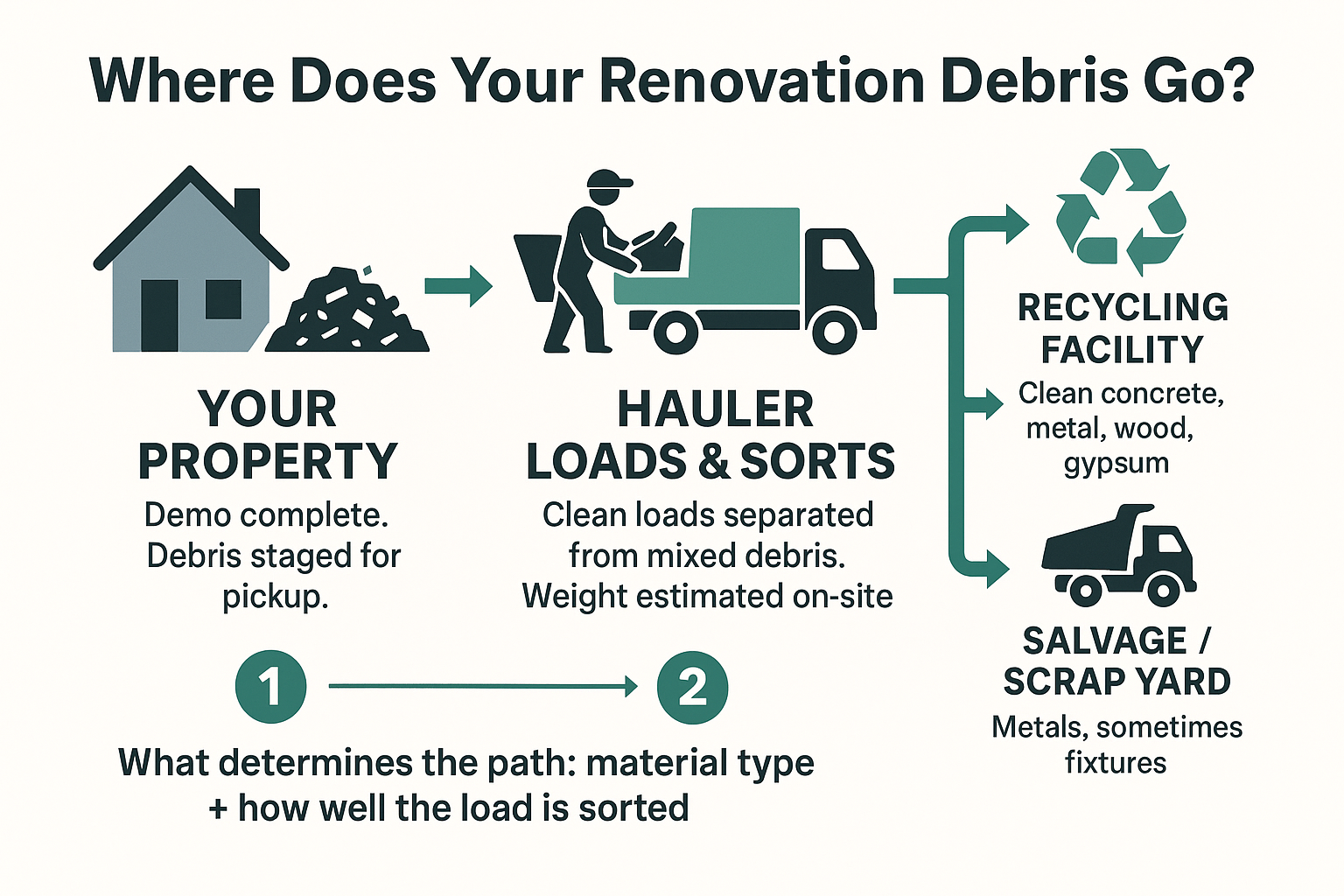
The Path Construction Debris Takes After a Renovation
This shows the three main routes debris takes from your property to its final destination — and what determines which path it follows.
What a Good Hauling Crew Actually Does With Your Debris
There’s a difference between a crew that shows up, loads everything into one pile, and dumps it — and one that’s thinking about what’s in that pile before it goes on the truck.
A crew worth hiring will:
- Identify any metal or salvageable materials before loading
- Separate concrete from mixed debris when it’s practical to do so
- Know which local facilities accept which materials
- Give you a disposal breakdown if you ask for one
- Not charge you extra for things they recover value from at the scrap yard
For larger renovation jobs — a full kitchen gut, a bathroom demo, or a whole-room addition teardown — volume and weight matter a lot. One truck may not be enough. Whether one truck is sufficient for a large cleanout depends on how much material is involved and what the mix looks like.
And if debris has been sitting for a while — especially in a garage or outside where moisture gets in — the job gets more complicated. Wet drywall gets heavier and starts breaking apart. Lumber warps. Some materials that would have been recyclable become mixed-waste problems. Letting renovation junk sit too long is one of those things that seems harmless until it doubles the work.
What Contractors and Homeowners in Gilroy and Hollister Should Know
If you’re managing a renovation project in Gilroy, the City of Gilroy Building Division can require a waste diversion plan for certain permitted projects — meaning you may need to document how debris was disposed of before your permit closes out. This is more common on larger remodels and additions than on minor demo work.
In Hollister and unincorporated San Benito County, San Benito County Integrated Waste Management sets the disposal policies and tracks diversion rates at the county level. Contractors working on permitted projects in the county should verify disposal documentation requirements with their permit office before the job wraps.
For homeowners, the practical concern is simpler: make sure your hauler is licensed, carries insurance, and can tell you where your debris is going. That last part matters if you’re ever asked to provide disposal documentation for a permit closeout — or if you just want to know your debris isn’t being illegally dumped on a rural road outside town.
What separates a reliable hauling crew from a bad one comes down to a few basics: clear pricing, real disposal practices, and a crew that actually shows up when they say they will.
Frequently Asked Questions About Construction Debris Disposal
Can I put renovation debris in my regular trash or recycling bin?
No — and most waste haulers in San Benito County and South Santa Clara County will reject bins containing construction debris. Drywall, concrete, lumber, and demo materials require separate disposal through a licensed C&D hauler or a permitted drop-off facility. Recology South Valley in Gilroy has specific bulky item and C&D programs, but they’re not designed for large volumes of renovation waste.
Does my hauler have to tell me where my debris is going?
They’re not always legally required to, but any hauler worth hiring should be willing to tell you. Ask specifically: ‘Do you sort loads before disposal, and which facilities do you use?’ If they can’t answer that clearly, that’s a signal worth paying attention to.
Is concrete from a demo job recyclable?
Yes — clean concrete is one of the most recyclable construction materials there is. It gets crushed and reused as road base, fill material, and aggregate. The catch is it has to be relatively clean — meaning not mixed with rebar, tile adhesive, or other materials in a way that makes processing difficult. A hauler with the right facility connections can usually divert clean concrete from the landfill entirely.
What about materials that might contain lead paint or asbestos?
This is outside the scope of standard junk removal and debris hauling. If you’re working on a home built before 1980 and the renovation disturbs painted surfaces or insulation materials, you need a licensed abatement contractor to assess and handle those materials before a hauling crew comes in. Standard haulers — including us — don’t handle hazardous materials, and mixing them into a regular debris load creates serious liability.
How do I know if my renovation job needs a dumpster or a hauling crew?
A dumpster makes sense when debris accumulates over multiple days or weeks and you need a staging container on-site. A hauling crew makes more sense when the work is done and you need everything gone in one shot. For most single-day demo jobs — a bathroom, a kitchen, a garage — a full-service crew is faster and often less expensive than renting a dumpster for several days. When a junk removal crew makes more sense than a dumpster breaks down exactly how to think through that decision.
Will I get charged more if my debris is heavier than expected?
Possibly — depending on how your quote was structured. Weight-based pricing means a load of concrete and tile will cost more than a load of drywall and cardboard, even if the pile looks the same size. A good hauler gives you an estimate based on a visual assessment upfront and tells you how they handle overages. Always ask before the crew loads the truck, not after.
Need Your Renovation Debris Hauled in Hollister or Gilroy?
MG Transportation & Hauling handles construction debris removal throughout San Benito County and South Santa Clara County — with upfront pricing, no hidden disposal fees, and a crew that handles the heavy work from start to finish. If you’ve got demo debris sitting and need it gone, call (831) 297-1972 or visit mgtransportationhauling.com/ to get a quote.
