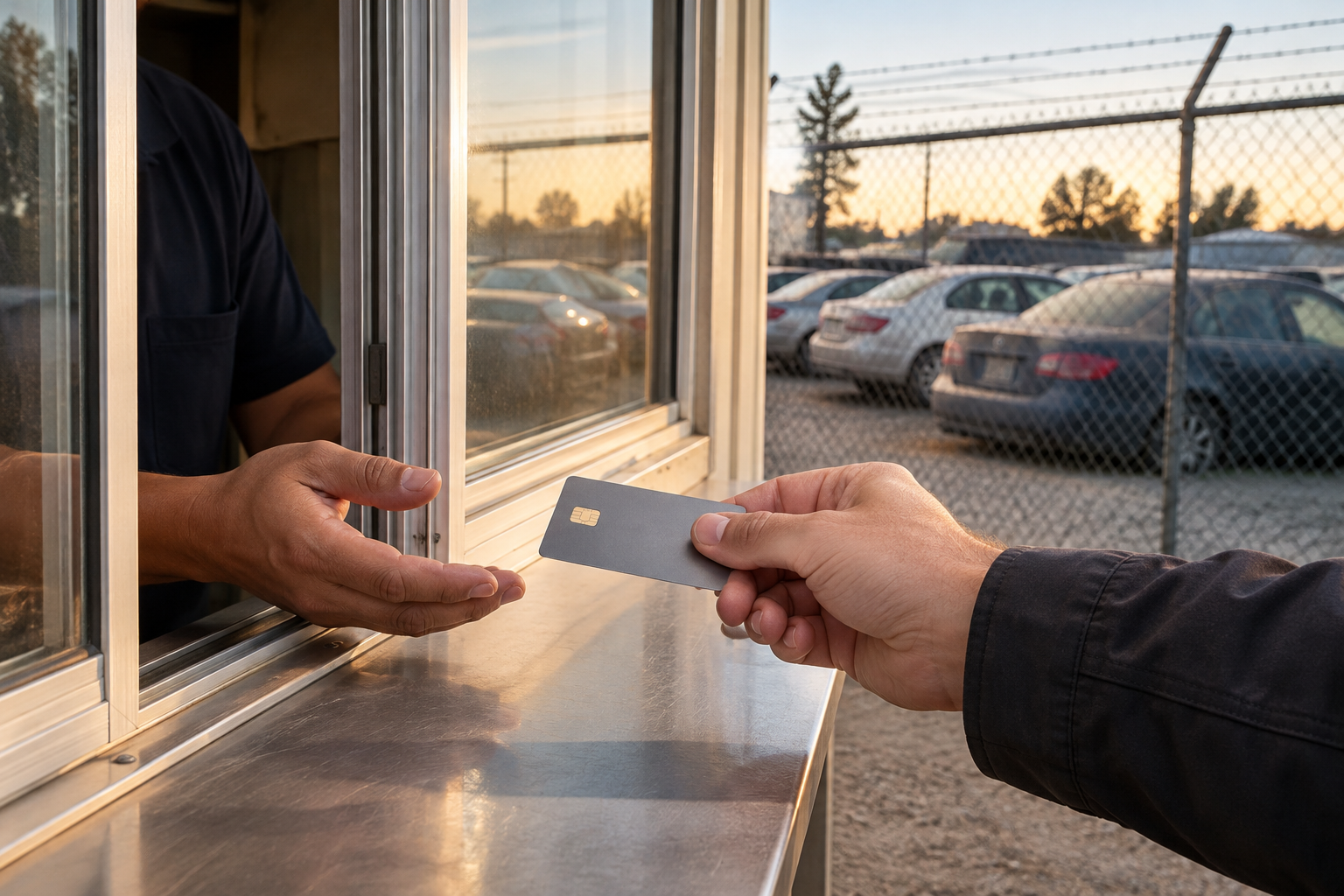
Direct Answer: Starting January 1, 2027, California impounding agencies and storage facilities must accept a valid bank debit card for towing and storage fees, without charging a fee for using it.
Almost every property cleanout I get called out to in Hollister, Gilroy, and over toward Salinas has one thing sitting in the way. A car that has not moved in years. Flat tires, dead battery, sometimes no plates on it at all.
If that vehicle gets towed before you deal with it, the problem changes shape. Now you are paying someone else to store it, and you are standing at a counter trying to figure out what they will take as payment. A new state law fixes part of that starting January 1, 2027.
My honest take after years of pulling dead vehicles off properties around Monterey County and San Benito County: the debit card rule is real help, but it does nothing to slow the daily storage clock. If a car on your property does not run, getting it gone before anyone tows it is almost always the cheaper path.
What the California tow yard debit card law 2027 actually requires
The change comes from AB 2437, which was enrolled on September 4, 2026. Independent towing trackers report it as enacted state law effective January 1, 2027, and GovBuddy’s bill page lays out what it does.
Here is the short version of what the bill covers:
- An impounding agency or storage facility must accept a valid bank debit card for towing and storage fees
- They cannot charge a fee for taking that debit card
- They are barred from demanding documents beyond what the law requires before releasing a vehicle
- An impounded vehicle can be released to the legal owner or their agent after 30 days, as long as all towing and storage fees are paid and required documents are presented
- Current registration must be presented before the vehicle is released to the registered owner
That last line matters more than people expect. Plenty of the cars I see parked behind a Hollister garage have been off registration for five or six years.
So the law smooths out payment at the window. It does not hand you a free pass on paperwork, and it does not reduce what the yard charges you.
The daily clock is the part that hurts
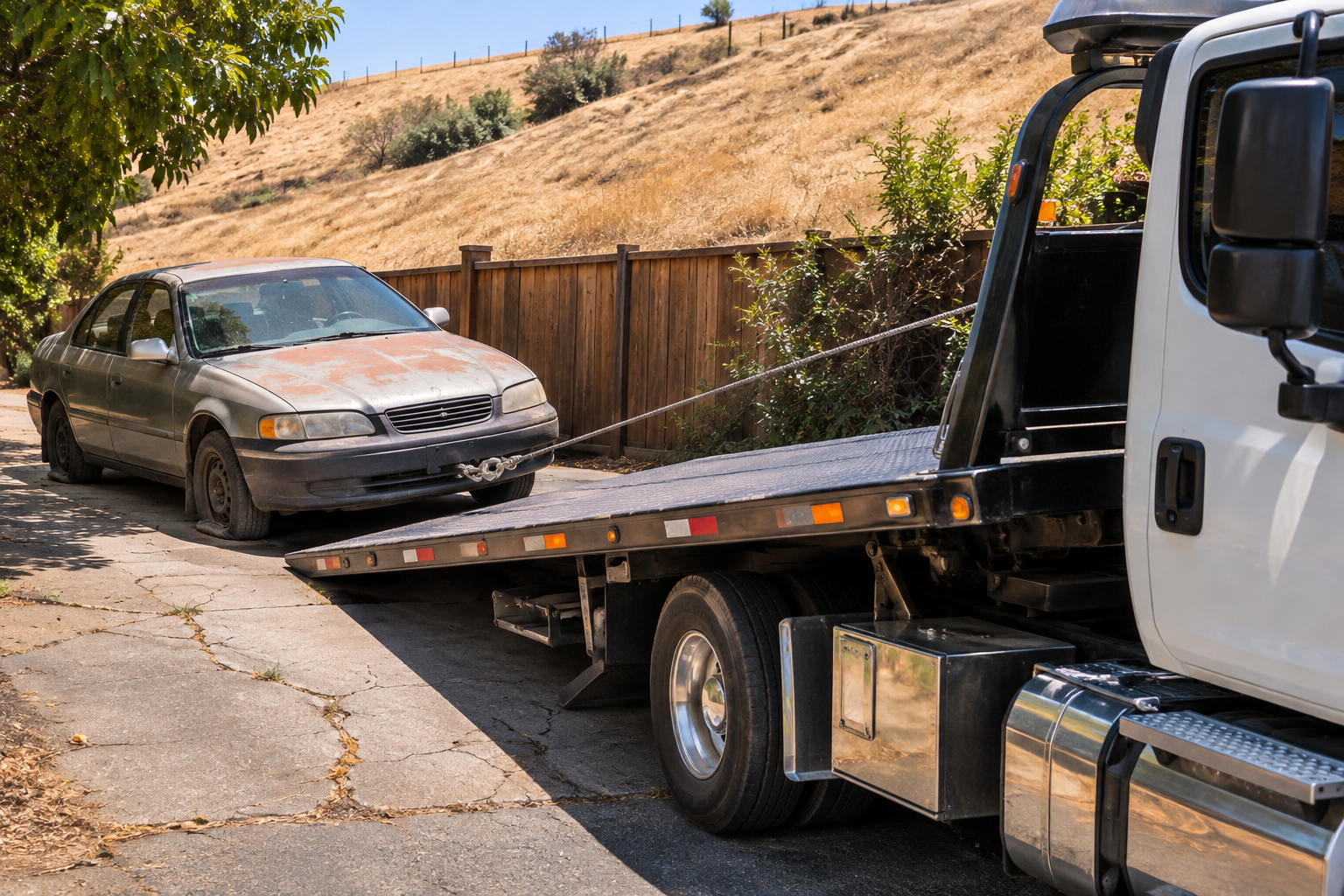
Towing is usually a one-time charge. Storage is not. Storage is billed by the day, and it keeps running whether you are ready to deal with it or not.
Rates vary a lot by city and by yard, so I am not going to pretend there is one number for Monterey County. As one public data point from a different market, a City of San Jose fee schedule back in 2019 put outdoor storage in the range of roughly $87.50 to $90 a day to match CHP San Jose rates. Local yards set their own schedules, and the only way to know yours is to ask them directly.
Run that kind of daily rate out two or three weeks and the storage bill can pass what the car is worth. I have talked to people who ended up paying several times the value of a vehicle they never wanted in the first place.
That is why the 30-day release provision cuts both ways. It gives a legal owner a clear path to get the car back, but every one of those days is a billed day.
If the vehicle is genuinely junk, the math usually points one direction: handle it on your own schedule, from your own driveway, before a tow ever enters the picture.
What changes at the counter on January 1, 2027
Here is a simple side by side of the practical difference for someone picking up an impounded vehicle in California.
| At the tow yard | Before January 1, 2027 | Starting January 1, 2027 |
|---|---|---|
| Debit card accepted for towing and storage fees | Varied by facility; some took cards, some pushed cash | Must accept a valid bank debit card |
| Extra fee for using a card | Sometimes added on top of the bill | Cannot charge a fee for the debit card |
| Paperwork demanded at release | Requests sometimes went past what the law called for | Barred from demanding documents beyond what the law requires |
| Release to legal owner or their agent | Depended on the facility’s handling | Allowed after 30 days with all fees paid and required documents presented |
| Registered owner picking up the car | Varied | Must present current registration |
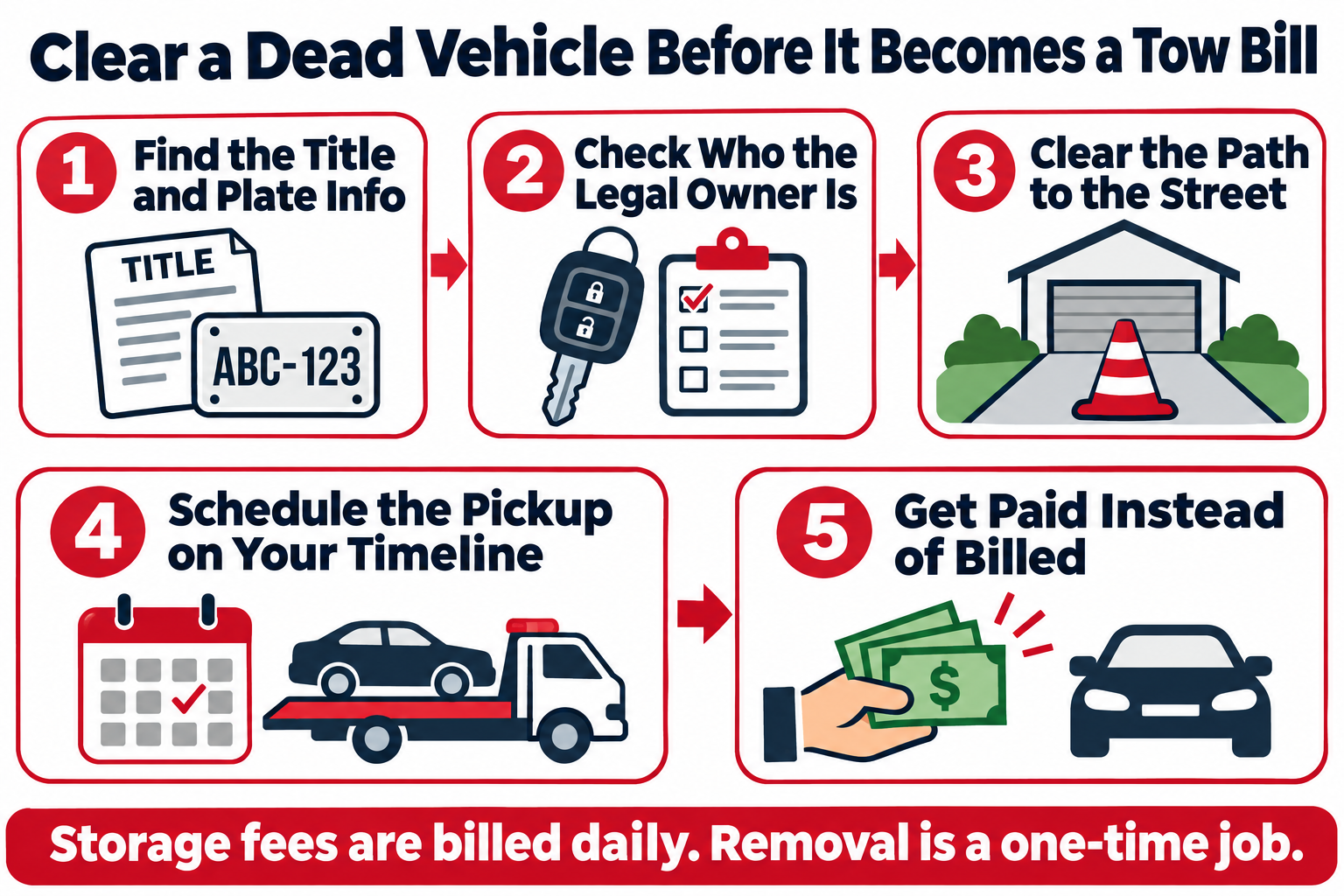
The cheaper path: handle the vehicle before a tow happens
This is the order I walk people through when there is a dead vehicle sitting in the way of a cleanout.
Estate cleanouts are where this comes up most
The calls that stick with me are the estate ones. Someone is handling a parent’s property from out of the area, there is a vehicle on the lot, and nobody is sure whose name is on the title.
One caller told us flat out that no other hauler would take the oversized vehicle she needed gone. That is a common story. Big, awkward, or unregistered vehicles get declined, and the family is left with a car that is slowly becoming someone else’s billing problem.
If you are in that spot, three things are worth doing before anything else:
- Track down the title or registration paperwork while you are already going through the house
- Write down the VIN and plate, even if the plate is expired
- Figure out whether you are the registered owner, the legal owner, or acting as an agent for the estate
Under the new rule, that agent language matters. A legal owner or their agent can get a vehicle released after 30 days with fees paid and required documents in hand.
Same logic applies to larger stuff parked on a property. If there is an old trailer or motorhome in the mix, there is now new state money for hauling off abandoned RVs that is worth knowing about before you make any decisions.
What a junk car pickup actually looks like here
When we pull a junk car off a property in Hollister or Gilroy, the customer does not lift anything. Our crew handles the loading, the vehicle gets disposed of properly, and we pay cash on the spot for it.
Most of these happen alongside a bigger job. The car is parked in front of the garage, and the garage is the real project. If that sounds familiar, clearing a garage out usually goes faster once the vehicle is out of the way.
A few things that shape how a pickup goes:
- Whether the vehicle rolls and steers, which affects how it gets loaded
- How much clearance there is between the car and the street
- Whether you have title paperwork on hand
- What else on the property is going at the same time
Pricing depends on the vehicle, the access, and what else is in the load, so an exact number comes from a quick look or a few photos. Free estimates are standard on our end.
And if the cleanout includes construction material or demo debris, keep in mind that dumping concrete or drywall in the wrong spot carries real penalties now. The John Smith Road Landfill and San Benito County Integrated Waste Management handle local disposal, but the rules differ by material.
Frequently Asked Questions About the 2027 Tow Yard Debit Card Rule
Does the tow yard have to take my debit card for the whole bill?
Under AB 2437, an impounding agency or storage facility must accept a valid bank debit card for towing and storage fees, and they cannot charge you a fee for using it. That takes effect January 1, 2027.
What if the car belonged to a relative who passed away?
The law allows release to the legal owner or their agent after 30 days, as long as all towing and storage fees are paid and required documents are presented. Estate situations get complicated fast, so talk to the DMV or an attorney about what documents apply to your specific case before you drive to the yard.
Can you take a car that does not run and has no keys?
Usually yes. Our crew handles all the loading, and most of the vehicles we pick up have not started in years. Tell us on the call whether it rolls and steers and how close it sits to the street, and we will know what to bring.
Do you actually pay for junk cars, or is it a removal fee?
We pay cash on the spot for junk cars. The amount depends on the vehicle, so we quote it after a quick look or a couple of photos.
I am clearing a rental before new tenants move in. Should I rent a dumpster or book a full-service pickup?
If the work is spread over a few days and you have people helping, a dumpster usually wins. If you want it gone in one visit without touching any of it, full-service removal makes more sense. Either way, check where a rented dumpster can legally sit before delivery day so placement does not become its own headache.
Got a vehicle in the way of a cleanout?
If there is a car, trailer, or pile of junk holding up a property in Hollister, Gilroy, Salinas, or the surrounding Monterey County and San Benito County area, it is worth handling before it turns into someone else’s daily storage bill. We give free estimates, and photos over the phone are usually enough to get you a number. Call (831) 297-1972 or visit mgtransportationhauling.com when you are ready to talk it through.
