
Direct Answer: Sheds under 120 square feet, decks 30 inches or lower, and fences under seven feet usually come down permit-free. Demolishing a whole building needs a permit. Your city’s building division has the final say.
You walk into the backyard, look at the shed that has been leaning for two years, and think: I could knock that down in a weekend. Then a small voice asks whether the city cares.
Most homeowners around Hollister, Gilroy, and the broader Monterey County, CA area assume small teardowns are free game. Some are. But here is the part that trips people up: size is not really the deciding factor. What the structure is connected to is.
A shed sitting on skids is a different job from a detached garage with power, a concrete slab, and a water line running to it. I’ll give you the actual numbers so you can walk outside with a tape measure, then show you the checklist that decides whether this is a Saturday project or a permitted one.
Start With a Tape Measure: What Usually Comes Down Without a Permit
Cities on the Central Coast publish exemption lists, and they are more specific than most people expect. The City of Hollister’s building page spells out several that cover common backyard structures.
Under those local rules, a building permit is generally not required for:
- A stand-alone deck 30 inches or less above grade and not built over a basement
- A fence seven feet high or lower
- A playhouse or storage shed no more than 120 square feet
So a 10 by 12 shed is 120 square feet and lands right at the line. A 12 by 12 does not.
The same page is clear that complete demolition and relocation of buildings does require a permit. A detached garage is a building. A shed on a slab with a roof structure can be treated as one too, depending on how it was built and permitted originally.
One more thing worth reading twice: the exemption list says other divisions or agencies may still need to review the work. Being exempt from a building permit is not the same as being cleared to start. Planning, zoning, or a historic overlay can all have a say.
In Gilroy, the Building Division on Rosanna Street tells residents to call 408-846-0451 when they are not sure, and permits there get filed through the city’s online GO Permit system. That one call settles the gray areas faster than an afternoon of searching.
The Real Dividing Line: What Is the Structure Connected To?
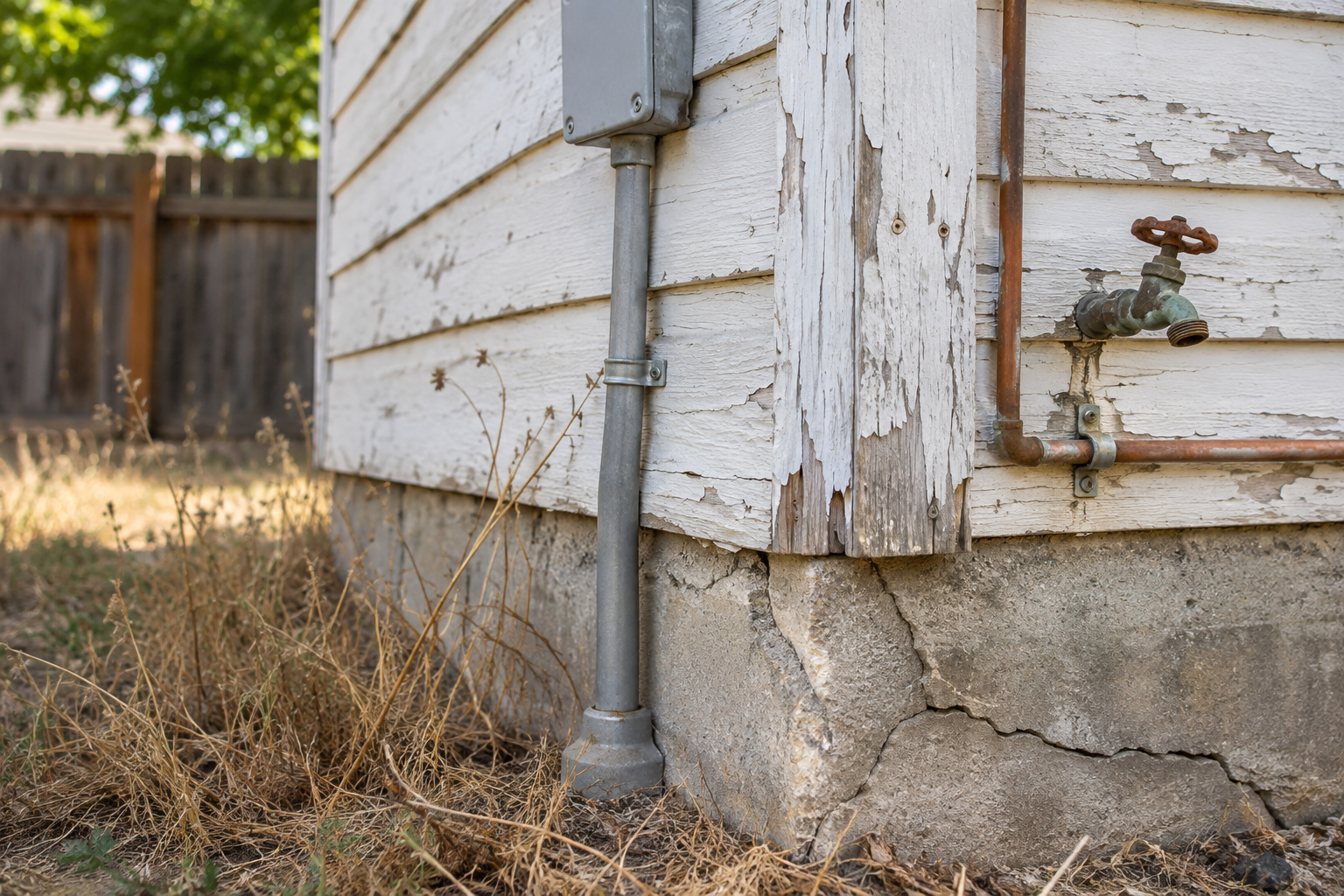
Before anyone swings a hammer, walk the structure and look for attachments. This is the checklist I run through on a walkthrough, and it is close to what a permit desk will ask you.
- Power. Any outlets, lights, a subpanel, or conduit running from the house
- Water. A hose bib, a sink, or a line buried toward the structure
- Gas. A line to a heater, dryer, or shop appliance
- A slab or footings. Poured concrete changes the job and the debris
- Sewer or septic. Any drain line at all
- A shared wall or roof tie-in with the house
Hit any one of those and you are almost certainly in permit territory, and you need utilities disconnected properly before demolition starts.
Here is the part that costs people the most later. Gilroy’s building policy states that a demolition permit must be closed out and finalized before inspections happen on any permit issued afterward. Tear down the old garage quietly, then apply to build an ADU or an addition on that spot, and the new permit can stall on a teardown you never recorded.
The same policy notes that if an inspector sees work being performed that requires a permit and none was issued, a stop work order gets issued. That is the worst possible timing, usually with a contractor already scheduled. I’ve written more about the debris paperwork that holds up a permit close-out if you are planning to rebuild on the same footprint.
Quick Reference: Common Backyard Teardowns
Use this as a starting point, then confirm with your city’s building division. Rules differ between San Benito County, Gilroy, and the unincorporated parts of Monterey County, CA.
| Structure | Permit Likely? | What Drives the Debris Load |
|---|---|---|
| Storage shed, 120 sq ft or under, on skids | Usually no | Mixed wood, shingles, fasteners, light hardware |
| Shed over 120 sq ft or on a slab | Often yes | Lumber plus broken concrete, which is heavy |
| Deck 30 inches or less above grade | Usually no | Decking, framing, and concrete pier footings |
| Raised deck over 30 inches or over a basement | Yes | Framing, posts, railings, deep footings |
| Detached garage with power or a slab | Yes | Framing, roofing, slab, stucco or siding, utility work |
| Fence seven feet or lower | Usually no | Posts, panels, concrete post bases |
Five Checks Before the First Swing
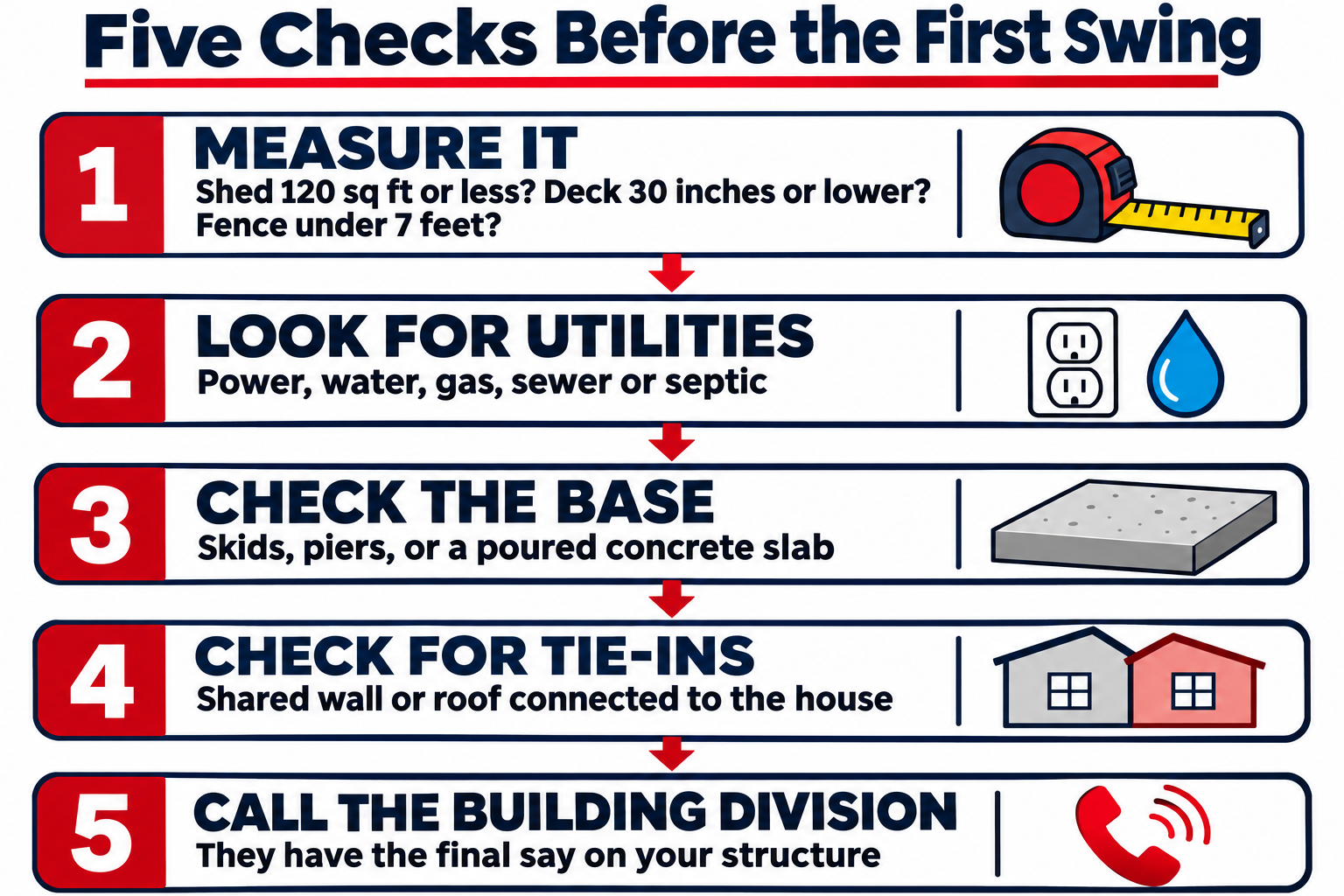
Run this quick pass on the structure before you book anything. It answers most of what a permit desk will ask you.
The Debris Pile Is the Part People Underestimate
Permits get all the attention. The budget usually breaks on the pile.
A 10 by 12 shed or a 200 square foot deck does not come apart into a neat stack. You end up with mixed wood, roofing, concrete footings, nails, screws, and whatever was stored inside. A half-ton pickup will not move that in one or two trips. It will not move it in five.
Roll-off boxes in this market commonly come in 10, 15, and 25 yard sizes. One local customer rented a 25 yard box just to handle a garage and backyard cleanup, which gives you a real sense of scale before you assume a 10 yard will do it.
There is also a disposal path most people do not know about. Hollister publishes pre-construction and post-construction solid waste diversion plan forms along with a list of construction and demolition debris accepting facilities in San Benito County. Teardown debris is tracked differently than household junk, and sites like the John Smith Road Landfill handle it on their own terms.
That matters for cost. Mixed construction and demolition debris is usually billed differently than a couch and some boxes, often by weight and material type. Costs vary quite a bit by load, but a quote should spell out what the disposal side includes rather than burying it.
So the honest fork in the road is this:
- Rent a box and do it yourself. Cheaper on paper, spread over several days, and all the loading is on you. Our rentals start at $500 for a 2-day rental, with same-day or next-day drop-off when the schedule allows.
- Have a crew take it down and haul it in one pass. Higher line item, one day, nothing left in the yard.
If you go the box route, know where a rented dumpster can legally sit before it gets delivered. Driveway versus street is its own set of rules.
October Is the Smart Month for This, and January Is Not
This is real timing logic, not a sales deadline.
The Hollister area gets close to 15 inches of rain a year, and almost all of it falls between late fall and early spring. December through February is the wettest stretch.
Wet wood, drywall, and old carpet weigh considerably more than dry material. When disposal is billed by tonnage, a soaked pile costs more to get rid of than the same pile did in October. Mud also turns a backyard into a slow, messy work site.
There is a scheduling piece too. Search demand for demolition help around the Monterey and Salinas region sits low in October and climbs roughly tenfold by January, when everyone’s New Year project list hits at once. Crews, boxes, and equipment all get tighter.
If the shed has been bugging you for a year, the dry fall window is the easy call. Same thinking applies to what to clear out before the December rain.
Who Actually Signs the Permit
A lot of callers assume the crew handles the paperwork. Usually it does not work that way.
The permit applicant is typically the property owner or a licensed contractor acting on their behalf. Gilroy’s building permit application requires the applicant to state under penalty of perjury that they are either licensed under the Contractors’ State License Law or qualify for an owner-builder exemption, and to certify they own the property or are authorized to act for the owner.
If you have never pulled a permit, that sounds intimidating. It is less so than it reads. The building division asks about structure size, what the structure is connected to, and where the debris is going, which are the same three things a capable crew asks during a walkthrough.
And the building division is the authority on your specific structure, not a blog post and not a contractor’s opinion. One call before the work starts is worth more than any of it.
What a Finished Teardown Site Should Look Like
A teardown is not done when the structure is on the ground. It is done when the ground is clean.
That means no scattered lumber, no nails in the dirt where kids and dogs walk, no concrete chunks left in a corner for later, and a driveway you can back a car into. One customer put it simply: “They hauled away dirt we needed removed and cleaned up our walkway and driveway before they left.”
We handle demolition from small structures up through larger projects and haul the debris with the same crew, which is the part homeowners usually have to line up separately. When the teardown and the hauling are two different phone calls, the pile tends to sit for a week while schedules get sorted.
If you want more on how that handoff usually goes wrong, I covered who handles the debris after a demolition project in a separate piece.
Frequently Asked Questions About Shed, Deck, and Garage Teardowns
Do I need a permit to tear down a shed in my backyard?
Often no, if it is 120 square feet or smaller and has no utilities running to it. Once it is bigger than that, sits on a slab, or has power or water, it starts looking like a building, and complete demolition of a building requires a permit. Call your city’s building division with the dimensions and the utility list and they will tell you in one conversation.
What happens if I already tore something down without a permit?
It does not always blow up immediately. The problem usually shows up later, because a demolition permit has to be closed out and finalized before inspections happen on permits issued afterward. If you plan to build a garage, ADU, or addition on that spot, talk to the building division now rather than when the new project stalls.
How big a dumpster do I need for a shed or deck teardown?
For a small shed on skids, a 10 yard box is often enough. Add a concrete slab, roofing, or a detached garage and you are usually looking at 15 or 25 yards, because concrete and shingles are heavy and eat capacity fast. Describe the structure, the materials, and whether there is concrete, and a size recommendation is easy to make over the phone.
Is demolition debris priced the same as regular junk removal?
Usually not. Mixed construction and demolition debris often gets billed by weight and material type at the disposal facility, while household junk is more volume-based. Costs vary by load, so ask for the disposal piece to be spelled out in the quote rather than assuming it is folded in.
Can a crew pull the permit for me?
The applicant is generally the property owner or a licensed contractor acting for them, and that person signs the application under penalty of perjury. So the signature is on you unless a licensed contractor is handling the project. The good news is the information you need is the same information you would give any crew during a walkthrough.
Planning a Teardown This Fall?
If you are weighing a shed, deck, or old garage teardown anywhere around Hollister, Gilroy, or the wider Monterey County, CA area, the dry months are the easier window for it. We take on demolition from small structures up through larger projects and haul the debris with the same crew, and a walkthrough will tell you what the pile really looks like before you commit. You can reach us at (831) 297-1972 or at mgtransportationhauling.com when you want an estimate on the hauling side.
