
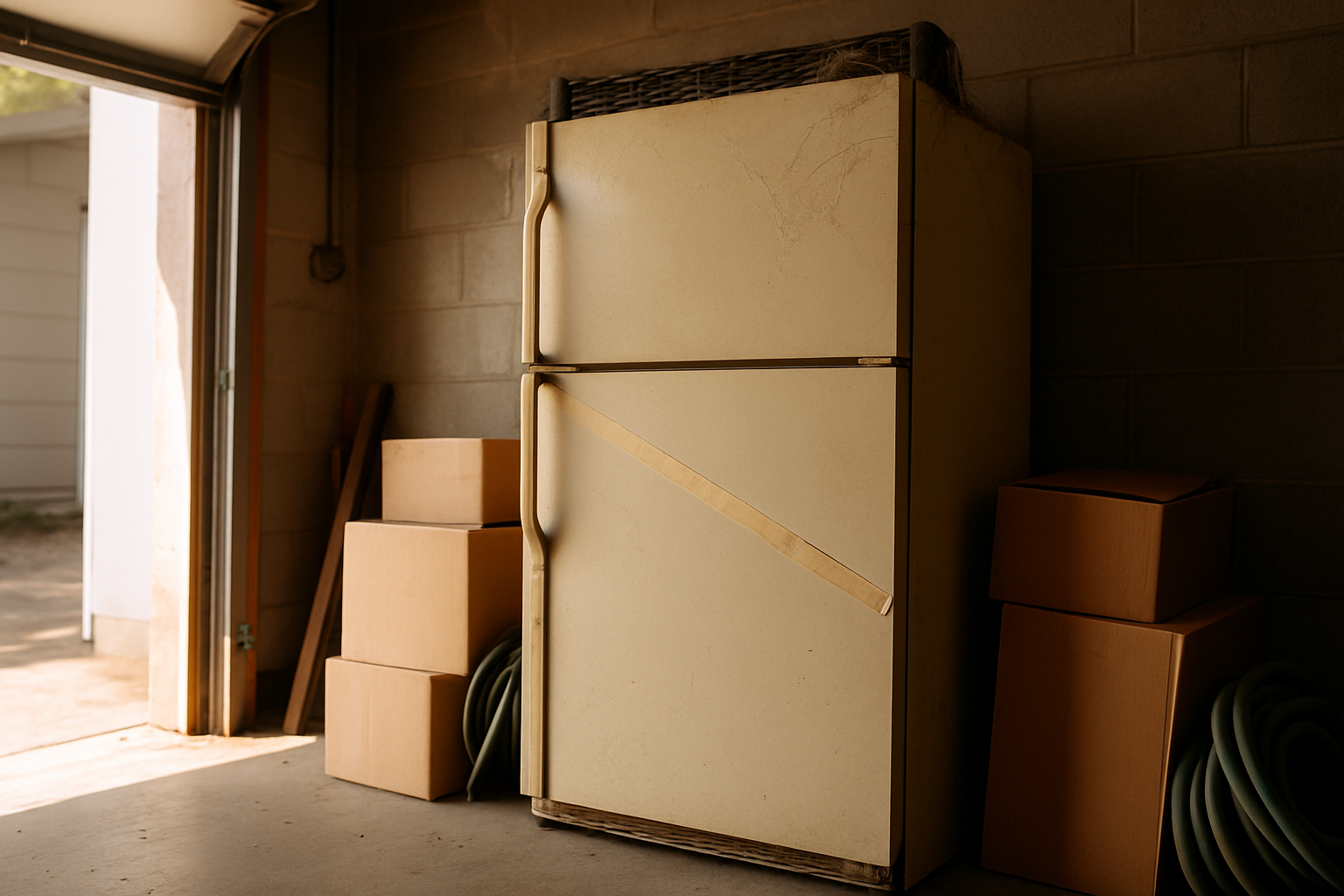
Direct Answer: Old refrigerators, freezers, and window AC units cost more to haul than furniture because they are dense, sealed with refrigerant that federal law requires be recovered, and usually parked somewhere tight.
The fridge quit years ago. Somebody rolled it into the garage or the side yard “for now,” and now there is a reason it has to go: a garage cleanout, a listing going live, a tenant turnover, or family showing up for the holidays.
Then the quote comes back and it is higher than the one for the sectional couch in the same garage. The couch is twice the size. People call me confused about that every month.
So let me walk through the actual reasons, because they are not a mystery and they are not an upsell. A refrigerator is dense, sealed, and regulated, and all three of those things cost money to handle correctly.
By the end of this you should be able to look at your own fridge, your own driveway, and get close to predicting your own number before you ever pick up the phone.
Why Appliance Removal Prices Higher Than Furniture Removal
Most people assume a hauler charges by how much room an item takes up in the truck. Volume matters, but it is not the only meter running.
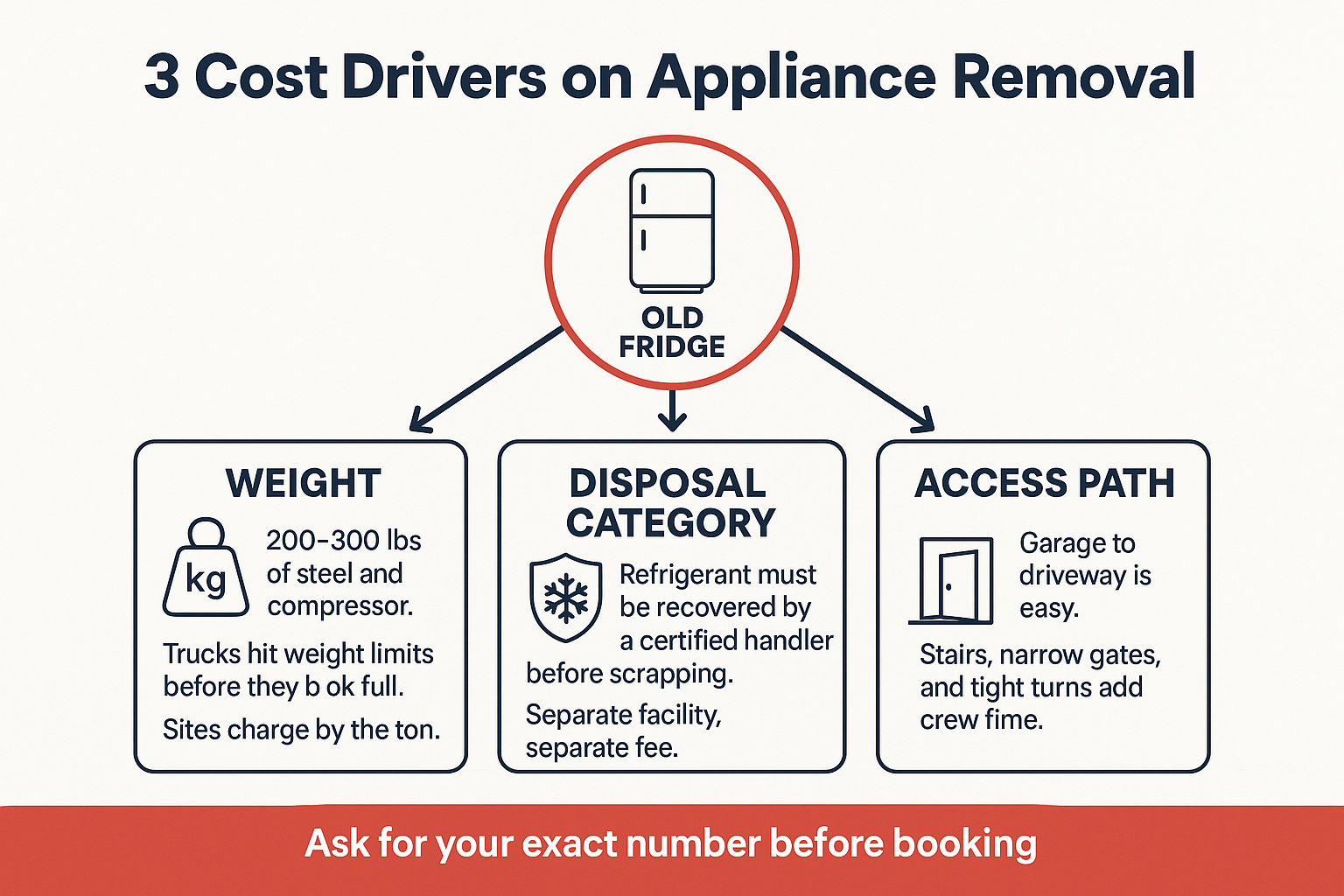
There are three things that actually move the number on a refrigerant appliance:
- Weight. A full-size fridge commonly runs 200 to 300 pounds of steel, compressor, and insulation packed into a small footprint. A truck hits its weight limit long before the bed looks full, and disposal sites charge by the ton at the scale.
- Disposal category. A couch rides a general load. A fridge, freezer, window AC, or dehumidifier has to go to a facility set up to recover the refrigerant first. That is a separate stop and a separate fee.
- Access path. Flat garage to driveway is one price. Down three back steps, through a 32-inch side gate, around a planter box, is another.
That sectional couch? It is bulky, but it is light, it comes apart, and it goes on the same load as everything else. The fridge is the opposite of that on every count.
If you want the wider version of this math, I wrote about what junk hauling actually costs in Hollister and what pushes a number up or down on any job.
The Refrigerant Rule Is Federal Law, Not a Hauler’s Preference
Homeowners ask me this one straight: “Is that a real rule, or are you just charging me extra?”
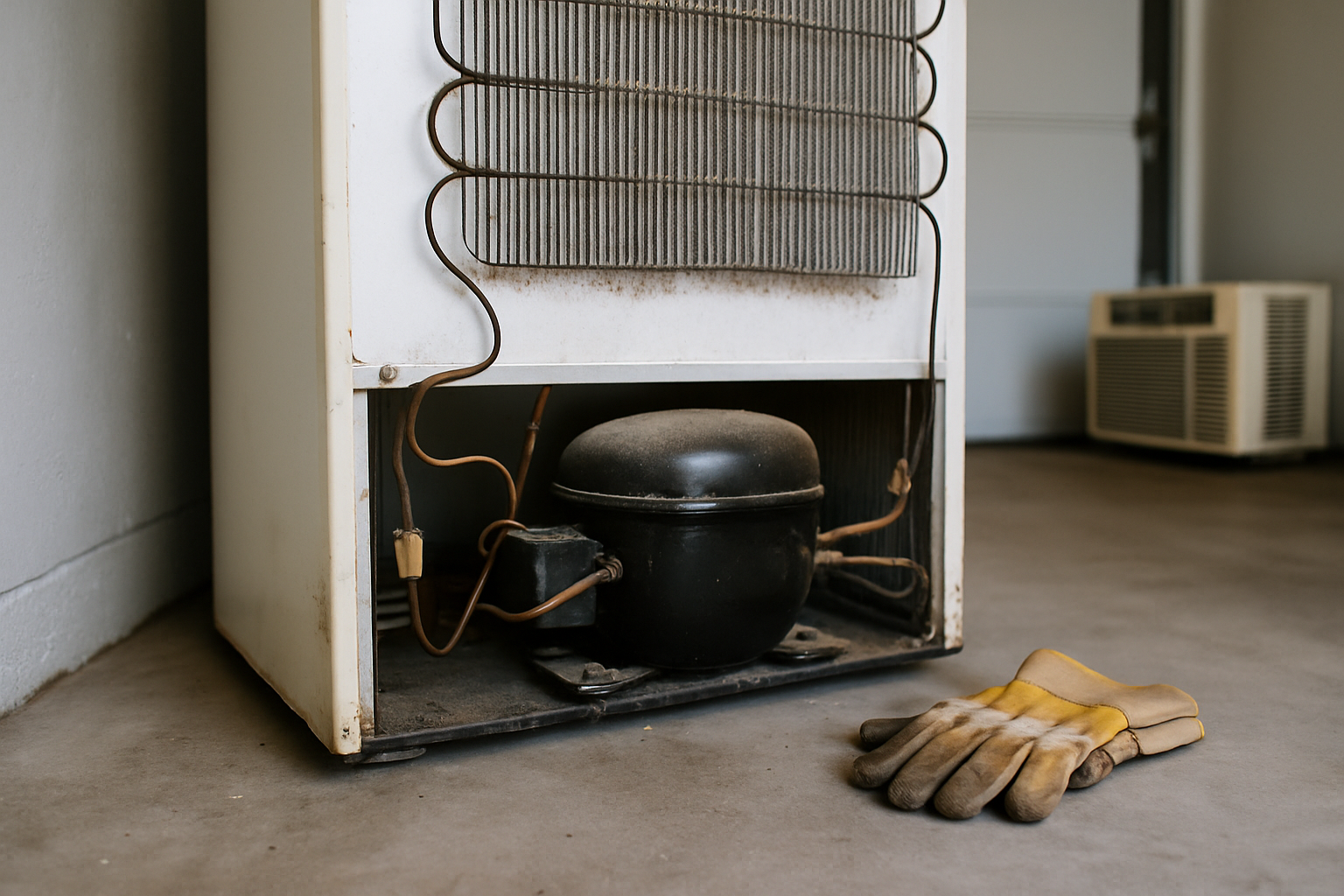
It is a real rule. Under the EPA’s Section 608 safe disposal requirements, the refrigerant inside a cooling appliance has to be recovered by a certified technician before that unit gets crushed, scrapped, or landfilled.
Here is the part that explains everything else. The last person in the disposal chain, usually the scrap recycler or the landfill, is on the hook for making sure the recovery happened. If the appliance shows up already empty, they have to keep a signed statement naming who recovered the refrigerant and when.
That is why nobody downstream will quietly take a fridge on a mixed load. They are the ones holding the paperwork.
It applies to more than refrigerators:
- Refrigerators and standalone freezers
- Window and portable AC units
- Dehumidifiers
- Wine coolers and mini fridges
It is also why a sealed appliance cannot go in a rented dumpster with the rest of the garage. If you are renting a box for a big cleanout, set the fridge aside and tell the hauler it is there. We route those units to facilities built to recover the refrigerant instead of burying them in a general load.
One more thing, and I mean this: do not cut the lines or try to drain anything yourself. That part belongs to a certified handler, and a punctured line turns a routine pickup into a problem.
What Makes One Fridge Job Cheap and Another One Expensive
Same appliance, very different jobs. This is roughly how I size one up when I pull into a driveway in Hollister or Gilroy.
| Factor | Keeps the price down | Pushes the price up |
|---|---|---|
| Location | Garage with the roll-up door open, 20 feet to the driveway | Back of the side yard, behind a gate, or down an exterior stair |
| Condition | Dry, intact, emptied out | Sat outside through winter, rusted bottom, standing water inside |
| What’s around it | Fridge alone with a clear walking path | Boxed in by stacked totes, lumber, and a lawn mower |
| The rest of the load | Fridge plus a few other items on one trip | Fridge only, which still meets the job’s floor price |
| Access width | Standard doorway or open garage | Narrow gate, tight turn, soft or sloped ground |
The Three Things That Set the Price on an Appliance Pickup
If you only remember three things before you call for a quote, make it these.
When the Free Local Programs Actually Work for a Fridge
I am not going to pretend the free programs do not exist. They do, and sometimes they are the right call. But the fine print is where a fridge trips people up.
On the Gilroy side, Recology South Valley gives residential customers two free curbside bulky collections per calendar year, and each collection is capped at two items. An appliance containing refrigerant is counted as two items. So one fridge can use up an entire collection by itself, and on-call bulky pickups carry a per-item charge with an added fee for refrigerant units.
The City of Gilroy also points residents toward the San Martin Transfer Station for drop-off. Appliance drop-off there has generally landed in the range of roughly $30 to $50 depending on the item, with refrigerant units charged extra. Those numbers shift, so call and confirm before you load anything.
In Hollister, Recology San Benito County offers residents two free bulky pickups a year, and the county runs quarterly free bulky item events at the John Smith Road Landfill with a per-household item limit and ID required.
The honest summary:
- Free route wins when it is one fridge, you own a truck or trailer, and you have no deadline.
- Free route loses when it is a fridge plus a garage full of everything else, or you have a listing, a tenant, or a move-out date.
If you are weighing a dumpster against a crew for the bigger version of that job, this breakdown of dumpster rental versus full-service removal covers the tradeoff.
What to Do Before the Truck Shows Up
The prep list for an appliance is short, but it protects two things: everybody’s hands, and the price you were quoted.
- Empty it and clean it out. Anything spoiled inside adds weight, smell, and time.
- Unplug it well ahead of pickup day if it is still drawing power.
- Tape or strap the door shut so it cannot swing open on a dolly.
- Clear the path from the appliance to the driveway. Boxes stacked in the walking lane are the single most common reason a crew takes longer than planned.
- Say up front if it has to come down stairs or through a narrow gate. Tell us on the phone, not when we arrive.
That last one matters more than people think. A surprise discovered in the driveway is how a quote and a final bill end up not matching each other, and I would rather price it right the first time.
One customer put it the way I wish every quote worked: “The service provided was excellent! They disclosed all information upfront and there were no hidden fees.” That is the whole goal. Tell us what is there, get a real number, no renegotiating on the driveway.
Why I Push People to Move This Up the Calendar
A fridge sitting in an open side yard through the rainy season gets worse, not better. Rust spreads at the base, the insulation holds water, and the shelf of boxes stacked next to it turns into waterlogged weight on the same load.
Around here, October through mid November is usually the last dependable dry stretch before the wet season sets in, and December through February are the soggiest months. Most people do not think about the garage until January, which is exactly when the weather has already made the job harder.
If your side yard has more than just the fridge in it, this guide on what to clear before the December rain covers what is worth moving now and what can wait.
No pressure tactics needed. Dry ground, dry items, and a lighter load just cost less to move than the wet version of the same job.
Frequently Asked Questions About Appliance Removal
Can I just put the old fridge in the dumpster I rented?
No, and this is the one I get asked most. Federal law requires refrigerant to be recovered by a certified handler before the unit is crushed or landfilled, and the facility receiving the load has to document that it happened. Set the fridge aside and flag it separately.
Does a window AC unit or dehumidifier count the same as a refrigerator?
Same category, yes. Window units, portable ACs, dehumidifiers, mini fridges, and wine coolers all contain refrigerant and get routed to the same kind of facility. They are lighter than a full-size fridge, so the handling cost is usually lower, but they do not ride a general load.
Why does one fridge cost close to what a small truckload costs?
Because the trip, the crew time, and the specialty disposal stop all happen whether you have one item or six. Most hauling jobs have a floor price for that reason. If you have other items in the garage, adding them to the same trip is almost always better value than a solo appliance run.
Should I drain the refrigerant or cut the lines first to save money?
Please do not. That work belongs to a certified technician, and a cut line on a unit sitting in your garage creates a problem you do not want. Leave it sealed and let the recovery happen at the right facility.
What if the fridge has been outside for years and is full of water and rust?
We still take it, but tell us ahead of time. A weathered unit is heavier, dirtier, and sometimes needs to be wrapped or handled differently so nothing drains across your driveway. Knowing before we load the truck keeps the quote accurate.
Wondering what your appliance pickup would actually run?
Appliance pickups are a routine part of the junk removal and property cleanout work we do across San Benito County, South Santa Clara County, and down into the Salinas and Monterey County area, so questions about how your specific unit gets handled are worth asking before you book anything. A crew with the right dolly, straps, and disposal connections is the difference between a 15-minute pickup and a scratched doorframe. If you want an estimate or just a straight answer about a fridge, freezer, or AC unit, MG Transportation & Hauling can be reached at (831) 297-1972 or through mgtransportationhauling.com.
