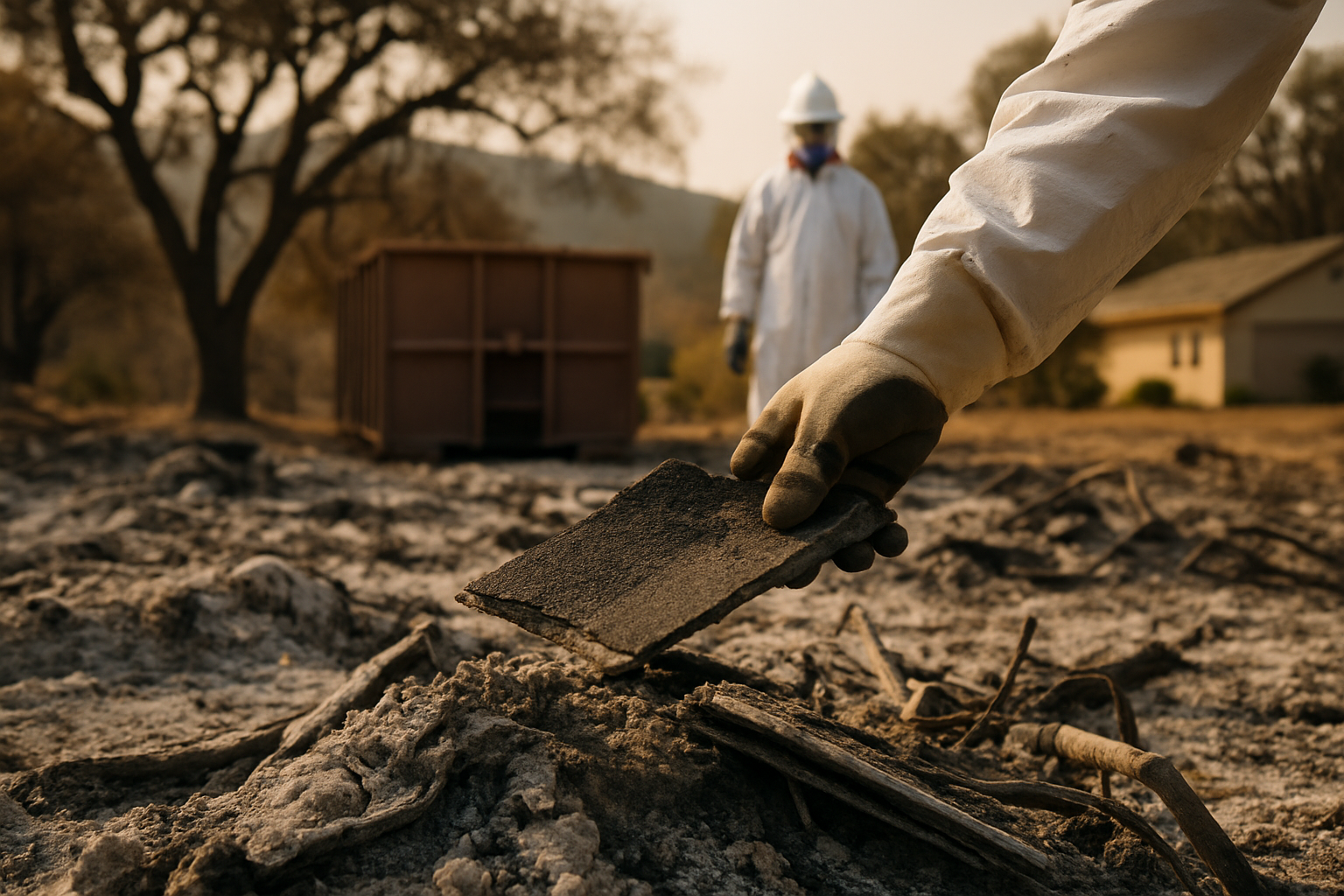
Direct Answer: Starting January 1, 2027, contractors cannot do debris removal involving hazardous materials on property damaged by a declared natural disaster unless they hold specified license classifications, passed a hazardous substance exam, and meet HAZWOPER rules.
If your house burns or floods in a declared disaster, the first instinct is to get the mess gone fast. I have watched that instinct cost people money, and starting in 2027 it can also put them on the wrong side of state law.
California just tightened the rules on who is allowed to haul fire damaged debris off a property. The change comes from SB 1263, authored by Senator Mike McGuire, which was chaptered by the Secretary of State on September 27, 2026 as Chapter 688, Statutes of 2026.
I run hauling jobs across San Benito County, Monterey County, and South Santa Clara County, so I get asked about this a lot. Below is what the law actually says, who it touches, and where normal junk hauling still applies.
What California law now says about who can remove fire damaged debris from a house
SB 1263 adds Business and Professions Code section 7058.9 to the Contractors State License Law. The measure was sponsored in partnership with the Contractors State License Board, and it takes effect January 1, 2027.
In plain terms, it bars contractors from performing debris removal involving hazardous materials on residential or commercial property that was damaged or destroyed by a declared natural disaster, unless that contractor meets all three of these:
- Holds the specified license classifications named in the law
- Has passed an approved hazardous substance certification exam
- Complies with HAZWOPER requirements, the federal hazardous waste operations and emergency response training standard
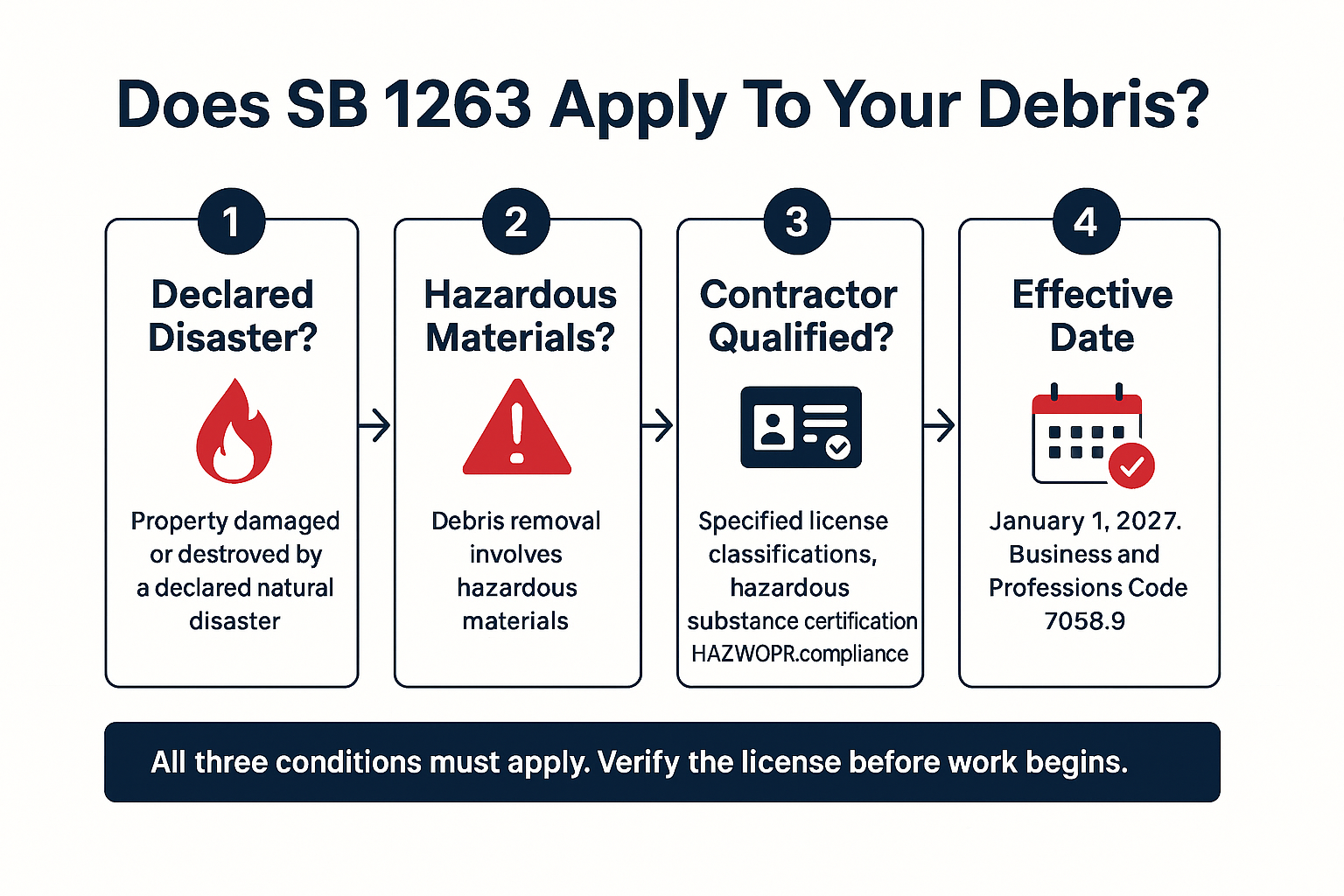
That is the whole trigger. Three conditions have to line up: a declared disaster, hazardous materials in the debris, and a contractor doing the removal.
The bill moved through the Legislature with wide support, clearing the Assembly Business and Professions Committee on a 16-0 vote according to the Office of Senator Mike McGuire. CalMatters Digital Democracy lists the bill’s final status as chaptered on September 27, 2026.
Why this matters for homeowners in San Benito and Monterey County
We sit in fire country. Grass fires move through the hills east of Hollister and along the Gabilan Range most summers, and the Monterey County side has its own history with both fire and storm flooding.
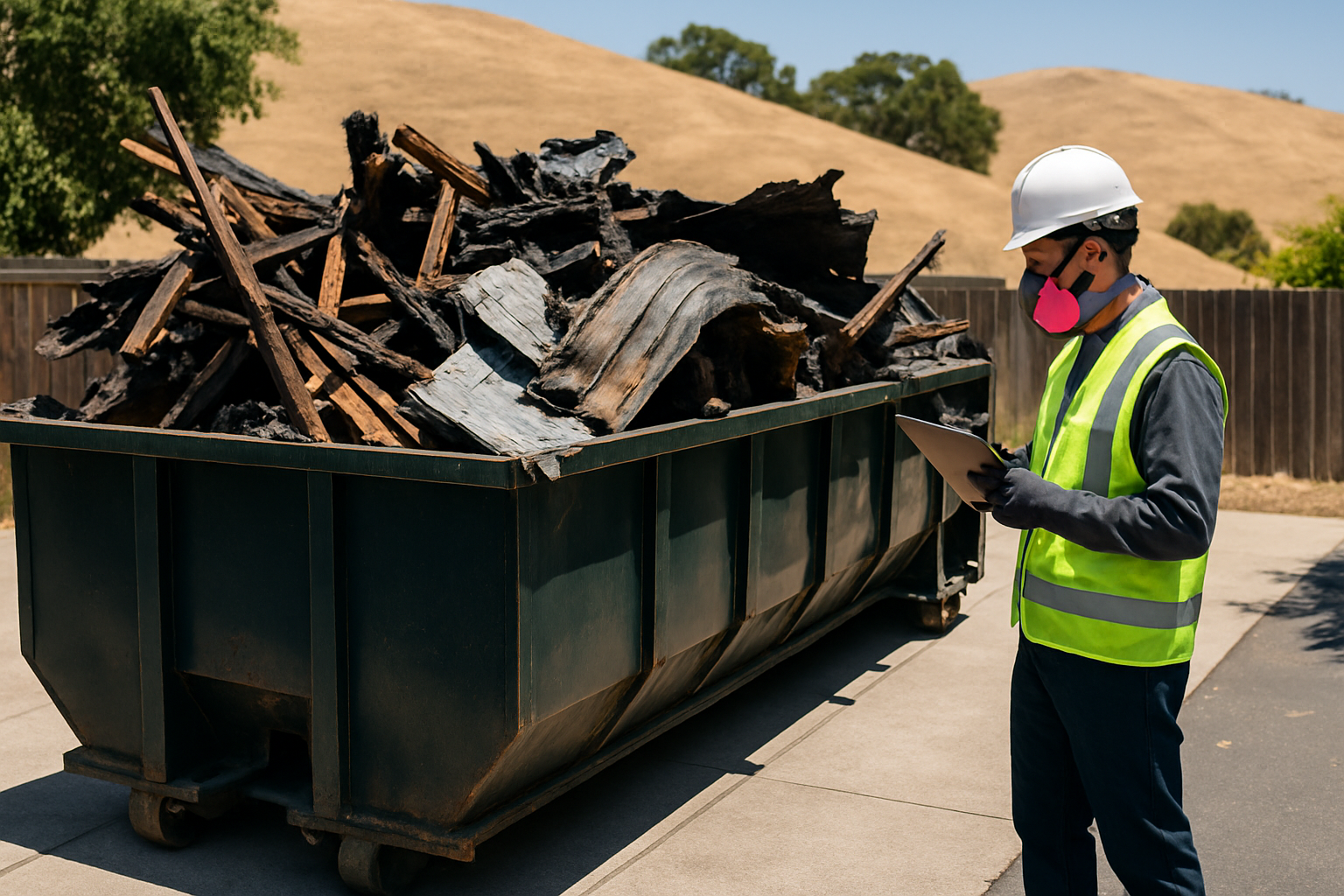
So this is not an abstract Sacramento rule. If a declared fire or flood event hits a property here, the crew you hire for ash and debris cleanup has to carry that licensing and hazmat certification, or the work is not legal.
The practical risk for a property owner is simple:
- A non-qualified crew does the work and the job gets flagged later
- Your insurance carrier questions an invoice from an unqualified contractor
- A building permit stalls because debris disposal cannot be documented properly
- You pay twice, once for the bad job and once for the crew who redoes it right
After a fire, people are exhausted and want the lot clear. That is exactly when the door knockers show up with a truck and a cash price. Check the license before anyone touches ash on your lot. The Contractors State License Board keeps a public license lookup, and it takes about two minutes.
And if your permit is already open, the paperwork side matters just as much. I wrote about that in detail in the debris paperwork nobody warns you about until the permit won’t close.
Disaster debris vs. everyday debris: who handles what
Here is the line I use when someone calls after a fire or a storm. The debris type decides the crew, not the size of the pile.
| Situation | Who it takes | What to verify first |
|---|---|---|
| House damaged in a declared fire, ash and burn residue present | Contractor with specified classifications, hazardous substance certification, and HAZWOPER compliance | License number, certification, disposal plan |
| Storm-downed fence boards, soaked drywall, yard debris, no declared disaster | Standard hauling or junk removal crew | Dump tickets and insurance |
| Garage, estate, or rental turnover cleanout | Full-service junk removal crew | Upfront pricing and crew size |
| Remodel or demolition debris from an active job site | Hauling crew or dumpster rental | Weight limits and landfill access |
| Abandoned vehicle or RV on the property | Towing and junk car removal operator | Title and release paperwork |
The three-part test before anyone hauls fire debris
This breaks down how the new rule applies and the order you should check it in.
Where normal hauling still applies, and where it stops
Most of what fills our trucks has nothing to do with this law. A flooded garage after a winter storm, a rental unit full of furniture, a demo pile behind a remodel, none of that is disaster hazmat debris.
What we handle is non-hazardous material: furniture, appliances, construction and demolition debris, whole property cleanouts, junk cars, and dumpster drop-offs. We do not do hazardous waste handling, chemical removal, or asbestos work, and under this law that line gets even sharper.
If you are not sure which bucket your pile falls in, ask these questions:
- Was the property damaged in an event that was formally declared a disaster?
- Is there ash, burn residue, or melted material mixed into the pile?
- Did a fire involve old siding, roofing, or insulation from a pre-1980s structure?
- Is an insurance claim or a public debris removal program already involved?
Answer yes to the first two and you need a certified crew. Answer no and you are looking at a standard haul, which is what storm debris piling up in your yard usually turns out to be.
On the cost side, straight hauling prices move with volume, weight, and how far the material has to travel to a facility like the John Smith Road Landfill. Our dumpster rentals start at $500 for a 2-day rental, and loaded junk removal gets quoted after we see the pile. Disaster hazmat work runs on a different track entirely, often through insurance or a government program, and pricing there is not comparable.
What I tell people to ask before hiring anyone after a fire
The fear I hear most on the phone is not about price. It is not knowing what happens to the stuff after it leaves, and not knowing whether the crew is legitimate.
So here is the short script:
- What is your license number, and what classifications do you hold?
- Have you passed the hazardous substance certification exam?
- Are your workers HAZWOPER trained?
- Which facility is this material going to, and will I get documentation?
- Is the quote all-in, or do fees get added at the end?
A real operator answers all five without hesitating. If someone dodges the license question, that is your answer.
One more thing worth saying. If your property was not part of a declared event, none of this applies to you and you can book a normal haul the same way you always have, including same-day junk removal in Hollister when you call before noon.
Frequently Asked Questions About California’s Disaster Debris Removal Law
When does the new rule actually start?
January 1, 2027. The bill was chaptered on September 27, 2026 as Chapter 688, Statutes of 2026, and adds section 7058.9 to the Business and Professions Code.
Does this apply if I clean up my own fire damaged property myself?
The law speaks to contractors performing debris removal. That said, ash from a house fire can contain material you do not want to breathe or spread, so even a self-cleanup deserves real protective gear and a call to your county environmental health office first.
My garage flooded in a storm but there was no declared disaster. Do I need a certified crew?
No. A standard hauling crew can take soaked drywall, ruined furniture, and yard debris. The rule is tied to property damaged or destroyed by a declared natural disaster where the removal involves hazardous materials.
Can you haul fire debris from my property in Monterey County?
We handle non-hazardous debris, cleanouts, demolition debris, and dumpster service. Hazardous material removal on a declared disaster site takes the specified classifications and certification described in the new law, and that is a different scope of work than ours.
How do I check whether a contractor is actually licensed?
Use the Contractors State License Board public license lookup and search the company name or license number. It shows classifications, status, and bonding. Do this before work starts, not after you get the invoice.
Sorting out what kind of debris you actually have?
If you are looking at a pile in Hollister, Gilroy, or anywhere across Monterey County and you are not sure whether it needs a certified disaster crew or a standard haul, a short phone call usually settles it. Our crews handle non-hazardous junk removal, property cleanouts, demolition debris, and dumpster drop-offs across the area. You can reach us at (831) 297-1972 or at mgtransportationhauling.com when you want a quote.
