
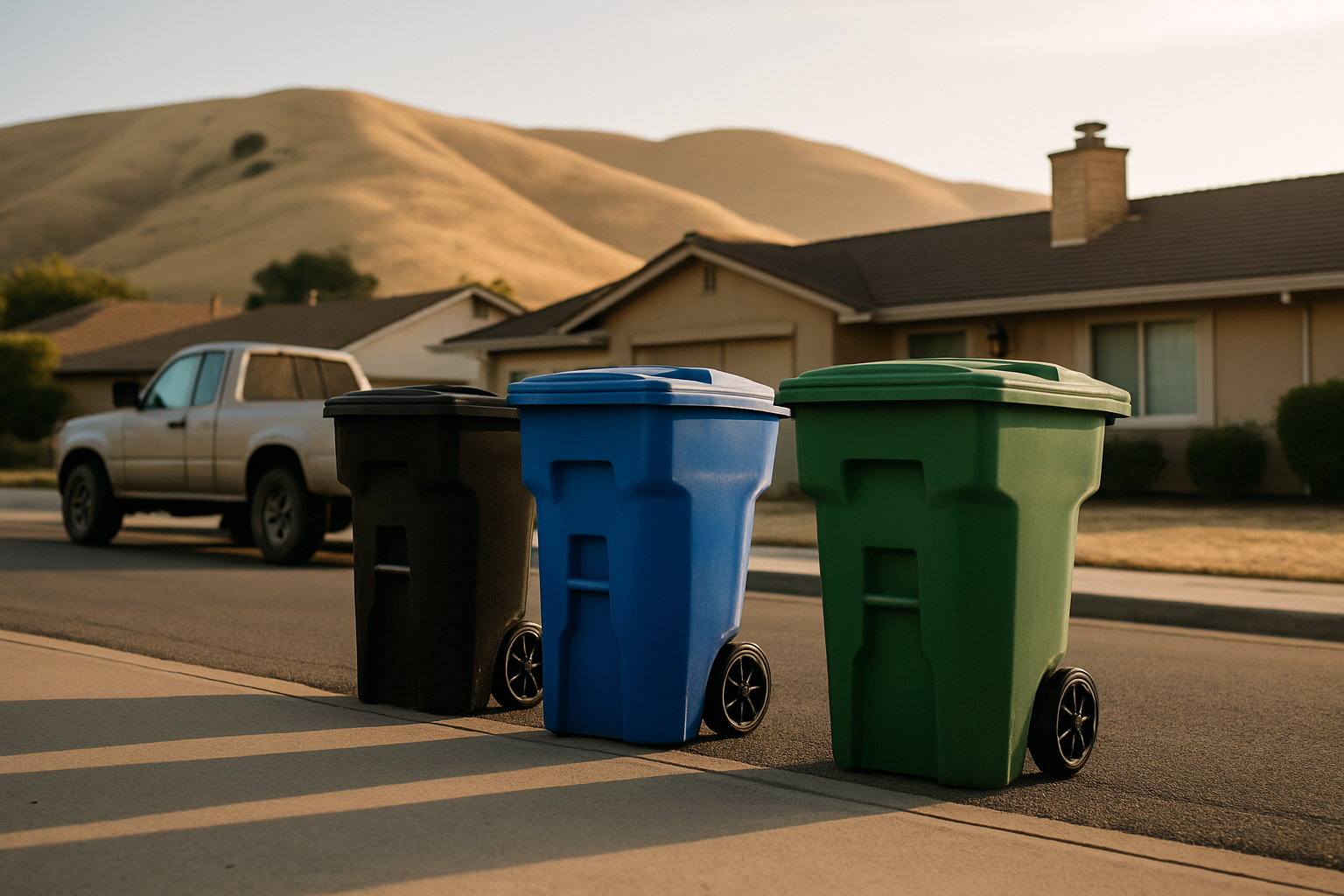
Direct Answer: After Proposition 218 hearings on August 3, 11, and 18, 2026, Recology rates for garbage, recycling, and organics can adjust annually for up to five years, beginning July 1, 2026.
If your monthly cart bill looks different than it did last year, you are not imagining it. The agencies that oversee solid waste service in this area held public hearings in August 2026 on annual rate adjustments for garbage, recycling, and organics collection, and those adjustments can run for up to five years beginning July 1, 2026.
I get calls every week from folks in Hollister and Gilroy who priced out a garage cleanout or a remodel a year ago and are now finding the math has moved. Disposal is one of the biggest inputs in any hauling job, so when tipping and processing costs climb, every load climbs with them.
Below I break down what actually changed, why it hits big cleanouts harder than it hits your weekly cart, and the few moves that genuinely lower what you pay.
What the Hollister garbage rate increase in 2026 actually is
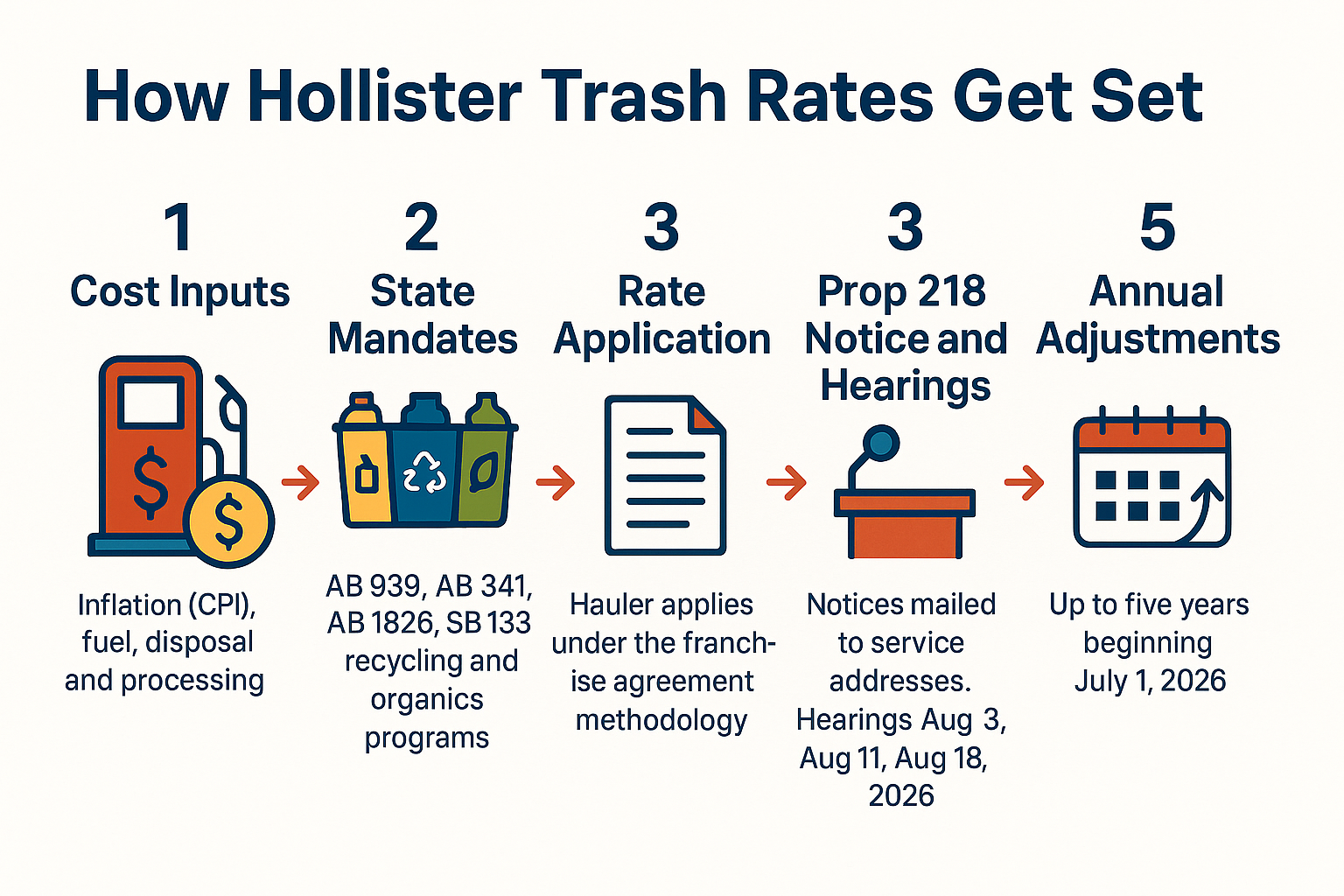
This was not a one-time bump. The San Benito County Integrated Waste Management Regional Agency, made up of the City of Hollister, City of San Juan Bautista, and County of San Benito, held Proposition 218 hearings on Recology’s application for annual adjustments to garbage, recycling, and organics collection rates for a period of up to five years beginning July 1, 2026.
Updated Proposition 218 notices were mailed to affected solid waste service addresses before the hearings. If you own property here and you tossed that envelope, that was the notice.
The adjustments come out of the rate-setting methodology written into the franchise agreement. According to the County of San Benito Resource Management Agency, that methodology accounts for:
- Changes in operating costs, including inflation measured by the Consumer Price Index
- Fuel costs
- Waste disposal and processing costs
- State law requirements including AB 939, AB 341, AB 1826, and SB 1383, which mandate expanded recycling and organics programs, public education, reporting, and regulatory compliance
That last group matters more than people expect. Sorting, hauling, and processing organics separately costs real money, and those programs are not optional.
The three August 2026 public hearings
Each member agency held its own hearing. Here is where and when they took place, straight from the published notice.
| Agency | Date and Time | Location |
|---|---|---|
| City of Hollister | August 3, 2026 at 6:30 P.M. | City of Hollister Council Chambers, 375 Fifth Street, Hollister |
| County of San Benito | August 11, 2026 at 9:30 A.M. | County of San Benito Administration Building, 481 Fourth Street, Hollister |
| City of San Juan Bautista | August 18, 2026 at 6:00 P.M. | City of San Juan Bautista Council Chambers, 311 Second Street, San Juan Bautista |
Why this hits cleanouts harder than your weekly cart
A few extra dollars a month on a residential cart is annoying. A five-year escalator on disposal and processing costs is a different animal when you are clearing a whole house.
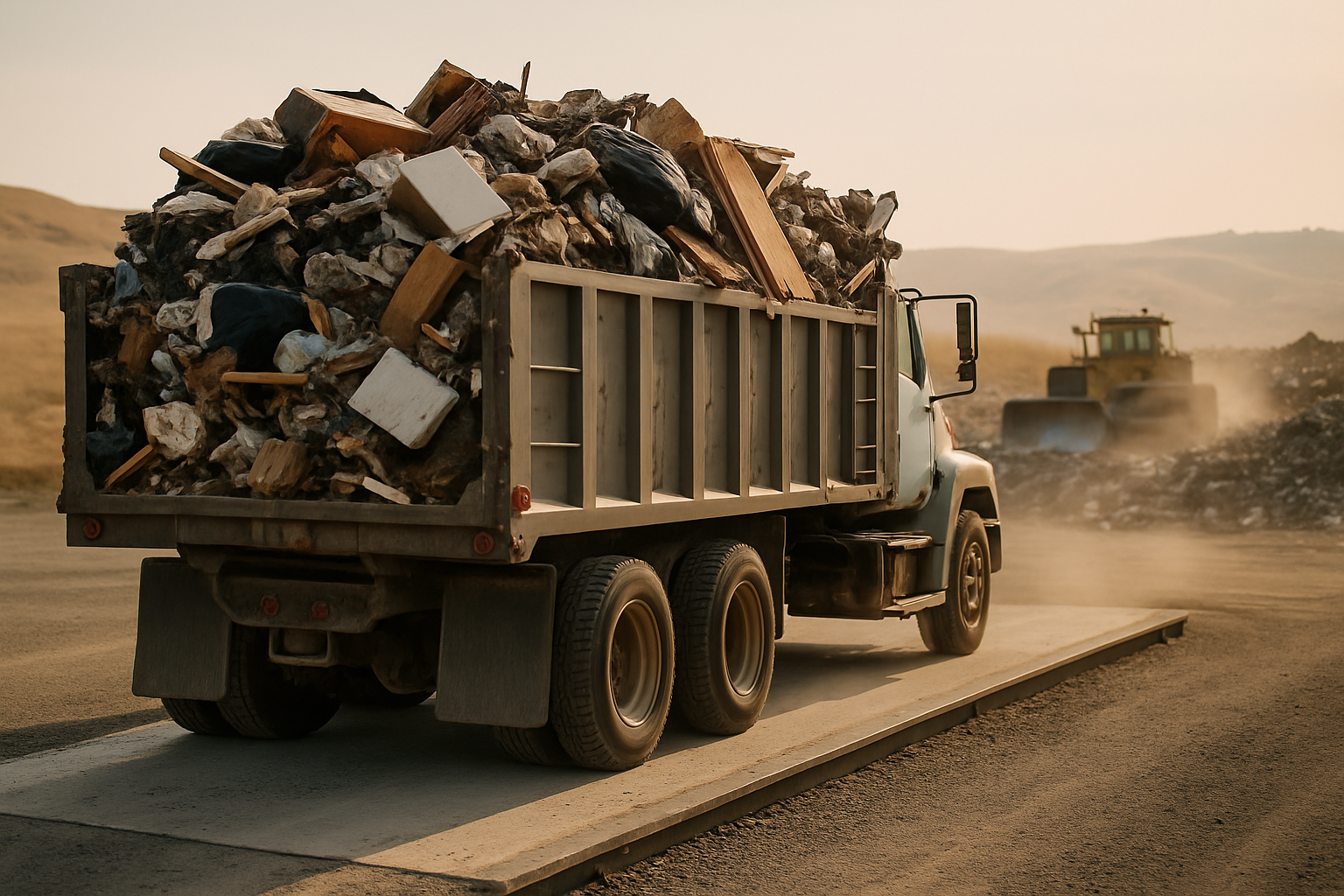
Here is the part most people never see. When my crew hauls a load from a property cleanout, that load gets weighed and dumped at a facility, and we pay by the ton. John Smith Road Landfill is the local endpoint for a lot of what comes out of Hollister homes. When the gate rate moves, every single load moves.
The heavier the material, the faster it adds up:
- Roofing, tile, concrete, and dirt weigh far more than their volume suggests
- Mattresses and appliances often carry their own handling fees
- Mixed loads cost more than clean, separated loads because they cannot be diverted
- Yard and organic waste has to go to a separate processing stream under state mandates
I have watched a two-day garage project turn into four truckloads because nobody accounted for the weight of old tile and a driveway’s worth of broken concrete. If you are budgeting a remodel, read up on what you’re responsible for after a remodel in Gilroy before you swing the first hammer.
What you can actually control on your bill
You cannot vote the rate-setting methodology out of the franchise agreement. But there are two levers most households never pull.
Cart size. Service levels are priced by cart size and frequency. Plenty of two-person households in Hollister are paying for a cart they fill halfway. Downsizing cuts the monthly hit every month, permanently.
Low-income rate. A reduced rate is generally tied to enrollment in programs like PG&E CARE or AT&T Lifeline. If you already qualify for one of those, it is worth asking the agency directly whether you qualify here.
On the Gilroy side, Recology South Valley runs bulky item pickup programs for residential customers that can cover a limited number of large items per year. Those programs have real limits on item counts and item types, so check the rules before you stack a couch at the curb and assume it disappears.
And one thing I tell almost every caller: do not try to feed a whole cleanout through your weekly cart. Overloaded carts get left behind, and you lose two weeks stuffing a bin that was never built for it. We wrote more about that tradeoff in what rising garbage rates mean for haul-it-yourself plans.
How your rate gets set, step by step
This is the short version of how a franchise agreement turns operating costs into the number on your bill.
How I price a cleanout when disposal costs keep moving
The fear I hear most on the phone is not the rate increase itself. It is not knowing what the final number will be.
So here is how we look at a job. Price comes down to volume, weight, access, and disposal. A second-story apartment with a narrow stairwell takes more crew hours than a ground-floor garage with a roll-up door, even if the pile is identical.
What drives the quote:
- How many truckloads the material will fill
- How heavy it is, since dense debris hits the scale hard
- Whether the crew can back a truck close or has to carry everything out
- What has to be separated out for organics, metal, or e-waste handling
- Whether it is one trip or a multi-day cleanout
We give the number before the work starts. Upfront pricing, no hidden fees, and you do not lift anything. One reviewer put it plainly: “They disclosed all information upfront and there were no hidden fees.”
For larger projects, a dumpster rental starts at $500 for a 2-day rental and comes in 10, 15, and 25 yard sizes. Which option costs less depends entirely on your pile and your timeline, and the honest answer usually takes a two minute phone call.
If you are clearing construction material specifically, where construction debris actually goes after a remodel covers the disposal side in more detail. Demolition jobs have their own wrinkle, which we sorted out in who handles the debris after a demolition project.
Frequently Asked Questions About the 2026 Recology Rate Adjustments
When do the new rates actually start?
The adjustments cover a period of up to five years beginning July 1, 2026. They are annual adjustments, not a single one-time change, so expect the number to move again in future years under the same methodology.
Why are rates going up at all?
The franchise agreement includes a rate-setting methodology that accounts for changes in operating costs, including inflation measured by CPI, fuel, and waste disposal and processing costs. On top of that, state laws like AB 939, AB 341, AB 1826, and SB 1383 require expanded recycling and organics programs, public education, reporting, and compliance. All of that costs money to deliver.
Is there a discount if money is tight?
A reduced low-income rate is generally tied to enrollment in programs such as PG&E CARE or AT&T Lifeline. Call the agency directly to confirm eligibility and the current application process, since the rules are theirs, not ours.
Does a rate increase mean junk removal prices go up too?
Disposal is a real input in any hauling job, so higher tipping and processing costs do put upward pressure on what a load costs to move. What that means for your specific job depends on weight, volume, and access, which is why we quote the job before we start rather than guess.
Can I just put cleanout debris in my regular cart over a few weeks?
You can try, but overfilled carts often get skipped, and construction debris, appliances, and large furniture generally are not accepted in curbside service. For a full garage or an estate clearance, one scheduled haul almost always beats six weeks of stuffing a bin.
Planning a cleanout under the new rate schedule?
Disposal costs across San Benito County, South Santa Clara County, and the wider Monterey County area are on a multi-year climb, so a job priced on last year’s numbers deserves a fresh look. Our crew handles junk removal, property cleanouts, dumpster rentals, and demolition debris throughout Hollister and Gilroy, and we are happy to walk through what your specific pile involves. You can reach us at (831) 297-1972 or at mgtransportationhauling.com when you are ready to talk it through.
