
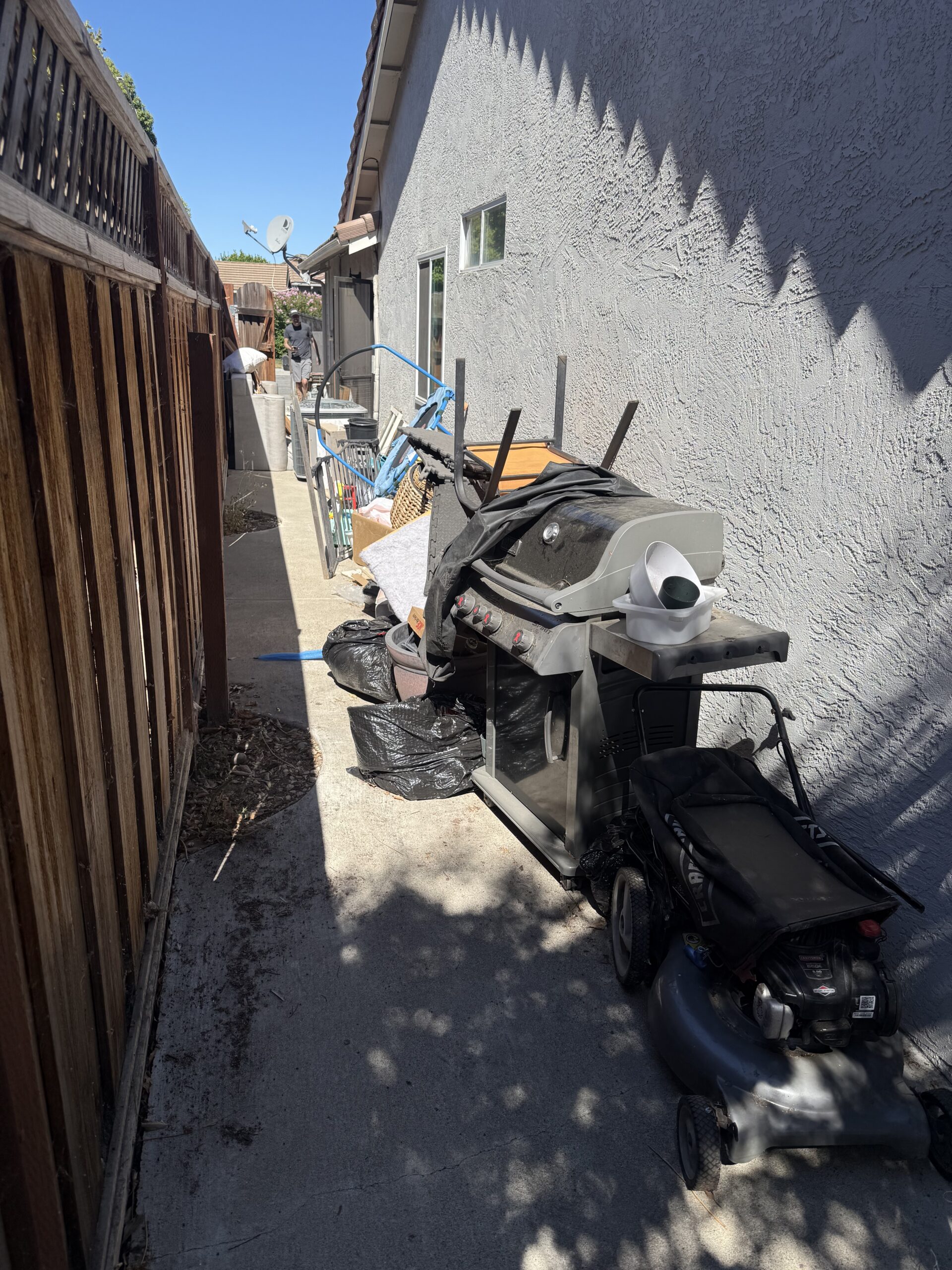
Direct Answer: Sort loose branches and yard waste for local pickup, then call a hauling crew for anything tangled with fencing, roofing, or heavy building material. Clear it within a few days so repairs can start.
The rain finally stops, you step outside, and the yard is not your yard anymore. There’s a limb across the fence, a shed panel in the flower bed, and a soaked couch cushion that used to live on the patio. Most people stand there for a good ten minutes and do nothing, because there’s no obvious place to start.
I see this every winter across Monterey County and up through Hollister and Gilroy. Storms roll in off the coast, the wind funnels down the valley, and the same three things end up down: fences, older sheds, and whatever tree was already leaning.
This guide walks through how I tell people to sort the mess, why letting it sit past a few days creates a second problem, and where debris removal ends and demolition begins. By the end you’ll know which pile you can handle yourself and which one needs a truck and a crew.
Start by Sorting: What You Can Handle and What Needs a Crew
Almost all storm debris falls into two buckets, and telling them apart takes about five minutes of walking the yard.
Bucket one is loose organic debris. Branches, leaves, small limbs, palm fronds, broken plant material. If you can drag it, cut it, or bag it without a saw fight, it belongs here. Green waste like this is the easiest material to move, and both Gilroy and San Benito County have curbside and drop-off options for it.
Bucket two is everything tangled or heavy. This is where a hauling crew earns the money:
- Fence panels with posts still attached, especially posts set in concrete
- Roofing material, siding, or plywood that blew off a structure
- Collapsed sheds, carports, and patio covers
- Waterlogged furniture, mattresses, and rugs that got soaked through
- Large trunk sections and limbs that need to be cut before they’ll move
- Anything wrapped around a fence line, HVAC unit, or utility box
The honest test I give people: if you have to ask whether two people can lift it safely, the answer is no. Wet debris weighs far more than dry. A soaked sectional sofa can run several hundred pounds, and a fence panel with a concrete footing still hanging off it is worse.
Sort first, then decide. It’s a lot easier to price and schedule a job when you can say “one truckload of branches plus about sixty feet of downed fence” instead of “my yard is a disaster.”
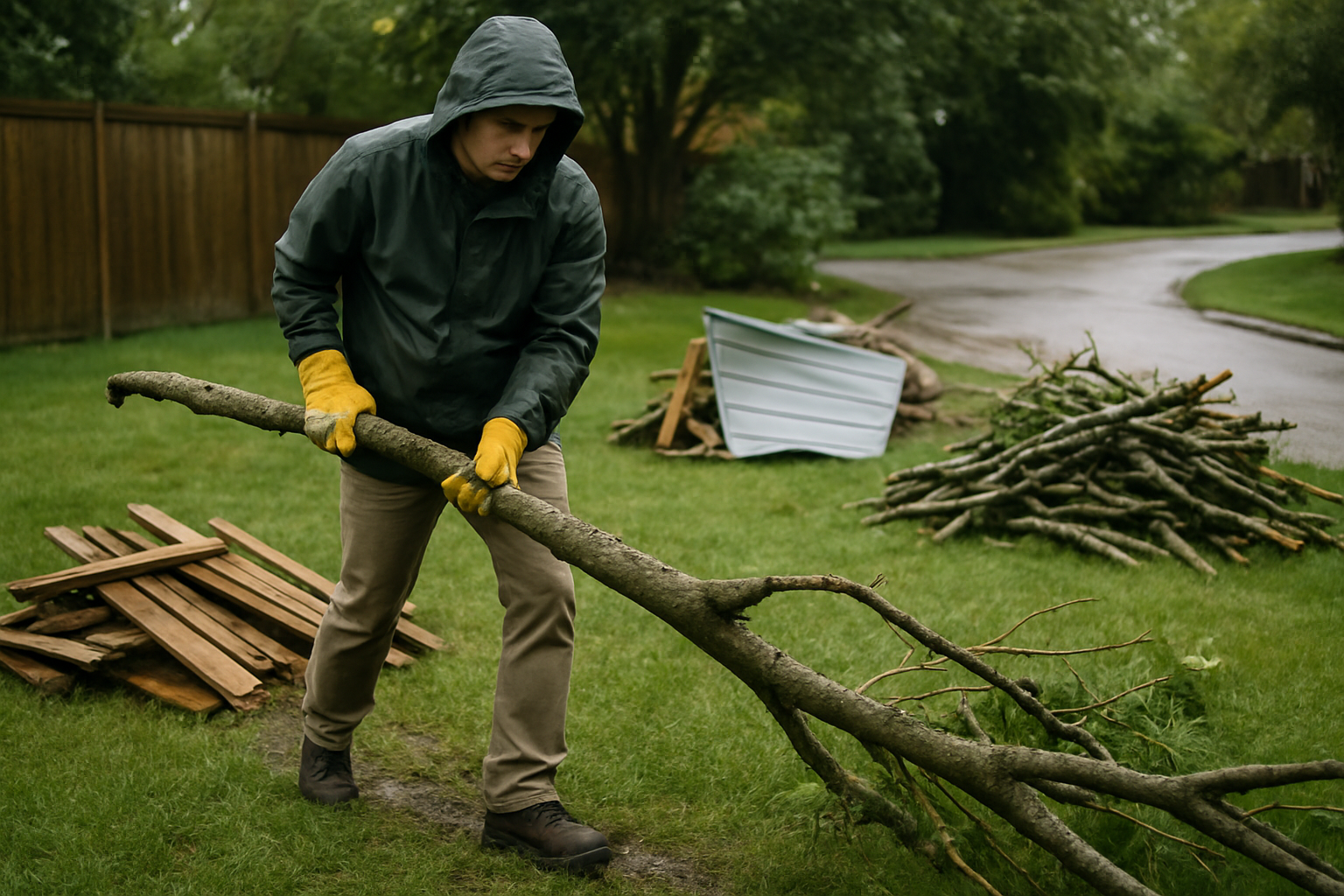
Why Debris Sitting for More Than a Few Days Becomes Its Own Problem
People treat storm cleanup like a cosmetic issue. It isn’t. Every week that pile sits, it creates new work.
Pests move in fast. A brush pile against the house is a rodent hotel, and standing water trapped in a tipped-over wheelbarrow or a folded tarp breeds mosquitoes. Wet cardboard, soaked insulation, and waterlogged upholstery start growing mold within a couple of days in our damp coastal air.
It blocks the repair work. This is the part homeowners don’t see coming. A fence contractor can’t set new posts with the old panels lying on the line. A roofer needs a clear staging area. An adjuster or inspector needs to walk the property. Cleanup is usually the first job that has to finish before any real repair can start, which is why I get calls from people who already have a contractor booked and suddenly realize the yard has to be cleared by Thursday.
And it can put you sideways with the city. Most municipalities on the Central Coast have property maintenance rules covering accumulated debris, especially in front yards, side yards, and anything visible from the street. Landlords and property managers feel this first, since a tenant complaint or a neighbor complaint travels quickly.
CalRecycle has good general guidance on how disaster and storm debris should be separated and handled in California, and the theme is the same everywhere: separate the material early, because mixed piles cost more and take longer to deal with.
My rule of thumb is a 72-hour window. Get the material off the ground and off the lawn within about three days, even if it’s just consolidated into one staged pile in the driveway. That protects your grass, keeps pests out, and gives whoever comes next a place to work.
What Usually Survives a Storm and What Doesn’t
After enough winters here, patterns show up. This is roughly how storm-damaged items sort out on the average residential job.
| Item | Usually Salvageable? | What Typically Happens To It |
|---|---|---|
| Loose branches and yard debris | Yes, as green waste | Chipped or composted through local green waste programs |
| Wood fence panels, snapped posts | Rarely | Hauled out as mixed wood debris; posts with concrete separated |
| Metal shed, carport frame, gutters | Not as a structure | Metal separated for scrap recycling |
| Waterlogged couches, mattresses, rugs | No | Hauled to a transfer station or landfill; mold makes donation a non-starter |
| Appliances left outside in flooding | Usually not | Metal recycled where possible after proper handling |
| Roofing shingles, plywood, siding | No | Handled as construction and demolition debris |
| Potted plants, planters, hardscape pieces | Often yes | Cleaned and reused, or hauled if cracked |
Debris Removal vs Demolition: Two Different Jobs
This trips up more homeowners than anything else on the list. Standing in the yard, it all looks like one problem. On our side, it’s two.
Debris removal is hauling what’s already down. The fence is on the ground, the limb is off the roof, the shed collapsed on its own. We load it, sweep the area, and take it to the right facility. Straightforward work, priced mostly by volume and weight.
Demolition is taking down what’s still standing but compromised. The shed is leaning at fifteen degrees and one more storm will finish it. Half the fence is down and the other half is rotted at the base. The patio cover held, but the posts are split. Someone has to take that structure apart safely before it can be hauled, and that’s a different job with different labor and equipment.
We handle both, from small tear-outs to larger projects. But knowing which one you’re asking about makes your quote faster and more accurate.
One more thing worth checking: structural demolition can require a permit. If you’re taking down anything attached to the house, or a detached structure above a certain size, the City of Gilroy Building Division or your county building department will want to hear about it first. Fences and small sheds usually fall below that line, but do not guess on anything with a foundation or a roof tied to the home.
If a contractor is already involved in the repair, sort out early who is hauling the debris. That gets fuzzy fast, and I’ve written more about who’s actually responsible for removing demolition debris because it comes up on nearly every job.
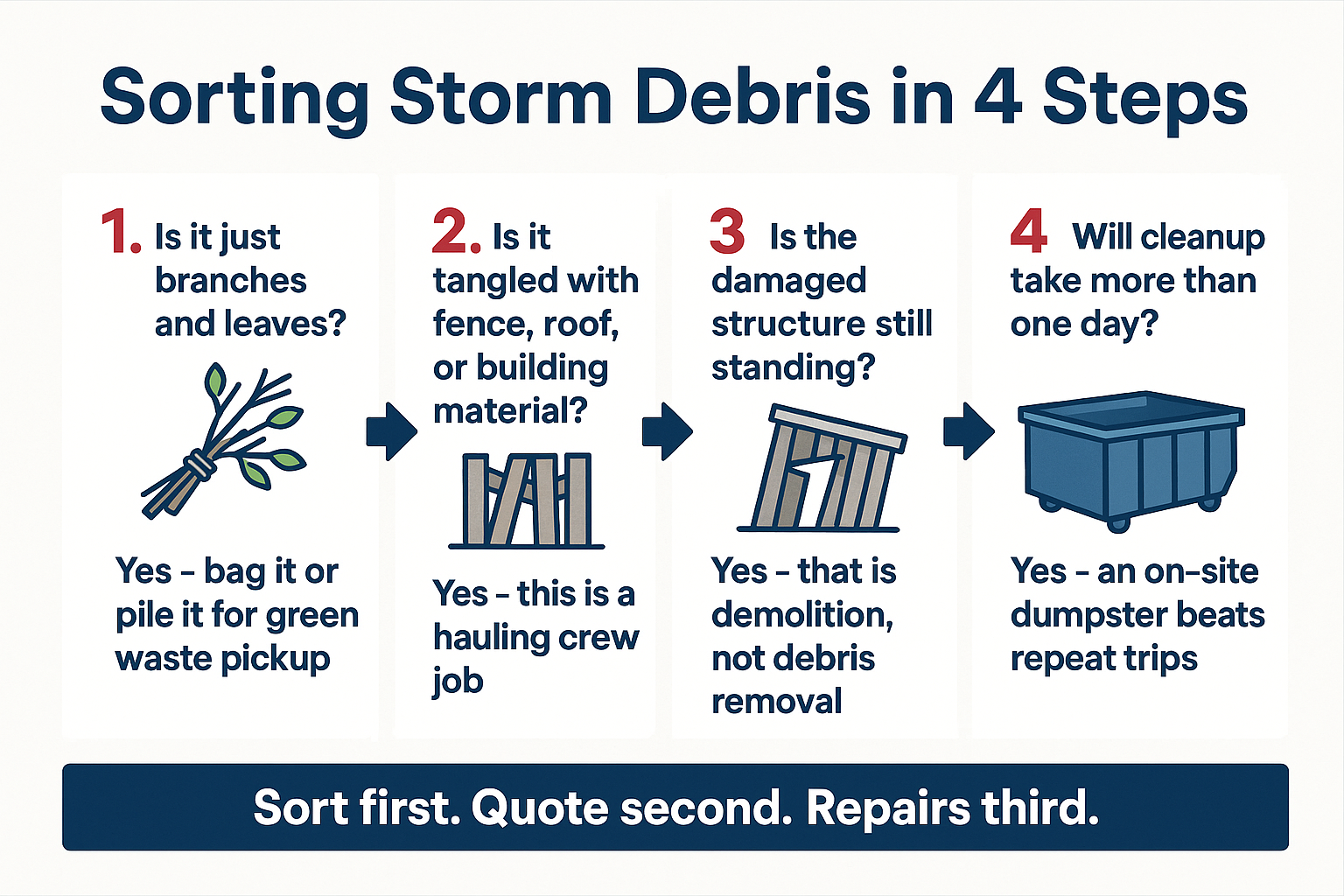
A Simple Sorting Flow for Storm Debris
When you’re standing in the yard and don’t know where to start, run the pile through these four questions.
When an On-Site Dumpster Beats Multiple Hauling Trips
Here’s a pattern I see a lot after a bad storm. The homeowner books a truckload haul, we clear it, and three days later they call back because they kept finding more once they could actually walk the yard.
Storm cleanup rarely finishes in one afternoon. You clear the front, then the side yard, then you finally open the shed and realize the water got in there too. When cleanup stretches across a weekend or a full week, a dumpster sitting in the driveway usually makes more sense than scheduling three separate pickups.
A dumpster works well when:
- You’re clearing more than one area of the property
- Family or a crew is helping and you want to work at your own pace
- Repair contractors will generate their own debris on top of yours
- You’ve got a mix of yard waste, fence material, and household junk going out together
- You want to fill it as you go instead of racing a truck’s arrival time
We run 10-yard, 15-yard, and 25-yard sizes. The 10 handles a modest yard cleanup and small furniture. The 15 covers a bigger yard plus carpet or a room’s worth of soaked goods. The 25 is the one people take for a full property cleanup or a fence and shed tear-out combined.
On cost, our dumpster rentals have started around $500 for a two-day rental, but size, duration, and what you’re putting in it all move the number. Call for a current quote rather than budgeting off a blog post.
Before it arrives, think about where it’s going to sit. Driveway is easiest. Street placement can require a permit depending on your city, and I broke down where a rented dumpster can legally sit in more detail if you’re tight on space.
What Drives the Cost of a Storm Cleanup
Nobody wants a number pulled out of the air, and I won’t give you one. But I can tell you exactly what moves the price, because it’s the same four things every time.
- Volume. How much space the material takes up in the truck or container. This is the biggest factor by far.
- Weight. Wet debris, concrete footings, and soaked furniture all cost more at the scale. Disposal fees at facilities like the John Smith Road Landfill outside Hollister are weight based, and that gets passed through on any honest quote.
- Access. A pile in the driveway is quick. A pile behind a locked gate, down a slope, or on the far side of a narrow side yard takes longer and needs more hands.
- Sorting. Mixed piles cost more than separated ones, because green waste, metal, and construction debris go to different places.
That last point is where you can save real money. If you spend an hour dragging branches into their own pile, you’ve made the job faster and cheaper. Gilroy residents can also check what Recology South Valley’s bulky item program covers before calling anyone, and San Benito County Integrated Waste Management publishes drop-off options for county residents.
What customers tell us matters most, though, isn’t the number itself. It’s knowing the number before work starts. One reviewer put it plainly: “They disclosed all information upfront and there were no hidden fees.” That’s the standard we hold on storm work, where nobody wants a surprise on top of the damage they already have.
The other thing people bring up constantly is speed. Same-day service is often possible when you call before noon, though it depends on the day’s schedule and how big the job is. After a major storm, everybody calls at once, so the earlier you get on the calendar the better. You can see how we handle storm cleanup and debris removal if you want the process laid out step by step.
And if the storm just surfaced how much other stuff has been sitting around, that’s normal too. There’s a reason the stuff piling up in your home is harder to move than you think.
Frequently Asked Questions About Storm Debris Cleanup
Can I just burn the branches instead of hauling them?
Don’t assume you can. Open burning on the Central Coast is regulated by your local air district and fire agency, and permitted burn days are limited. Check with your fire department before you light anything, especially in the dry months. Chipping or hauling green waste is usually simpler and never gets you a citation.
Do I have to drag everything to the curb before you show up?
No. We’re full service, so our crew does the loading. If you’ve already staged a pile, great, that speeds things up and can lower the cost. But you don’t have to touch a thing if you can’t or don’t want to.
How fast can someone actually come out after a storm?
Often same day or next day, and same-day is most realistic when you call before noon. After a big regional storm the phones get busy across Hollister, Gilroy, and the surrounding area, so response times stretch. Calling early in the week after a weekend storm usually gets you on the schedule faster.
What happens to my debris after it leaves the property?
It gets separated. Green waste goes to a facility that chips or composts it, metal from sheds, gutters, and fence hardware goes to scrap recycling, and what’s left as mixed construction or household debris goes to a transfer station or landfill. Nothing gets dumped somewhere it shouldn’t be, and we can tell you where your load went if you ask.
Will you take a fence post with concrete still attached?
Yes. Concrete footings are heavy and they affect the weight side of the quote, so mention them when you call. It’s better to know upfront than to have someone discover twenty of them on the day of service.
Is storm cleanup something my insurance covers?
Sometimes, depending on your policy and what caused the damage. Take photos of everything before it gets moved, and ask your carrier before the pile disappears. Keeping the receipt from your hauler helps if you’re filing.
Ready to Get the Yard Back?
If you’re standing in a yard full of downed fence, broken limbs, and soaked furniture somewhere between Monterey County and Hollister, you don’t have to figure out the sorting alone. We handle storm debris removal, dumpster drop-offs, and demolition on damaged structures throughout San Benito and South Santa Clara County. Call MG Transportation & Hauling at (831) 297-1972 or visit mgtransportationhauling.com when you want an upfront quote before anything gets loaded.
