
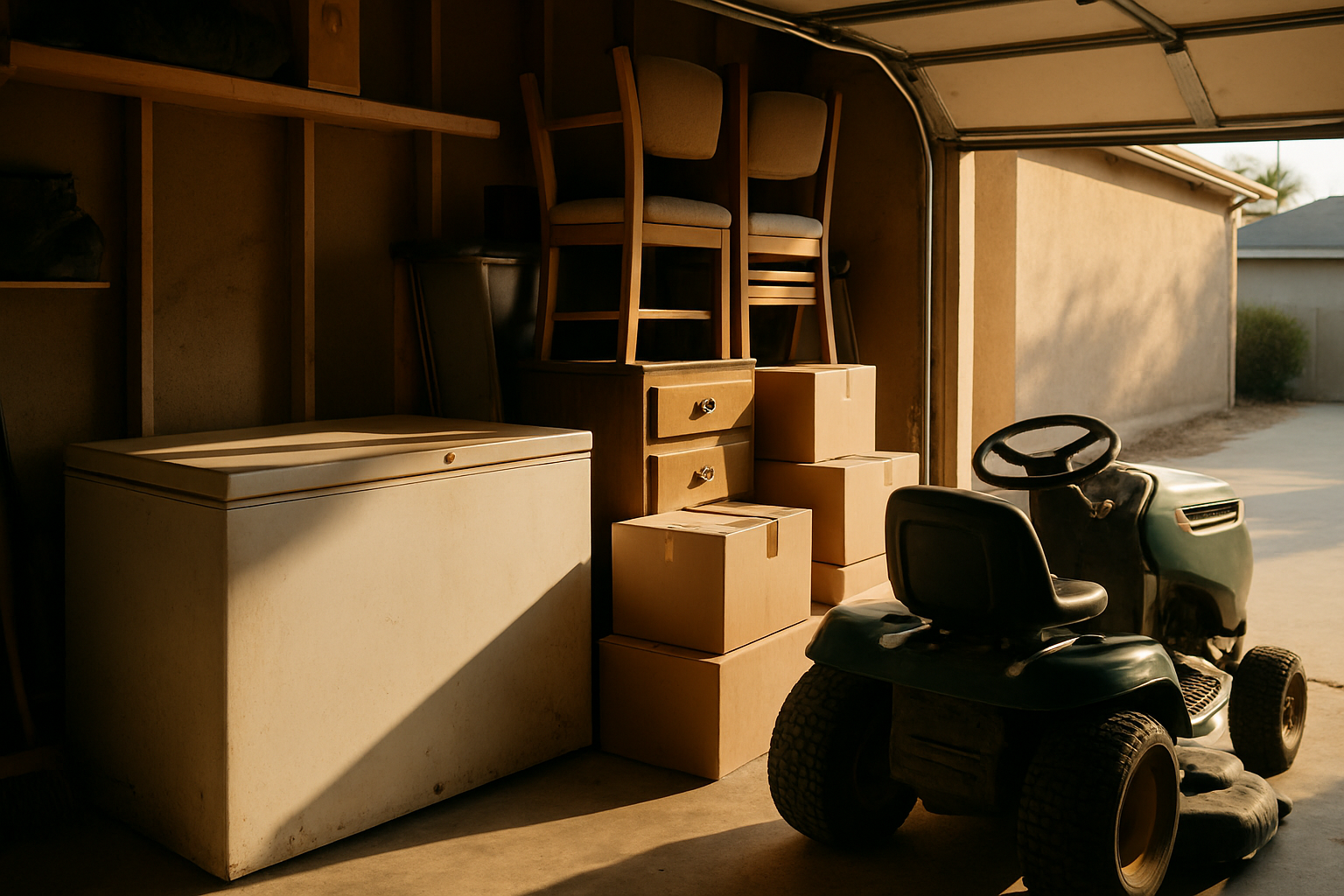
Direct Answer: Certain items — hot tubs, pianos, old appliances, and concrete debris — require special equipment and disposal planning that most people don’t anticipate until the crew shows up.
Most people underestimate what they’re actually dealing with until they try to move it. A mattress feels manageable until it’s stuck in a hallway. A chest freezer looks like two people can handle it — until someone pulls their back at the top of the stairs.
This is one of the most common surprises we see in Hollister and Gilroy. Homeowners start clearing out a garage or back room with good intentions, and then they run into something they didn’t plan for. The job stops, the frustration sets in, and whatever was supposed to take a weekend turns into a months-long pile.
This article focuses on the specific categories of stuff that are genuinely difficult to remove — not because they’re scary, but because they have real weight, bulk, access problems, or disposal requirements. If you’re planning a cleanout, knowing this upfront saves you time and money.
Why Some Items Cost More to Remove Than They Look Like They Should
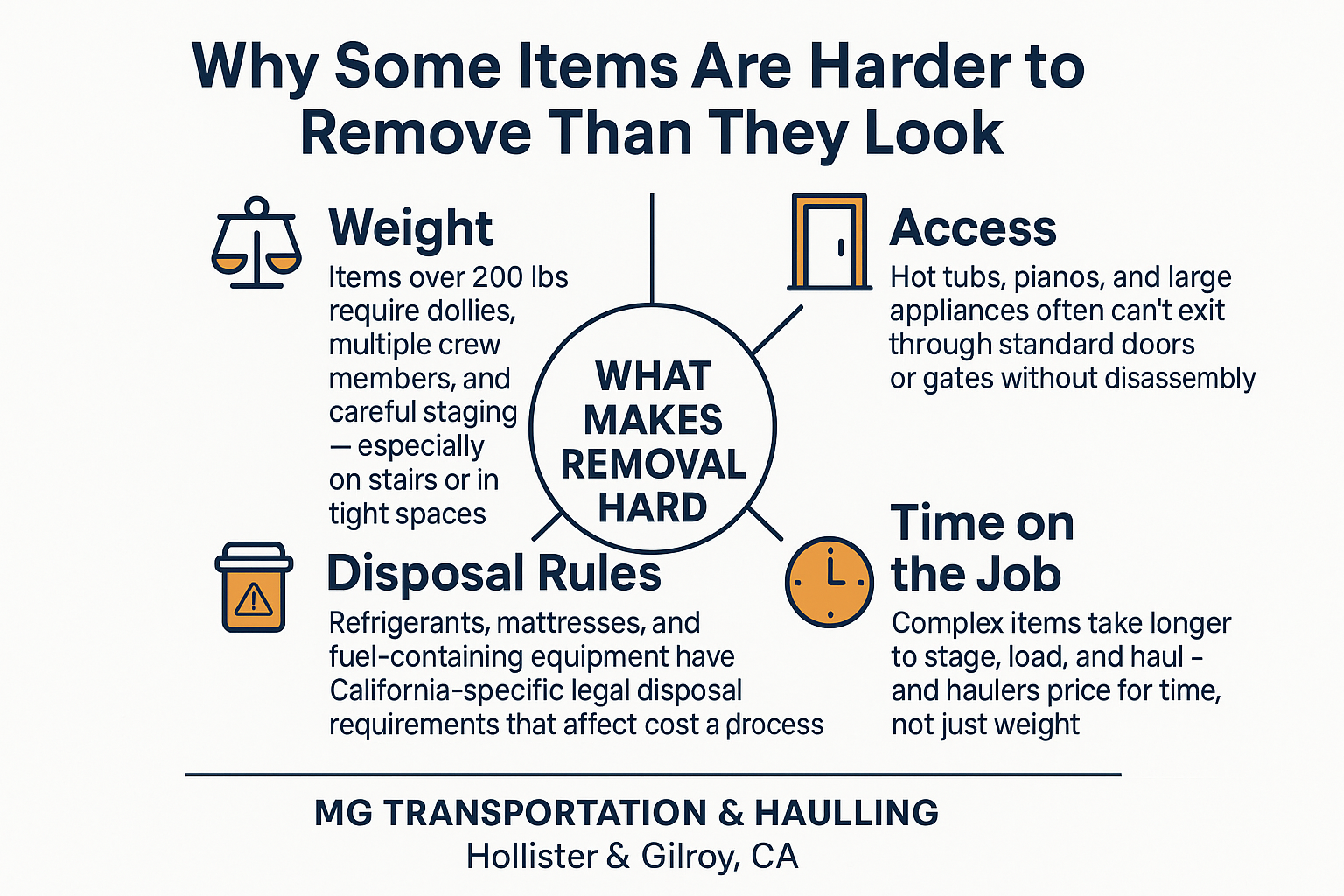
Price surprises happen in hauling for a predictable reason: weight, access, and disposal cost don’t always match what an item looks like from the outside.
A full-size sofa sitting in your living room looks like a furniture problem. But if it’s on the second floor of a narrow Hollister craftsman, it becomes a logistics problem — extra labor, careful maneuvering, and more time on the job. Time is real money for any hauling crew.
Disposal fees are the other piece most people don’t think about. Certain materials cost significantly more to drop at the John Smith Road Landfill in Hollister or at transfer facilities serving Gilroy. Items with refrigerants — old refrigerators, freezers, window AC units — require proper handling before they can be legally disposed of, and that adds to the job cost. If you want to understand what actually determines the price of junk removal, disposal fees are often the piece people overlook most.
None of this is a reason to avoid the job. It’s a reason to walk through it honestly with whoever you hire before anything gets loaded.
The Items That Cause the Most Problems — and Why
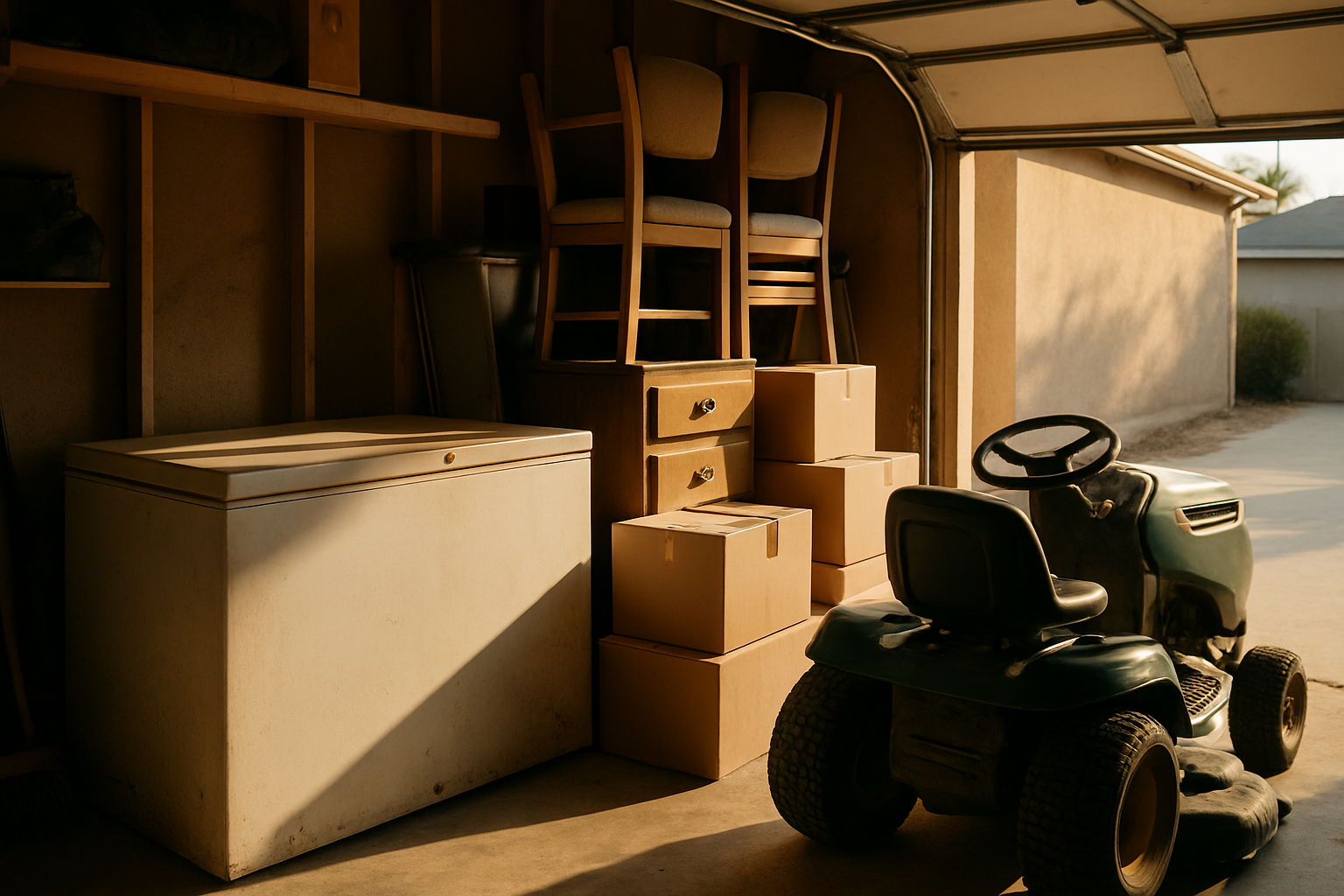
These are the categories we see stall cleanouts most often. Each one has its own reason it’s harder than it looks.
Large appliances — refrigerators, chest freezers, washers, dryers, and dishwashers — are heavy and often awkward. A standard refrigerator runs 200 to 350 pounds. Getting one out of a tight kitchen or down a flight of stairs takes a dolly, the right grip, and someone who’s done it before. Washer and dryer removal specifically has extra considerations around water line disconnection and floor protection.
Hot tubs are in a category of their own. Even drained, a standard two-person hot tub can weigh 400 to 800 pounds and won’t fit through a standard gate or doorway in one piece. Most removals require it to be cut apart on-site before it can be hauled out. If you haven’t looked into what that actually involves, the hot tub removal guide for Hollister and Gilroy is worth reading before you start.
Mattresses are less about weight and more about size and disposal. California has strict rules around mattress recycling, and they can’t just go to landfill without going through a certified recycler first. Disposing of an old bed in compliance with California law takes a little planning.
Other items worth flagging:
– Pianos and organs — upright pianos commonly run 400 to 700 pounds; baby grands are heavier
– Riding lawn mowers — fuel and oil must be drained before legal disposal; see the lawn mower disposal guide for Hollister for specifics
– Old grills — propane tank removal is required first; there’s a practical guide to disposing of a grill that covers this
– Concrete and tile debris — extremely heavy per cubic foot; even a modest pile can exceed a truck’s weight limit fast
– Metal bed frames — usually not heavy, but they’re sharp and awkward to bundle without the right approach
Difficult Items at a Glance: Weight, Access, and Disposal Flags
This table gives you a quick reference for the items that most commonly add complexity — and cost — to a residential cleanout.
| Item | Typical Weight | Common Complication |
|---|---|---|
| Chest freezer (full-size) | 200–350 lbs | Refrigerant requires proper handling before disposal |
| Refrigerator | 200–350 lbs | Same refrigerant issue; often in tight kitchen spaces |
| Hot tub (drained) | 400–800 lbs | Must be cut apart; won’t fit through standard gates |
| Upright piano | 400–700 lbs | Requires multiple crew members; stair access is high risk |
| Riding lawn mower | 300–600 lbs | Fuel/oil must be drained; may need a ramp for loading |
| Concrete debris (1 cubic yard) | ~1,800 lbs | Can max out a truck in a single load; disposal fees are high |
| Mattress (queen) | 50–150 lbs | California recycling rules limit landfill disposal |
| Old propane grill | 40–100 lbs | Tank removal required before any hauler can legally take it |
The Hidden Difficulty Scale: Common Household Items Ranked
This infographic breaks down the four main factors that make an item genuinely hard to remove — not just heavy, but complicated.
What to Do Before the Crew Arrives
A little preparation on your end genuinely changes how a job goes — especially if you have items in this difficult category.
The most important thing you can do is be honest about what’s there. When you call for a quote, describe every large or unusual item specifically. Don’t say “a bunch of old appliances” — say “a chest freezer, a washer and dryer, and an old refrigerator in the garage.” That detail affects how many people show up, what equipment they bring, and what the price is.
For fuel-powered equipment like lawn mowers, generators, or grills, drain the gas and oil before the day of service if you can. Most haulers won’t load equipment with active fuel, and it’s a safety issue, not an upsell.
If you have items you think might have value — furniture, appliances, tools — it’s worth separating those before the crew arrives. An estate sale or a quick Facebook Marketplace post before cleanout day could offset some of the hauling cost. The estate sale playbook walks through that process if you haven’t done it before.
And if you’re not sure whether a dumpster rental or a full-service crew makes more sense for your job, that’s a real question worth thinking through. When a junk removal crew makes more sense than a dumpster covers the tradeoffs honestly.
Local Disposal Context: What Happens to the Stuff After It Leaves
One of the most common questions we hear in Hollister and Gilroy is simple: where does it actually go?
Most general junk and furniture goes to the John Smith Road Landfill in San Benito County, or to transfer facilities that serve Santa Clara County disposal infrastructure. Appliances with refrigerants are routed to processors equipped to legally recover those chemicals before the unit is scrapped.
The City of Gilroy and Recology South Valley offer bulky item pickup programs for residents, but those programs have item limits, scheduling requirements, and exclusions — they won’t take a full garage of mixed junk or anything requiring special handling. For large or complicated loads, a private hauler is typically the faster and more practical path.
Items with resale or donation value — working appliances, clean furniture, usable tools — we’ll route to donation when that’s possible. Nothing gets donated that isn’t genuinely usable, but when it is, it reduces the landfill load and sometimes the cost.
If you’re curious about how landfill fee changes in 2026 are affecting hauling prices broadly, there’s a full breakdown in the article on what higher landfill fees mean for hauling and vehicle removal.
Frequently Asked Questions About Hard-to-Move Household Items
Can you take an item if I’m not sure whether it’s too heavy or too big?
Yes — describe it as accurately as you can when you call, and we’ll tell you what’s needed. Dimensions and approximate weight help more than general descriptions. If we need extra crew or equipment, we’d rather know that before the job than after we’re in your driveway.
Why do appliances with refrigerant cost more to dispose of?
California law requires that refrigerants be recovered from compressors before a unit can be landfilled or scrapped. That step requires certified equipment and adds a handling fee on the disposal side. The appliance itself isn’t the expensive part — it’s that extra step. This affects refrigerators, chest freezers, window AC units, and dehumidifiers.
Do I need to do anything to prepare a riding lawn mower for pickup?
Drain the gas tank and engine oil before the pickup date if you can manage it safely. Most haulers won’t load fuel-containing equipment, and facilities won’t accept it either. If draining it yourself isn’t something you’re comfortable with, let us know — we can walk you through your options.
How do I know if I need a dumpster or a full crew for a big cleanout?
A dumpster works well when you’re doing the work yourself over several days and the debris is mostly standard stuff — boxes, furniture, yard waste. A crew makes more sense when you have heavy items, appliances, or anything requiring special handling, or when you simply want it done in one day without lifting a finger. There’s a full breakdown of the tradeoffs at When a Junk Removal Crew Makes More Sense Than a Dumpster.
What’s the honest price range for removing something like a hot tub or piano?
For a hot tub removal, expect somewhere in the range of $300 to $600 or more depending on access, whether cutting is required, and disposal fees. Pianos are similarly variable — an upright in an accessible first-floor room costs less than one on a second floor with a tight stairway. The article on how much you should actually pay for junk removal gives you a solid framework for evaluating quotes.
Can you remove items from a property I manage but don’t live at?
Yes. We regularly work with landlords and property managers in Hollister and Gilroy handling tenant cleanouts, vacant unit turnovers, and full property clearances. You don’t need to be on-site for the entire job, but we do need access and a point of contact who can authorize the work.
Ready to Finally Clear That Space?
If you’ve got heavy, awkward, or complicated items sitting in a Hollister garage or a Gilroy property and you’re not sure what it’ll take to move them, the easiest next step is a straightforward conversation. MG Transportation & Hauling handles the hard stuff — appliances, hot tubs, full cleanouts, and everything in between — with upfront pricing and no surprises. Call (831) 297-1972 or visit mgtransportationhauling.com/ to describe your job and get a quote.
