
Direct Answer: Walk each room and mark everything you’re keeping with tape. Everything unmarked is the haul. That one step alone speeds up any property cleanout significantly.
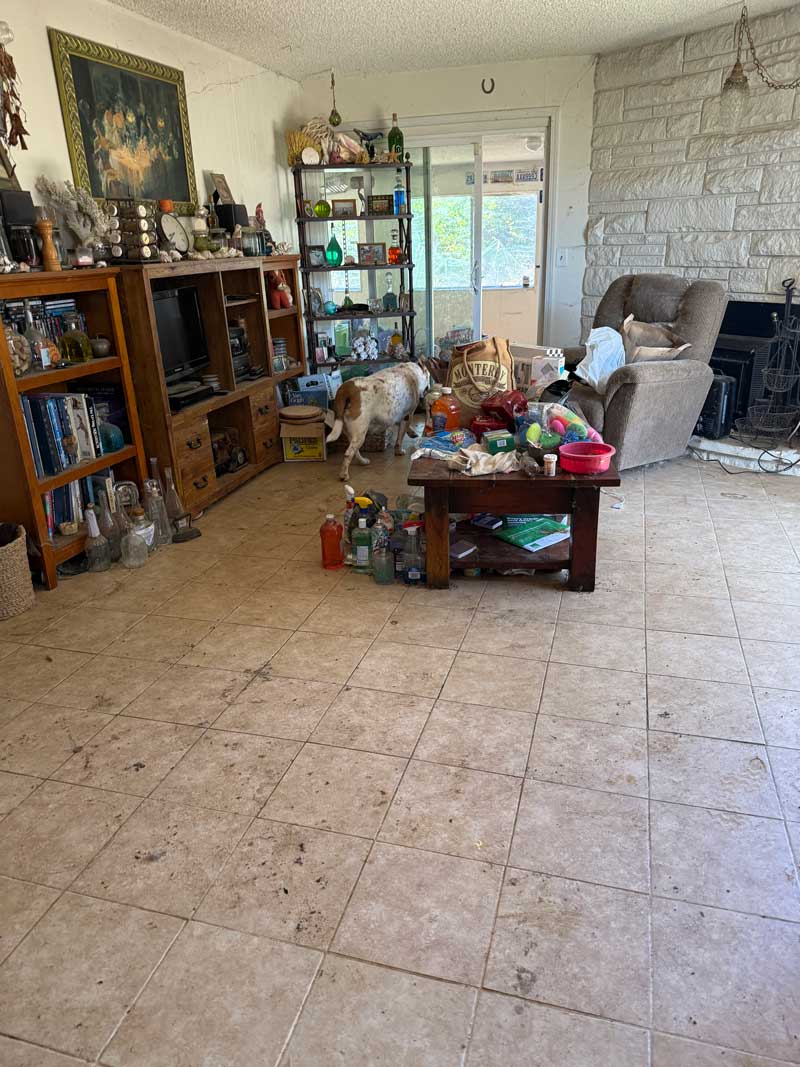
If you’ve ever stood in the middle of a house packed with decades of stuff and thought, “I don’t even know where to start”, you’re not alone. I hear that from customers in Hollister and Gilroy almost every week, and it’s one of the most common things people say when they finally pick up the phone.
The good news is that you don’t need to do the hauling yourself. That’s our job. But a small amount of sorting before the crew shows up can make a real difference, both in how fast the job goes and, when pricing is based on volume, what you end up paying.
This guide walks you through the process I recommend to anyone preparing for a property cleanout, whether you’re clearing a family home, dealing with an estate, or turning over a rental unit. None of these steps require heavy lifting. They just require a few decisions.
Step 1: Understand What Sorting Actually Means Here
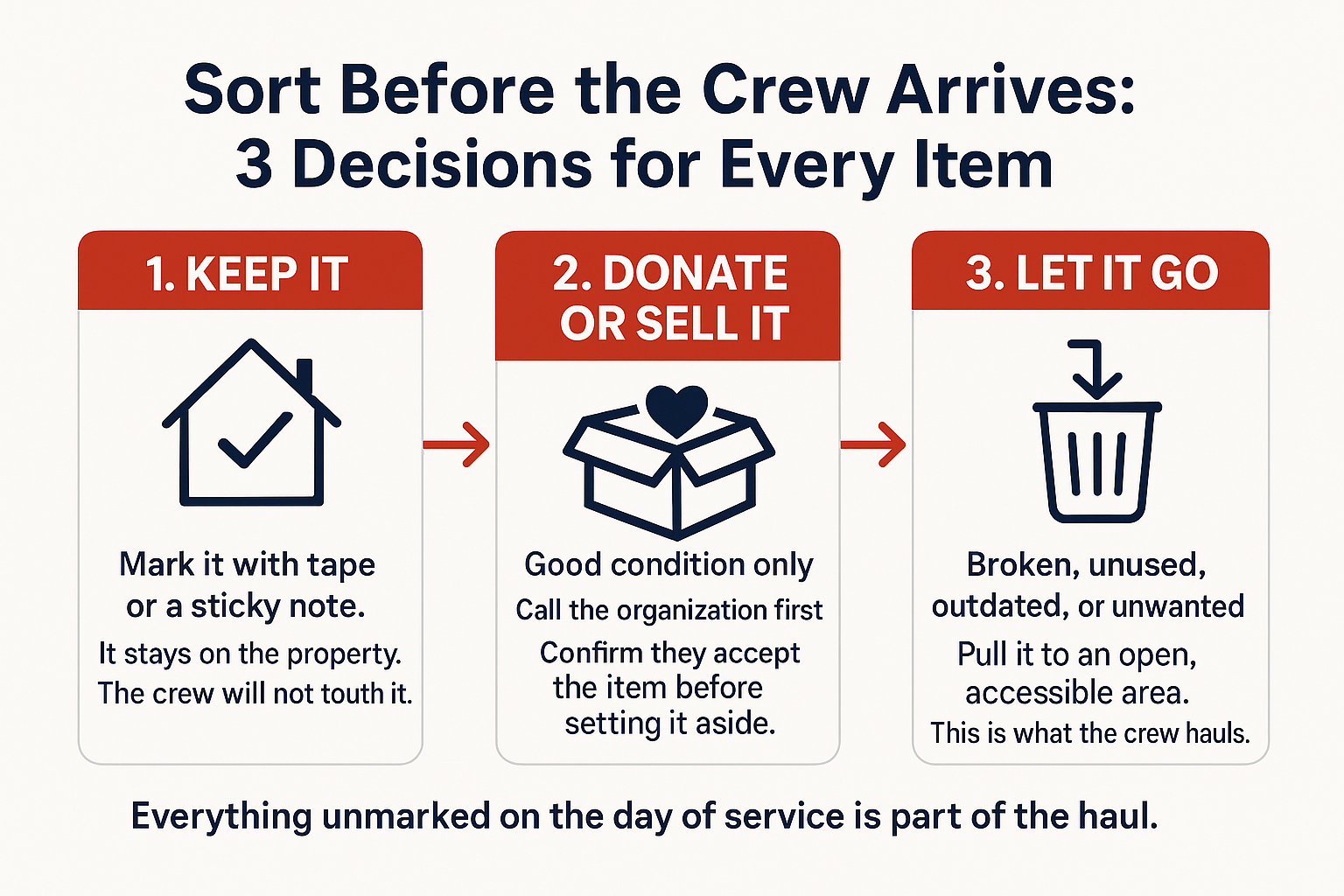
Sorting before a cleanout doesn’t mean moving furniture or dragging stuff to the curb. It means making three decisions for each category of items in the house:
- Keep it, it’s staying on the property or going home with you
- Donate or sell it, it’s in good condition and could go to someone else
- Let it go, it’s trash, broken, worn out, or you just don’t need it anymore
That’s it. Those three buckets cover everything in the house.
The reason this matters is simple: a crew can move at full speed when those decisions are already made. What slows a cleanout down isn’t the volume of stuff, it’s the uncertainty. When we’re stopping every few minutes to ask “does this stay or go?” the job stretches out. And if you’re paying by volume or by the hour, that time has a real cost. You can read more about what speeds up a same-day haul in a separate article that gets into the specifics.
Step 2: Start With the Easy Piles, Not the Hard Ones
Most people try to tackle the sentimental stuff first. That’s the wrong order.
Start with the things that are clearly trash. Broken items, expired products, torn clothing, old paint cans, cardboard boxes that have been sitting in a garage since the last move, these are easy calls. Consolidate them into one or two accessible areas so the crew can walk straight to them and start loading.
For large or heavy items that are clearly going, old appliances, broken furniture, bulky debris, the most useful thing you can do is pull them away from walls and corners. A pile the crew can circle and load directly is much faster to clear than the same items wedged behind other furniture or stacked in a narrow hallway. This matters especially on second-story cleanouts or properties with limited driveway access.
Once the obvious trash is organized, you’ll feel less overwhelmed, and you’ll have a clearer head for the harder decisions.
Step 3: The Hardest Category Is the Middle One
The trash is almost never what slows people down emotionally. It’s the stuff in the middle.
I’m talking about the furniture that nobody uses but someone’s grandmother picked out. The box of tools that hasn’t been touched in fifteen years but feels wrong to throw away. The paperwork from a previous decade that might be important but nobody knows for sure.
If you’re handling an estate cleanout after a loss, which many of our customers are, that middle category carries real weight. One customer whose mother had passed shared that just having a crew that was compassionate and patient made an enormous difference. Sorting through someone else’s belongings is hard, and there’s no timeline you have to hit to “be ready.”
For the items in the middle, give yourself a simple rule: if you can’t name a specific reason to keep it or a specific person it’s going to, let it go. If it’s still in good condition, consider whether it could be donated before it goes to the landfill. You can read more about the hardest part of an estate cleanout, and it’s not always what you’d expect.
Step 4: Know What Qualifies for Donation Before You Set It Aside
Items in good condition that you separate before the crew arrives have a real chance of being routed away from the landfill rather than ending up at the John Smith Road Landfill in Hollister. That’s worth doing when you can.
But local donation organizations, including thrift stores and community programs in the Gilroy and Hollister areas, have their own rules about what they accept. Most take furniture and working appliances, but they typically won’t accept items that are stained, broken, or missing parts. The California Department of Resources Recycling and Recovery (CalRecycle) maintains general guidance on donation and diversion options if you want to understand the broader framework.
The practical takeaway: call ahead before assuming an item qualifies. Don’t set aside a couch with a tear in it expecting it to be donated, that creates confusion on the day of the job. If something is in genuinely good shape and you’ve confirmed a local organization will take it, set it in a clearly separate area and let the crew know. We won’t haul what you’ve told us to leave.
And don’t overpromise yourself on this step. For a large cleanout, the majority of items typically go to disposal regardless, and that’s fine. Even routing a few pieces away from the landfill is worth the effort.
The Simple Three-Decision Sort System
Before a cleanout crew arrives, every item in the house falls into one of three categories. This breakdown shows how to make those calls quickly.
Step 5: Use Tape or Sticky Notes to Mark What Stays
This is the single most useful thing you can do before the crew walks in the door.
Go room by room and put a piece of tape or a sticky note on anything that is not going. A lamp your daughter wants. The filing cabinet you’re keeping. The dining table that’s moving to the guest room. Mark it clearly.
Then step back. Everything in the house that has no mark on it becomes part of the haul. The crew knows exactly what to touch and what to leave alone, with no guesswork and no back-and-forth conversations in every room.
This sounds almost too simple. But the most time-consuming part of any cleanout job is the undecided pile, items scattered throughout the property with no clear signal either way. Eliminating that ambiguity before we arrive is the fastest way to get a large cleanout done in a single visit. And for a job big enough to need multiple trips or crew members, that time savings adds up quickly.
What to Consolidate Before the Crew Arrives, By Area
Different areas of a home create different sorting challenges. Here’s a quick reference for where to focus your prep time.
| Area of Home | Common Items to Flag | Prep Tip |
|---|---|---|
| Garage | Old tools, broken appliances, sports equipment, paint cans | Pull items away from walls and toward the center or garage door opening |
| Bedrooms | Furniture, clothing, boxes from previous moves | Stack boxes in one corner; mark furniture you’re keeping with tape |
| Kitchen | Small appliances, dishes, pantry items | Group donation-eligible items in one box; trash in another |
| Living Room | Sofas, bookshelves, electronics, decorative items | Identify sentimental items first and mark them; everything else is fair game |
| Attic or Storage | Holiday items, old paperwork, luggage | If you haven’t opened it in over two years, it’s almost certainly a haul item |
A Note on Pricing and Volume
Most full-service junk removal and property cleanout pricing is based on how much space your items take up in the truck. The more volume, the higher the cost, generally speaking.
What that means practically: if you pull out a few large items you’re keeping or route a few pieces to donation before the crew arrives, you may reduce the load size. That can affect what you pay. I can’t tell you exactly how much, because every job is different, the type of items, the access to the property, and the number of trips all factor in. But the relationship between volume and cost is real, and sorting helps.
If you’re unsure whether your job warrants a full-service crew versus a dumpster rental, that’s a question worth asking before you book. The article on dumpster rental vs. full-service junk removal breaks down when each option makes more sense.
Frequently Asked Questions About Preparing for a Property Cleanout
Do I have to sort anything before the crew arrives, or will they handle everything?
You don’t have to sort a single thing if you don’t want to. A full-service crew handles all the loading and cleanup regardless. But if pricing is volume-based and you have items you want to keep or donate, separating them in advance protects you from paying to haul things you didn’t mean to haul.
What if I don’t know what I want to keep yet?
That’s more common than you’d think, especially with estate cleanouts or homes with decades of accumulated items. In that situation, the tape method works well, only mark what you’re certain about keeping, and let everything else go. You can also ask about doing a walkthrough before booking so the crew can give you a realistic picture of the job scope.
Will the crew take furniture that’s in good condition to a donation organization?
Some items in good condition can potentially be routed away from disposal, but we can’t guarantee donation routing for any specific item. The best approach is to call a local organization yourself first, confirm they’ll accept the piece, and have it clearly separated before the crew arrives. That way there’s no confusion on the day of service.
How do I handle paperwork and personal documents I find during sorting?
Set all paperwork aside in a box or bag and go through it separately before the crew arrives. Shred or keep any financial documents, personal identification, or legal papers, don’t let those go out in a general haul. If you find a large volume of old records you’re not sure about, a quick call with a family member or an estate attorney can save you a headache later.
What’s the one thing I should do if I only have an hour before the crew shows up?
Use tape or sticky notes to mark everything you want to keep. Walk every room, mark every “keeper,” and assume everything unmarked is going. That single step eliminates the most time-consuming conversations on the day of service and lets the crew move at full speed from the moment they walk in.
Ready to Get a Property Cleanout Scheduled?
If you’re in Hollister, Gilroy, or anywhere in San Benito County and you’re staring down a house full of stuff, we’re available seven days a week and can often get out the same day when you call before noon. Reach out to MG Transportation & Hauling at (831) 297-1972 or visit mgtransportationhauling.com to request a free estimate, and if you have questions about what to sort before we arrive, just ask. That’s exactly the kind of thing worth talking through before we show up.