
Direct Answer: After a remodel in Gilroy, debris removal is usually the homeowner’s responsibility unless your contract explicitly says otherwise. Construction and demolition waste cannot go in your curbside bin and must be hauled to an approved facility.
You finished the kitchen. The tile is in, the cabinets are up, and the contractor’s crew has packed their tools and left. Then you walk outside and see it: a heap of broken tile, scraps of drywall, old flooring, and maybe a chunk or two of concrete sitting on your driveway. Nobody told you who was supposed to deal with that.
This is one of the most common surprises homeowners in Gilroy and South Santa Clara County face after a remodel. According to Harvard’s Joint Center for Housing Studies, national homeowner improvement spending is projected to reach roughly $518 billion in 2026, which means a lot of families are finishing projects and staring at a pile of debris with no clear plan. The Gilroy area is right in the middle of that trend.
I want to walk you through the three things that actually matter here: who is responsible for the debris, where it legally has to go, and how disposal costs work when the material is heavy. If you sort those three things out, the rest is just scheduling a pickup.
Who Is Actually Responsible for the Debris After a Remodel?
This is where a lot of homeowners get caught off guard, and I’ve heard the frustration more than once. The contractor finishes the job, the crew walks out, and the homeowner assumes cleanup was part of the deal. Often, it isn’t.
In most residential remodel contracts, debris removal is treated as a separate line item, not a built-in part of the scope. If it isn’t written into the agreement, the contractor isn’t obligated to haul anything away. Some contractors do offer it as an add-on, but others leave it entirely to the homeowner to figure out after the fact.
Before you assume your contractor will handle it, check your contract for language like:
- “haul-out included”
- “site cleanup and disposal”
- “debris removal to [specific facility]”
If none of that language is there, the debris is yours to deal with. And if you’re already past that point and the pile is sitting in your driveway, the practical question isn’t who should have handled it. It’s what to do now.
One thing worth knowing: if your project required a permit from the City of Gilroy Building Division, there’s a real scheduling reason to move the debris quickly. Final inspections generally expect the worksite to be cleared. Letting the pile sit while you wait on an inspection can create a bottleneck that delays your sign-off. Debris removal isn’t just cleanup; it’s part of completing the project the right way.
For a broader look at how demolition and remodel debris responsibility plays out, Demolition Debris and Who’s Actually Responsible for Removing It covers that topic in detail.
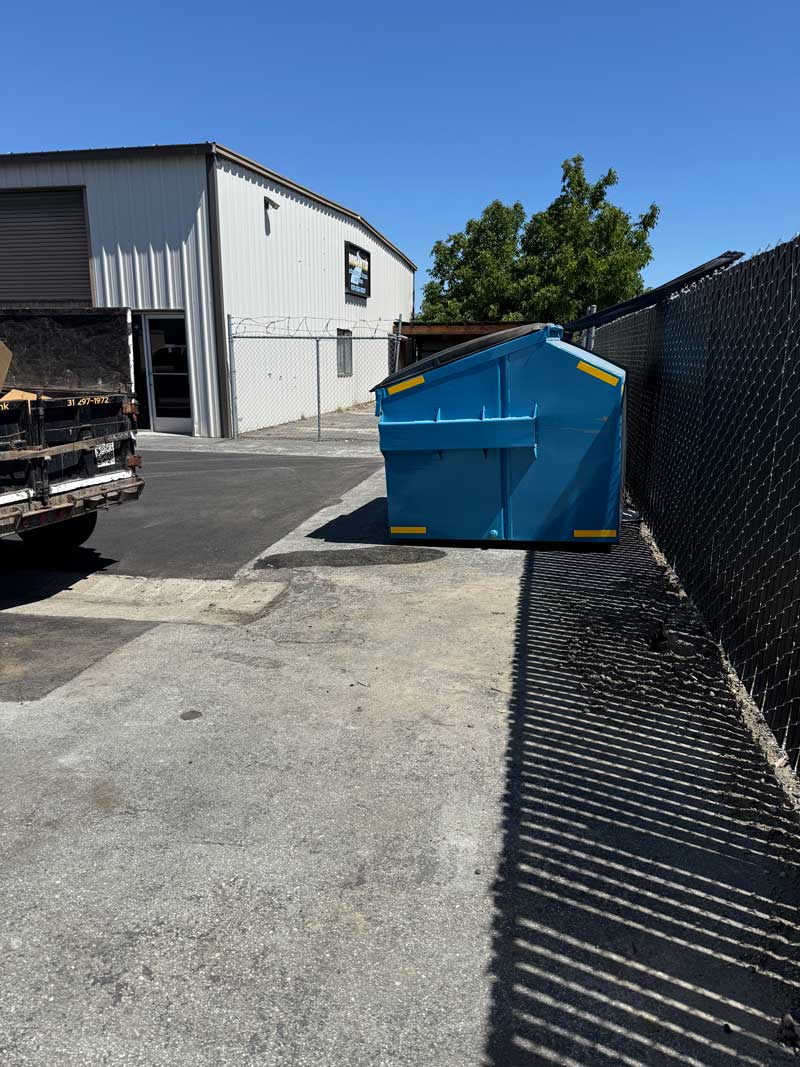
Where Construction Debris Actually Has to Go in Gilroy
This is the part that surprises people who’ve never dealt with it before. Renovation debris is not regular trash. Drywall, concrete, tile, flooring, and roofing materials are classified as construction and demolition (C&D) debris, and they cannot go in your curbside bin. Most waste haulers in Gilroy will reject it or charge an overage fee if you try.
The closest facility that accepts C&D debris from homeowners in this area is the San Martin Transfer Station, located at 14070 Llagas Avenue in San Martin. Their hours are Tuesday through Saturday, 8 a.m. to 4 p.m., and fees are weight-based, meaning you pay by the ton rather than by the load.
For someone who works a standard Monday through Friday schedule, that Tuesday-Saturday window is a real constraint. You’d need to take time off, rent or borrow a truck capable of carrying heavy material, and make the trip yourself. For a small amount of debris, that might be manageable. For anything left over from a full kitchen or bathroom gut job, it usually isn’t.
For more detail on what actually happens after construction materials leave your property, What Happens to Construction Debris After Your Renovation? and Where Does Construction Debris Actually Go After a Remodel? both break that down clearly.
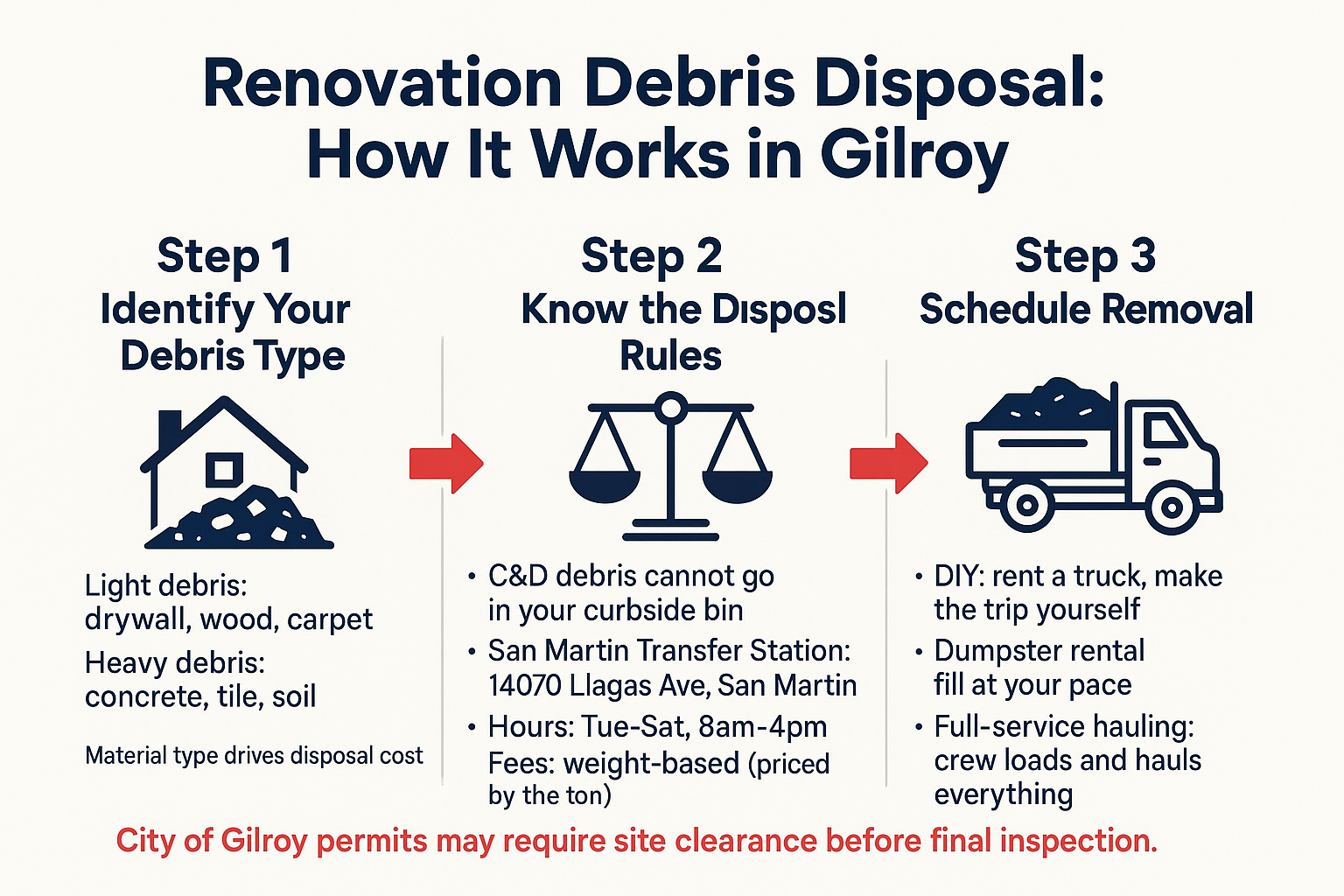
How Renovation Debris Disposal Works in Gilroy
This infographic outlines the three-stage path from finished remodel to cleared worksite, and what factors affect cost at each step.
Why Heavy Materials Cost More to Haul Than You Expect
I want to spend some time on this because it’s where cost surprises happen most often. When people ask for a quote on construction debris removal, they tend to think about volume, meaning how much stuff there is. But with renovation materials, weight matters as much as volume, and sometimes more.
Here’s the practical difference:
- A truckload of old cardboard boxes, carpet scraps, and light furniture might weigh very little even when it looks full.
- A small pile of concrete chunks, ceramic tile, or soil can weigh significantly more than it looks.
Disposal facilities charge by the ton, and those weight-based fees apply to whoever is hauling the material. When a hauler prices your job, they’re factoring in what it will actually cost to dispose of your specific debris at the destination facility.
This is why a quote for removing drywall doesn’t automatically translate to the same price for removing concrete. The material type has to be part of the conversation from the start. When you call for a quote, describe what you have as specifically as you can:
- What material is it? (Tile, drywall, wood, concrete, carpet, mixed?)
- How much of it is there? (A few bags, half a truck, a full truckload?)
- Is it all in one place, or spread across the property?
That information lets a hauler give you a number that actually reflects your job. For more context on what drives cost, What Junk Hauling Actually Costs in Hollister (and What Drives the Number) and Why Your Junk Removal Quote and Your Final Bill Don’t Always Match both explain the mechanics in plain terms.
For most homeowners in Gilroy dealing with a standard remodel, costs can vary widely depending on what materials are involved and how much. A small pile of light debris sits in a different pricing category than a mixed load of tile, concrete, and old subflooring. The only way to get an accurate number is to describe what you actually have.
Common Renovation Materials and How They Affect Disposal
Different materials from the same remodel job are handled and priced differently. This comparison helps explain why debris type matters when you call for a quote.
| Material | Weight Category | Notes on Disposal |
|---|---|---|
| Drywall | Light to medium | Accepted at C&D facilities; not curbside trash |
| Wood framing scraps | Light | Often accepted at C&D facilities; weight adds up fast in volume |
| Ceramic or porcelain tile | Heavy | Dense material; weight-based fees can be significant even for small piles |
| Concrete (slabs, chunks) | Very heavy | Highest weight-based disposal costs; small volumes can cost more than expected |
| Carpet and padding | Light to medium | Bulky but relatively light; often priced by volume rather than weight |
| Mixed debris (multiple types) | Varies | Quote requires description of what’s in the mix; don’t assume a flat rate |
Dumpster Rental vs. Full-Service Removal for Remodel Debris
Once you know your debris needs to go to a proper facility, the next decision is how to get it there. There are two main routes, and the right one depends on your timeline and how much physical work you want to do yourself.
Dumpster rental makes sense when you want to load at your own pace. After a remodel, you might still be doing finish work and generating debris over several days. Having a dumpster on-site lets you toss material as you go. We offer three sizes, and for renovation debris, the right size depends on what you’re working with:
- 10-yard for smaller jobs like a single bathroom or minor updates
- 15-yard for mid-size projects like a full bathroom gut or partial kitchen
- 25-yard for larger remodels, full room renovations, or mixed material loads
Rentals start at $500 for a 2-day rental, which reflects our confirmed pricing. Heavy materials may affect the final cost depending on weight at disposal.
Full-service removal is the right call when you want the crew to do the loading. You point at the pile, we do the rest. For homeowners who are already exhausted from a long project, or who don’t want to risk back strain loading heavy tile and concrete, this is usually the more practical option.
For help thinking through which approach fits your situation, Dumpster Rental vs. Full-Service Junk Removal: How to Pick the Right One walks through the decision clearly. And if you’re wondering whether the debris sitting on your property is crossing the line from manageable to too much for a solo effort, 8 Signs Your Cleanout Job Is Too Big to DIY is worth a quick read.
Frequently Asked Questions About Renovation Debris Removal in Gilroy
Can I just put renovation debris in my regular trash bin in Gilroy?
No. Construction and demolition materials, including drywall, tile, concrete, and flooring, are classified separately from household trash and cannot go in your curbside bin. Your regular waste hauler will either reject the bin or charge an overage fee. This material has its own disposal pathway and needs to go to a facility like the San Martin Transfer Station.
My contractor said cleanup was included, but they left debris behind. What now?
Check your contract first. If cleanup and haul-out are written in, you have grounds to contact the contractor about it. If the language isn’t there, it’s a gray area that often comes down to what was verbally agreed. Either way, if you need the debris gone quickly, especially if you have a final inspection pending with the City of Gilroy Building Division, the practical answer is usually to schedule a separate removal and sort out the dispute with the contractor separately.
Does a small amount of concrete or tile cost more to remove than a large pile of drywall?
It can, yes. Disposal facilities charge by weight, and heavy materials like concrete and tile weigh significantly more per cubic foot than light materials like drywall or wood scraps. A small but dense pile of concrete can cost more to dispose of than a much larger pile of lighter debris. When you call for a quote, describe the material type specifically, not just the volume.
How fast can renovation debris be removed in Gilroy?
We run seven days a week, and same-day scheduling is available when you call before noon. For larger loads or if you need a dumpster dropped, calling ahead by even a day gives you the most flexibility. Describe your material type and rough volume when you call so we can match the right crew and equipment to the job.
Will debris sitting on my driveway hold up my final inspection with the City of Gilroy?
It can. Permitted remodel projects typically require the worksite to be cleared before a final inspection is signed off. If debris is still piled in the work area or blocking access, it may delay your sign-off. Getting it removed before you schedule the inspection removes that variable entirely.
Ready to Clear the Debris and Close Out Your Project?
If you’ve finished a remodel in Gilroy or anywhere in South Santa Clara County and need the debris gone, we’re available seven days a week, including same-day pickups when you call before noon. Reach us at (831) 297-1972 or request a free quote at mgtransportationhauling.com. Describe what you have and where it is, and we’ll give you a straight number with no hidden fees.