
Direct Answer: Price depends on your rig’s length, height with the AC, weight, hitch type, tire and bearing condition, access at both ends, and the exact route. An accurate number comes from a conversation.
Camping season winds down in October, and the rig that was fun in July is now a 35-foot problem sitting in your side yard. The rain is coming, the neighbor has started giving it a look, and you need it somewhere else before December.
Most people who call me about moving a 5th wheel to winter storage are still figuring out how transport even works. They want to know what the move will cost, but they don’t yet know what information anyone needs to answer that.
So this is the homework. I’ll walk through the specs, the access details, and the route facts that decide both the price and whether the move is even doable this month. Do this part first and you avoid the surprises that show up on move day.
What I Need to Know Before Anyone Can Price Your Move
A fifth wheel quote is not a per-mile number pulled out of the air. It comes from a short list of facts about your specific rig, and every one of them changes what truck, what route, and how long.
Here is what to gather before you make the call:
- Total length, bumper to pin, not the model number on the side. A “32-foot” model is often closer to 35 feet in real life.
- Width, including slide-out awnings and any exterior racks.
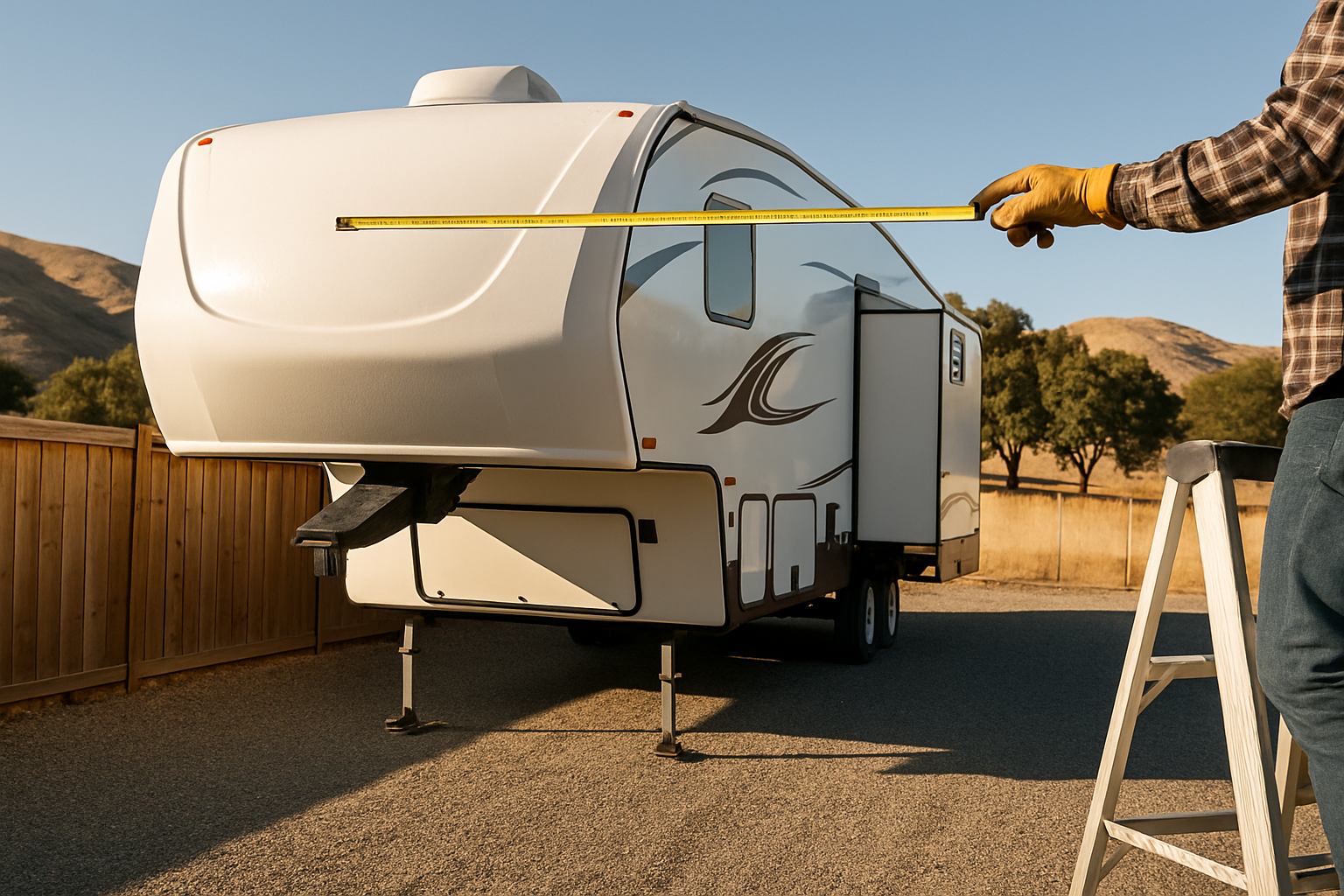
- Height with the AC unit included. This is the one owners get wrong most often, and it decides which overpasses and tree-lined streets are usable.
- Dry weight off the manufacturer plate, plus an honest guess at what’s still loaded inside.
- Pin box and hitch type, including whether it’s a standard king pin or a gooseneck adapter.
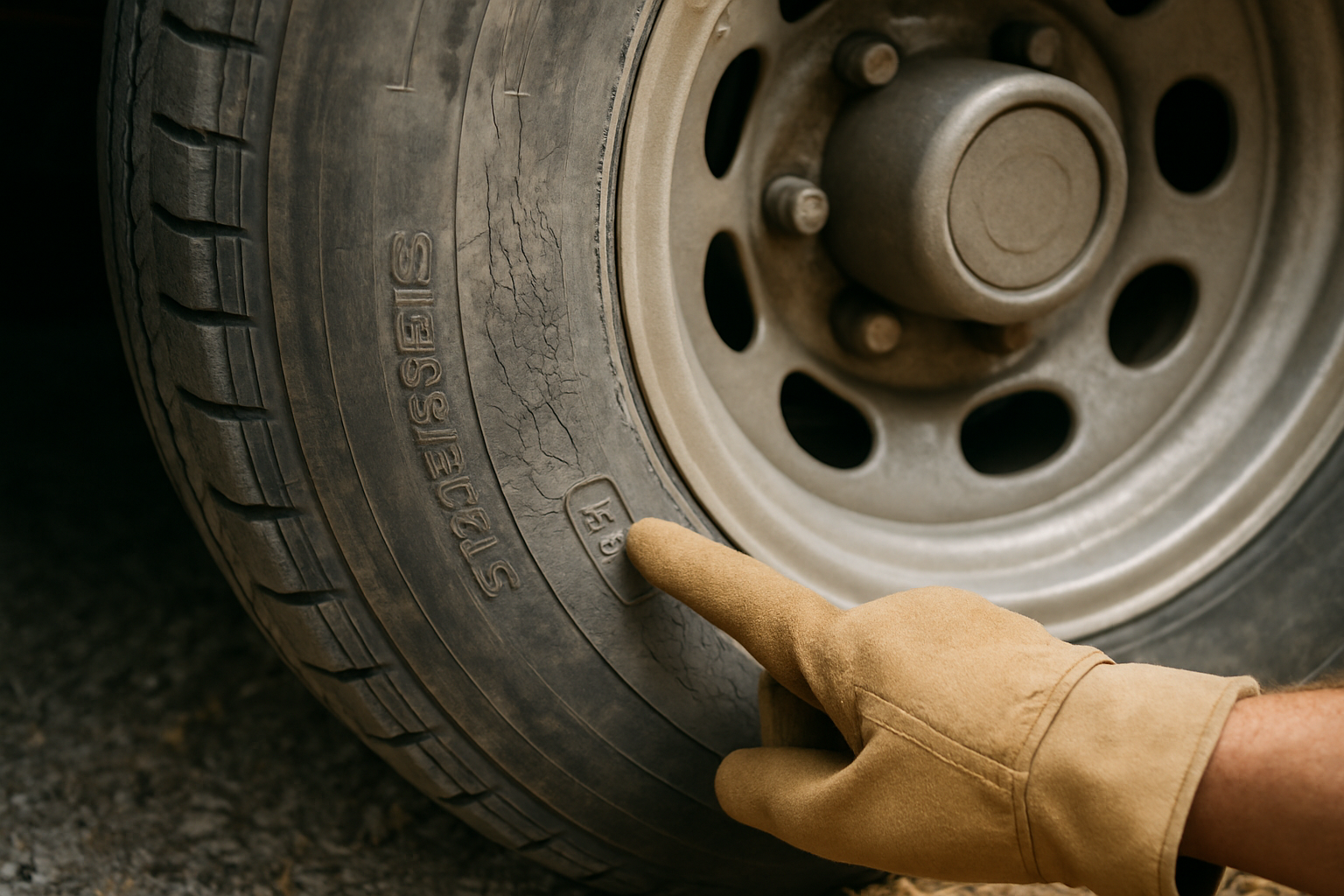
- Tire age and condition. Read the date code on the sidewall, not the tread.
- Wheel bearings, meaning when they were last packed or inspected.
- Brakes and lights, and whether the trailer plug still works.
- Current registration, since an expired tag on a highway move is a real problem.
I won’t put dollar figures on any of these in a blog post, because the honest answer depends on how they stack up together. A short, light, road-ready rig in an open driveway is a different job than a long one that hasn’t rolled in four years.
The Sitting-Still Problem: Tires and Bearings
A fifth wheel parked in the same spot since 2022 is the most common version of this call I get. The trailer looks fine. The tires look fine. Neither one is a guarantee.
RV tires age out on a calendar, not on mileage. Rubber that has baked through four Hollister summers and sat flat-spotted on gravel can fail on the first grade even with tread left. The NHTSA tire safety guidance explains how to read the date code stamped on the sidewall, and that four-digit number tells you more than a visual check will.
Wheel bearings are the quieter risk. Grease dries out and water finds its way in while a rig sits, and a seized bearing on Highway 152 turns a two-hour move into a tow and a repair.
If your answer to “when were the bearings last done” is “I don’t know,” say that on the call. It’s not a strike against you. It just means the conversation includes whether the rig gets serviced before it rolls, and that affects scheduling more than it affects anything else.
Access at Both Ends Is Where Jobs Go Sideways
If a transport job runs long or costs more than the owner expected, access is almost always why. Not the mileage. The first 60 feet and the last 60 feet.
On the pickup side, the things that slow a fifth wheel down are specific:
- Turning radius. Older streets in Hollister and the neighborhoods off Monterey Street in Gilroy were not laid out for a dually pulling 35 feet behind it. A tight corner can mean multiple pull-forwards or a different approach direction entirely.
- Low branches and utility lines. A 13-foot rig under an 11-foot limb over the driveway is a stop-everything moment. Walnut and oak limbs grow over side yards fast out here.
- Soft ground. Gravel and dirt side yards hold up fine in October. After the first real storm they turn into something a loaded truck will sink into.
- Fences, gate posts, and parked cars. Six inches of clearance on paper is not six inches in practice.
The drop side has its own list. Storage lots vary wildly on gate width, aisle width, and whether the back rows are paved. Some facilities also require you to back into an assigned spot rather than pull through, which changes how long the drop takes.
Here’s the practical ask: measure and photograph both ends before you call. Gate width, the approach from the street, overhead obstructions, and the surface. Five photos from your phone answer questions that ten minutes on the phone can’t.
The Prep Checklist, and Why Each Item Matters
This is the short version of what I ask for, why it matters, and where to find it.
| What to Check | Why It Changes the Job | Where to Find It |
|---|---|---|
| Height with AC | Decides route, overpasses, and tree clearance | Measure ground to top of AC shroud |
| Total length | Affects turning radius and permit threshold | Tape measure, pin to bumper |
| Dry weight | Determines truck and tow setup | Manufacturer plate near the door |
| Tire date codes | Old rubber may need replacing before transport | Four-digit code on sidewall |
| Bearings and brakes | Safety and whether service comes first | Service records or recent inspection |
| Gate and aisle width at storage | Most common cause of a delayed drop | Measure or ask the facility |
| Exact drop address | Route planning and permit review | Facility confirmation, not just city name |
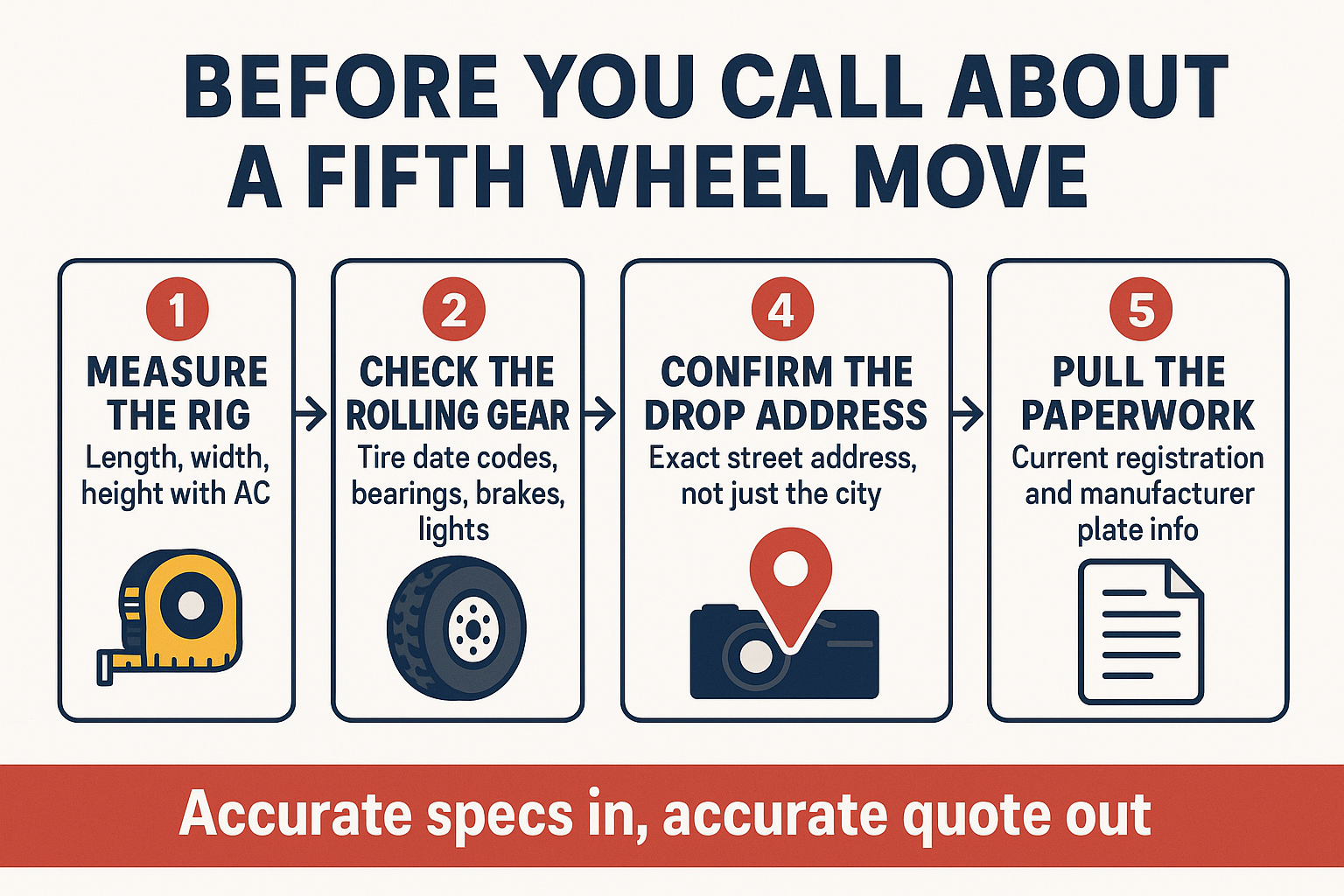
Your Pre-Call Homework at a Glance
Five things to have in hand before you ask anyone to price a storage move.
Why the Route Matters More Than the Mileage
A fifth wheel is a tall, flat-sided box. That shape is why route planning is a bigger deal here than it is for a car or a utility trailer.
Most storage moves out of Hollister head one of three ways: up Highway 25, onto 101, or east over Pacheco Pass on Highway 152 toward a Central Valley lot. Pacheco Pass has grades and crosswinds that a driver has to respect with a high-profile trailer, and there are afternoons when the smart call is to wait out the wind rather than fight it.
Exact dimensions also decide whether an oversize permit is in play. California sets limits on width, height, and length, and anything past them means a permit and sometimes a restricted route or time of day. Caltrans publishes the rules through its transportation permits program, and a transporter who knows that system plans around it instead of discovering it mid-trip.
That’s also why I ask for the exact drop address rather than “a lot in Los Banos.” The last two miles to a storage facility can include a low railroad underpass or a weight-limited county bridge that doesn’t show up when you only name the city. Freight and fuel costs shift with the season too, which is part of why hauling prices move around during the year.
The Calendar Is Doing Half the Deciding
Hollister gets roughly 15 inches of rain a year, and almost all of it lands between December and February. December alone averages about 11 rainy days.
That means mid-October through mid-November is your last dependable dry stretch for pulling a rig out of a soft side yard. After the ground soaks, the same move either waits for a dry window or needs a different approach to get the truck in.
Short winter daylight compresses things from the other direction. A driver covers less ground per day in December than in October, which matters on a long haul to a Central Valley or out-of-area lot.
If you bought a used fifth wheel out of state this fall and need it brought home, you’re on the same clock from the opposite side. Same prep list, same weather window. While you’re planning, it’s a good time to think about what else needs to clear your side yard before the December rain, because the same soft ground affects all of it.
What Good Transport Communication Looks Like
Two things show up over and over in what our customers say matters most, and neither is about equipment.
The first is a fast reply to the first call or text. If you can’t get a straight answer in the first hour, that usually predicts how the rest of the job goes.
The second is a driver who tells you where the load is. One customer put it plainly in a review: “The service was awesome , with my car being picked up and delivered on the scheduled dates. The driver provided updates along the way, which kept me informed about the progress.” That’s the bar. You should never have to wonder whether your rig left the driveway.
If you want the mechanical side of why a fifth wheel is its own category, we covered how moving a 5th wheel differs from a standard tow in a separate post.
Frequently Asked Questions About Fifth Wheel Storage Moves
How do I measure my fifth wheel’s real height?
Measure from the ground to the top of the rooftop AC shroud, not to the roofline. Do it on level pavement with the tires at normal pressure. Owners are often a foot off, and a foot decides which route works.
My rig hasn’t moved in four years. Can it still be transported?
Usually yes, but tires and wheel bearings get looked at first. Dry rot and dried-out grease are the two failure points on a rig that’s been sitting, and neither one shows up in a quick glance. Mention the sitting time on the first call so it’s part of the plan instead of a surprise.
Do I need a permit to move my fifth wheel in California?
It depends entirely on your exact width, height, and length. California has set limits, and if your rig exceeds them an oversize permit and a reviewed route come into play. This is the main reason a transporter asks for precise measurements instead of a model name.
Why can’t I get a price over the phone in two minutes?
You can get a ballpark once we know the specs and the two addresses. What takes the extra few minutes is access, because a narrow gate or a low limb changes the job more than another 20 miles of highway does. A short conversation beats a wrong number.
Is October really better than January for this?
For a rig parked on gravel or dirt, yes. Once the December storms hit, soft ground and short daylight both work against you. If the trailer sits on concrete with a clean paved approach, the season matters less.
Thinking Through a Storage Move This Fall?
Marcus and the crew handle RV and fifth wheel transport across Hollister, Gilroy, San Benito County, and down into Monterey County, and we’re happy to talk through a specific rig and a specific route. Bring your measurements, your tire date codes, and photos of both ends, and the conversation goes a lot faster. You can reach us at (831) 297-1972 or at mgtransportationhauling.com.
