
Direct Answer: For one or two light household loads, hauling it yourself is usually cheaper. Once you hit a third or fourth trip, fuel, truck wear, and lost weekends make a rented dumpster the better deal.
Almost every week, somebody calls me after they already made three trips to the dump in a borrowed truck. They started out trying to save money, and by the second Saturday they were sore, out of gas money, and still looking at a full garage.
So let me answer the question people around Hollister and Gilroy keep typing into their phones: is it cheaper to rent a dumpster or haul it to the dump yourself? Sometimes yes. And there is a clear point where the math flips.
This is a different question from whether you should rent a box or hire a crew to load it. That one is about who does the lifting. This one is about whether your own truck can realistically do the job at all.
The Honest Answer: One or Two Light Loads, Haul It Yourself
If you have a single bedroom’s worth of furniture, a few bags of clothes, and some flattened boxes, take it yourself. One trip to the landfill with a light load is almost always cheaper than any rental.
Two loads is still usually fine, as long as the stuff is light and you own or can easily borrow a truck.
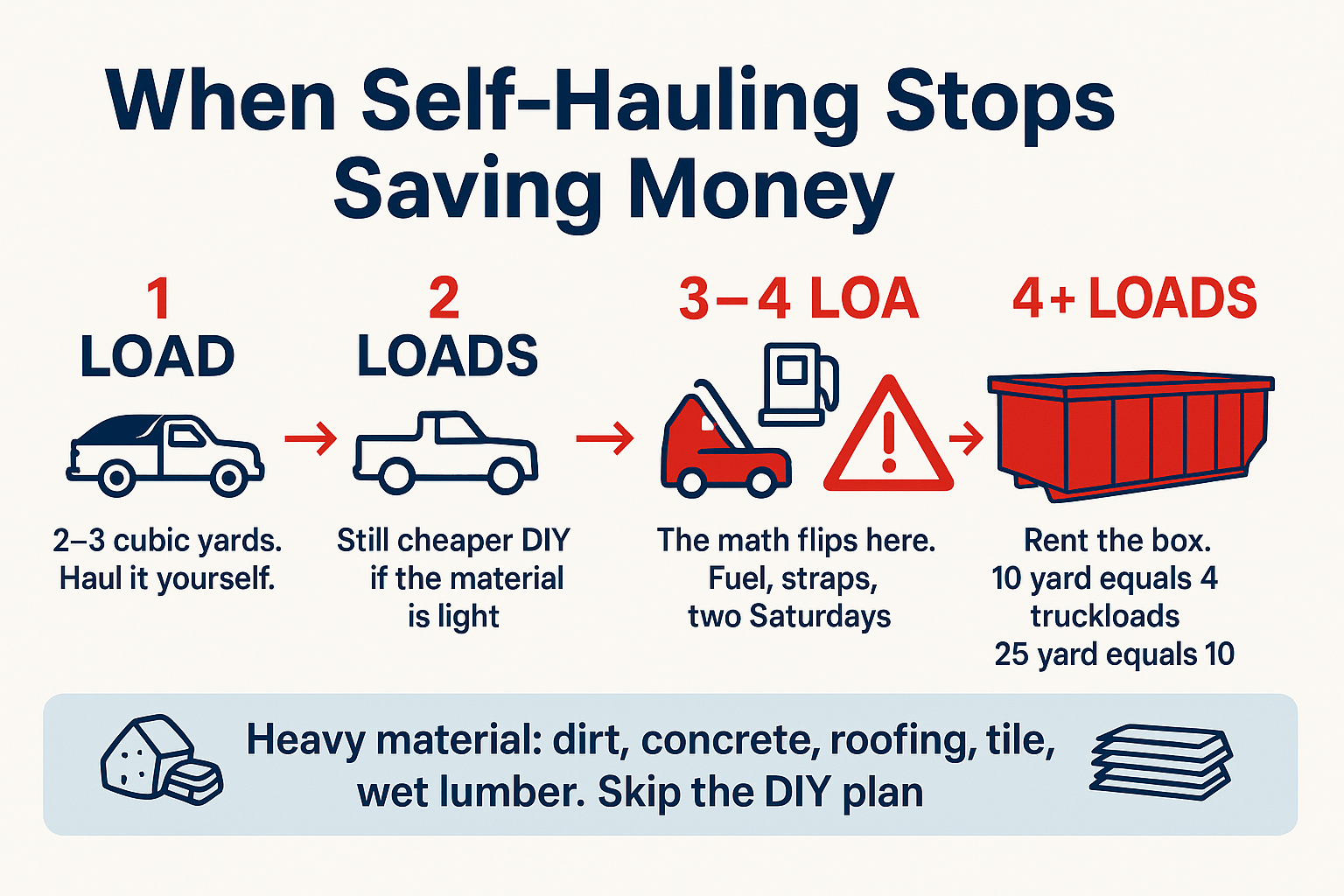
The math flips somewhere around the third or fourth trip. That’s when the real costs stack up:
- Gate fees charged on every single visit, not once
- Fuel for repeat round trips out Highway 25 or down to the transfer station
- Tarps, bungees, and ratchet straps you probably need to buy
- Borrowing a truck more than once, which gets old fast
- Two or three Saturdays you don’t get back
- Wear on a vehicle you still need for work Monday morning
A customer in San Benito County told me she had done two truckloads and figured she was “halfway done.” She was about a quarter done. That gap between what people estimate and what’s actually there is the single biggest reason self-haul plans fall apart.
And disposal costs here are not standing still. It’s worth reading up on how rising local garbage rates affect haul-it-yourself plans before you commit to a dozen trips.
What a Self-Haul Trip Really Involves Out at the Landfill
Most people picture a quick drive, a quick fee, and a quick dump. The reality out at the John Smith Road Landfill east of Hollister has more moving parts than that.
The site is county owned and privately operated under an agreement overseen by San Benito County Integrated Waste Management. A few things worth knowing before you load:
- Construction and demolition material is priced on its own schedule, separate from household trash
- Posted customer safety requirements have included hard hats, safety vests, and eye protection at the working face
- Loads need to be secured and covered, and an untarped bed can turn into a problem before you reach the scale
- Hours and accepted materials change, so confirm both the same week you plan to go
I won’t print a per-ton number here, because rates change and you should confirm at the scale house. What I will say is that people routinely budget for one fee and get a second one because their load was mixed.
Showing up with a pile of drywall, old fence boards, a mattress, and a bag of dirt all together is how one Saturday trip becomes two. Different material, different handling, sometimes a different drop location entirely.
The Volume Math People Get Wrong Almost Every Time
This is where I see the biggest miss, and it’s worth slowing down on.
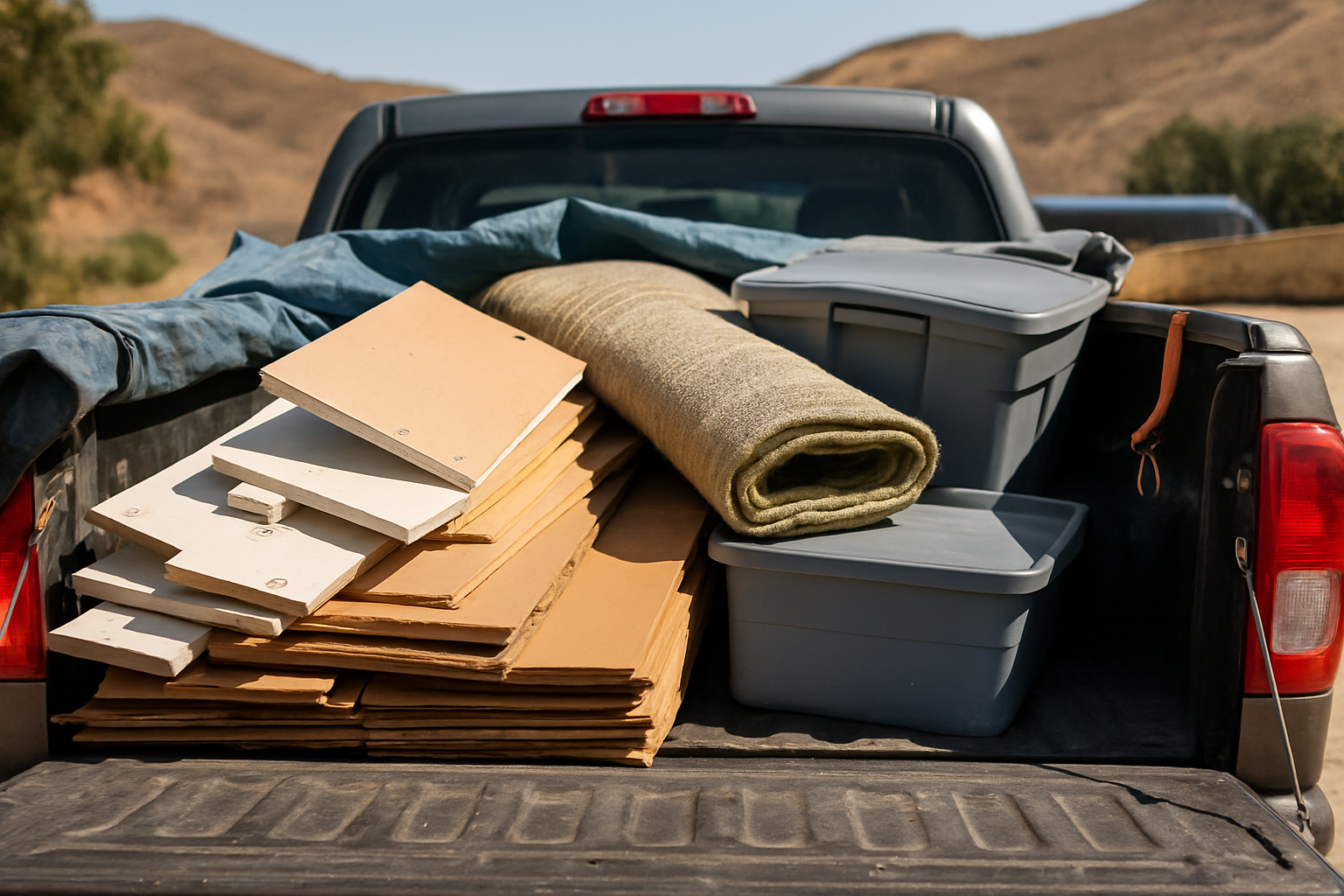
A standard half-ton pickup bed holds roughly 2 to 3 cubic yards when it’s heaped and tarped properly. Not when it’s piled loose and shifting around, and not when you’re trying to keep the load below the cab line for visibility.
Run that against rental sizes and the picture gets clear fast:
- A 10 yard box replaces about four truckloads
- A 15 yard box replaces roughly six truckloads
- A 25 yard box replaces closer to ten truckloads
Now walk out to your garage and count honestly. A two-car garage that looks like “two truckloads” from the doorway is almost never two truckloads once the shelving comes out, and once you pull the boxes that were hiding behind the shelving.
The same thing happens with sheds, tenant turnovers, and side yards. You’re estimating the stuff you can see, not the stuff behind it.
My rule is simple. Count the loads honestly, then decide. If your honest count is one or two, take it yourself. If your honest count is four or more, a dropped box on the driveway will cost you less in money, time, and back pain.
For reference, our dumpster rentals start at around $500 for a two-day rental, and the final number depends on size, material, and how long you keep it. Call for an exact quote on your job rather than guessing from a web page.
If you’re weighing a box against a crew doing the loading, that’s covered separately in dumpster rental vs. full-service junk removal.
How Many Truckloads Is Your Job, Really?
Here’s how common Hollister and Gilroy jobs usually shake out once everything is actually pulled into the driveway. Treat these as planning estimates, not promises.
| The Job | Honest Truckload Count | Usually the Better Call |
|---|---|---|
| One bedroom of furniture and boxes | 1 to 2 loads | Haul it yourself |
| Single mattress plus a broken dresser | 1 load | Free bulky program or self-haul |
| Packed two-car garage with shelving | 4 to 7 loads | 10 or 15 yard box |
| Backyard and shed cleanout | 3 to 6 loads | 15 yard box |
| Full tenant turnover, small unit | 4 to 8 loads | 15 yard box or full-service crew |
| Bathroom or kitchen remodel debris | 2 to 5 heavy loads | Box, due to weight limits |
| Whole-property or estate cleanout | 10+ loads | 25 yard box or a crew |
The Point Where Self-Hauling Stops Paying Off
A quick visual breakdown of how truck loads line up against rented box sizes, and where the DIY plan starts costing more than it saves.
Weight Is the Thing That Quietly Kills the DIY Plan
Volume is the obvious trap. Weight is the sneaky one.
A half-ton pickup has a payload limit, and certain materials hit that limit long before the bed looks full. Check your door jamb sticker if you’ve never looked at yours.
The usual offenders:
- Dirt and sod, which get heavy within a few shovelfuls
- Concrete, brick, and tile, where a partial bed is already over the line
- Roofing material, especially layered asphalt shingles
- Soaked lumber and fence boards that have been sitting in a side yard
- Plaster and drywall scrap in any real quantity
An overloaded pickup heading out Highway 25 is a safety problem, not a savings plan. Sagging suspension, longer stopping distance, and a load that shifts when you brake are all real.
The same material also changes what the disposal site charges and where it has to go. That’s why a mixed remodel pile is the worst possible candidate for self-hauling. You’ve got weight, sorting rules, and multiple drop points all at once.
When you do rent a box for heavy material, weight still matters on that side too, which I’ve broken down in how dumpster weight charges work.
Free Local Programs Solve a Smaller Problem
These programs are genuinely useful and I point people to them often. They just solve a different size of problem than most callers have.
San Benito County runs periodic free bulky item drop-off events at the landfill with tight limits, often a couple of items per household with ID required. The county also holds monthly household hazardous waste Saturdays. Over in Gilroy, households have bulky item pickup available through Recology South Valley.
If what you have is a mattress and a broken dresser, use the free option. No argument from me.
What these programs will not do is clear a two-car garage, a packed shed, or a tenant turnover. The per-household limits are built for a couple of items, not for a decade of accumulation. Gilroy readers can compare the two paths in more detail in free bulky pickup vs. hiring a hauler.
Timing Matters More Here Than People Think
There’s a seasonal piece to this that is specific to our valley.
October and early November are the last dependable dry stretch before the rain shows up. December through February are our wettest months, and anything sitting outside soaks it up.
Cardboard, mattresses, upholstered furniture, and bare lumber all gain real weight when they get wet. Heavier material costs more to dispose of, and it’s harder to load.
So the same pile in your side yard is a more expensive job in January than it was in October. If you’re already thinking about a cleanout, doing it before the rain is the cheaper version of the same project. And if you go the rental route, how long you actually need the box is worth planning around the weather too.
What to Ask Before You Book Either Option
Whichever direction you go, get the number before anything moves. That’s the part that protects you.
When you call about a box or a haul, you should get:
- An upfront price based on size, material, and duration
- A clear answer on what the price does and does not include
- A realistic drop-off and pickup window
- Flexibility on how long the box can stay if the job runs long
That transparency is what our customers mention most. One review put it plainly: “The service provided was excellent! They disclosed all information upfront and there were no hidden fees.” That’s Jennifer L., and that’s the standard we hold ourselves to.
Another customer told us she was confused about which option she even needed, and what she valued was somebody taking the time to walk her through it instead of pushing the biggest box. If you’re genuinely unsure whether your job is a two-load afternoon or a 15 yard situation, ask. That conversation is free and it takes about five minutes.
Frequently Asked Questions About Self-Hauling vs. Renting a Dumpster
How many pickup truckloads fit in a 10 yard dumpster?
About four. A standard half-ton bed holds roughly 2 to 3 cubic yards heaped and tarped, so a 10 yard box takes the place of four properly loaded trips.
Can I take construction debris to the landfill in my own truck?
Usually yes, but construction and demolition material is priced on its own schedule separate from household trash, and it may need to go to a different spot on the site. Confirm current rates, hours, and accepted materials before you load, because mixed loads are where people get surprised.
Is it cheaper to rent a dumpster or haul it to the dump yourself for a garage cleanout?
For a packed two-car garage, the box almost always wins. Garages routinely run four to seven truckloads once the shelving and the stuff behind the shelving comes out, and at that point you’re paying gate fees four to seven separate times plus burning multiple weekends.
What’s the worst thing to try to self-haul?
A mixed remodel pile. You’ve got weight limits, separate pricing for the construction material, and multiple drop points all in one load. Dirt, concrete, tile, and roofing will max out a half-ton payload before the bed even looks full.
Does the free county bulky item event cover a whole cleanout?
No. Those events typically limit you to a couple of items per household with ID required. They’re great for a mattress and an old dresser. They’re not built for a shed, a garage, or a tenant turnover.
Should I wait until after the holidays to do a cleanout?
If the material is sitting outside, waiting costs you. December through February are our wettest months, and wet cardboard, mattresses, and lumber get heavier and more expensive to dispose of than the same pile in October.
Still Not Sure If It’s a Two-Load Job or a Box Job?
If you’ve counted the loads and you’re landing somewhere in the middle, a quick phone call will sort it out faster than another Saturday guessing. We rent dumpsters and handle full-service cleanouts across Hollister, Gilroy, San Benito County, and the surrounding Monterey County, CA area, and we’ll tell you straight if your job is small enough to take yourself. Reach MG Transportation & Hauling at (831) 297-1972 or mgtransportationhauling.com when you want an upfront number before anything moves.
