
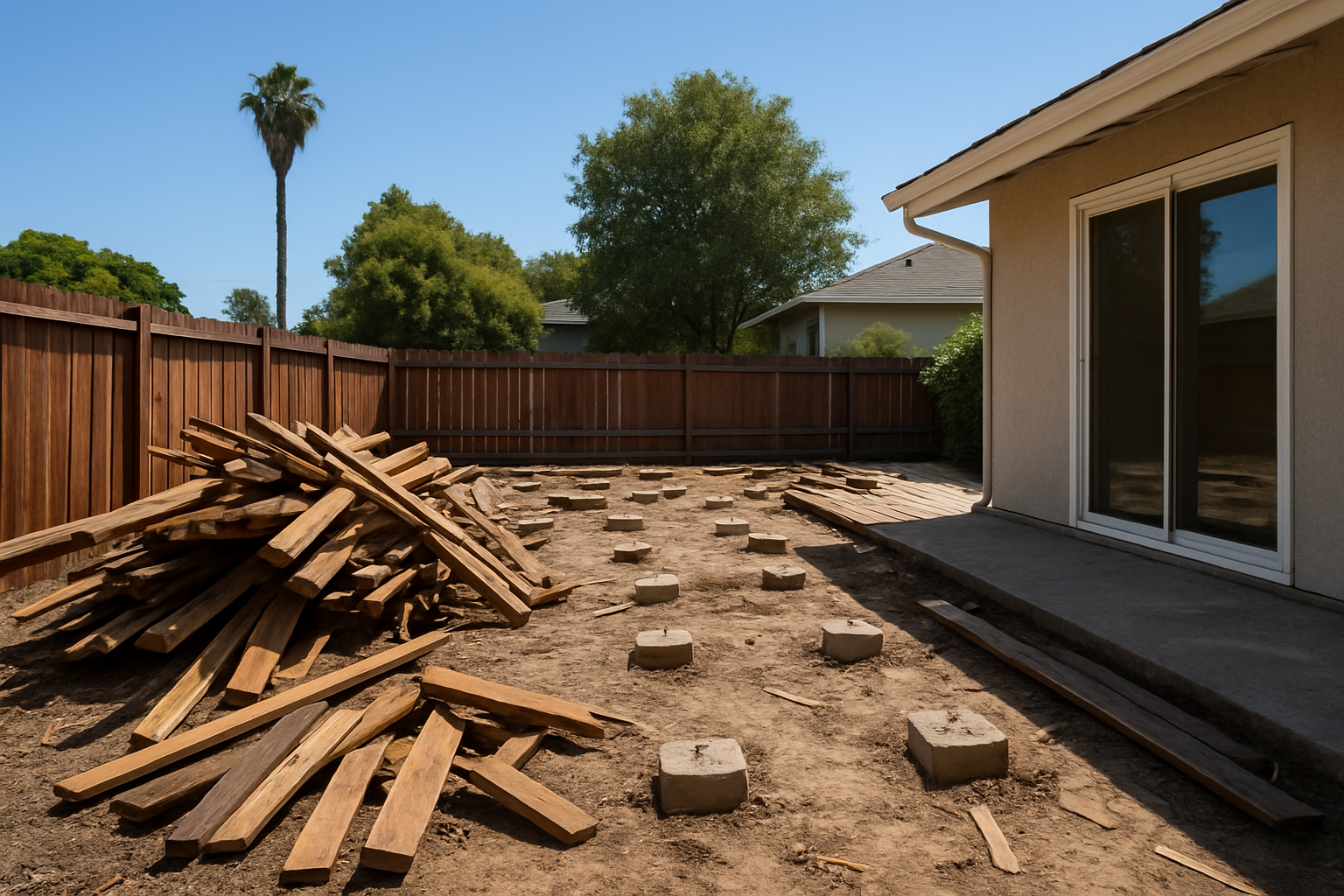
Direct Answer: After demolition, debris removal is the property owner’s responsibility unless you’ve explicitly contracted a crew to handle it. Most demo jobs don’t include hauling by default.
Here’s something I see on job sites in Gilroy and Hollister more often than you’d think: the demo is done, the contractor is gone, and the homeowner is standing next to a pile of lumber, broken concrete, and drywall with no plan. Nobody talked about who was actually removing the debris. It got treated as an afterthought, and now it’s a problem.
Debris removal is almost never automatically included in a demolition quote. A crew hired to tear down a shed, gut a bathroom, or pull a fence is usually scoped for the demo work itself. What happens to the pile after — that’s a separate conversation that a lot of people skip until they’re staring at it.
This article is about what actually happens after the demo ends: what different materials cost to haul, why permits matter more than most homeowners realize, how to coordinate a hauler on an active job site, and what you can do today to make the whole process faster and cheaper.
Why Demo Debris Costs More When You Don’t Plan It
Planning debris removal before the demo starts almost always saves money. When it’s an afterthought, you end up with a mixed pile — concrete chunks thrown in with lumber, drywall dust coating everything — and that’s the most expensive version of a load to dispose of.
Disposal facilities, including the John Smith Road Landfill that serves San Benito County, typically charge more for mixed loads than for sorted material. That’s because sorted concrete, sorted wood, and sorted drywall can be routed to different processing streams, some of which cost less per ton than general mixed construction waste.
The math works against you when everything gets dumped together in one pile:
- Mixed loads are often classified as general construction waste, which carries a higher tipping fee
- Sorted concrete can sometimes go to a lower-cost disposal or recycling stream
- Clean wood and clean drywall may qualify for separate handling depending on condition
I’m not saying you need to become a recycling expert before your fence comes down. But understanding that material composition directly drives disposal cost means you can make smarter decisions — even if that just means keeping the concrete footings in one corner and the lumber in another before we show up.
If you want a deeper look at how different materials get handled on the back end, what happens to construction debris after your renovation breaks it down clearly.
Not All Demo Debris Weighs the Same — and Pricing Reflects That
Weight is the biggest variable in what construction debris removal actually costs. This surprises a lot of homeowners who assume a truckload is a truckload.
Concrete and soil are dense. A small pile of broken concrete slabs can weigh several thousand pounds and fill only a fraction of a truck bed. Wood and drywall are comparatively light — you can fill a truck to the top and still come in well under the weight of a half-load of concrete.
Here’s a general picture of the most common demo debris types and what drives their disposal cost:
- Concrete and masonry — heaviest per cubic foot; priced by weight at most facilities; even a modest deck demo can generate more tons than expected
- Lumber and framing wood — much lighter; bulky but manageable; can sometimes be separated for cleaner disposal
- Drywall — light but creates dust and can’t be mixed with certain other materials at some facilities
- Mixed loads — any combination of the above; convenient for the homeowner but often the most expensive to dispose of per load
- Soil and dirt — often underestimated; excavation or grading work generates heavy material fast
When someone calls us for a quote on construction debris removal in Gilroy or Hollister, one of the first things I ask is what the load is actually made of. That question isn’t just curiosity — the answer determines what equipment we bring and what the disposal cost will look like.
For a broader breakdown of how these materials differ at the disposal end, can you throw away drywall, wood, and concrete the same way? covers the specifics.
Common Demo Debris Types and Disposal Considerations
This is a general reference for how the most common demolition materials differ in weight, volume, and disposal complexity. Costs vary based on load size, mix, and current facility rates — get a quote for your specific job.
| Material | Weight Profile | Disposal Notes |
|---|---|---|
| Concrete / Masonry | Very heavy per cubic foot | Often recycled or crushed; priced by weight; sorted loads may cost less |
| Lumber / Framing Wood | Light; high volume | Clean wood sometimes separated; mixed loads add cost |
| Drywall | Light; dusty | Some facilities require separation; check before mixing |
| Soil / Dirt | Very heavy; deceptively dense | Large volumes add up fast; excavation projects especially |
| Mixed Construction Waste | Variable | Most expensive to dispose of per load; sorted is always better |
The Permit Question Nobody Wants to Bring Up
I’ll be direct about this: the hauler’s job starts after the demo is done. But if permits weren’t pulled before the demo started, that becomes your problem — and it can affect the whole timeline.
In Hollister, San Benito County governs permitting for unincorporated areas, and the City of Hollister handles permits within city limits. In Gilroy, the City of Gilroy Building Division handles permits for structures within its jurisdiction. Tearing down a detached garage, a large deck, or an accessory dwelling unit without the right permit can result in a stop-work order or a required inspection before debris can even be removed.
I’ve seen jobs where everything was ready to go — demo done, debris staged, crew scheduled — and the project hit a wall because a permit issue surfaced after the fact. That delay costs money and kills the contractor’s schedule downstream.
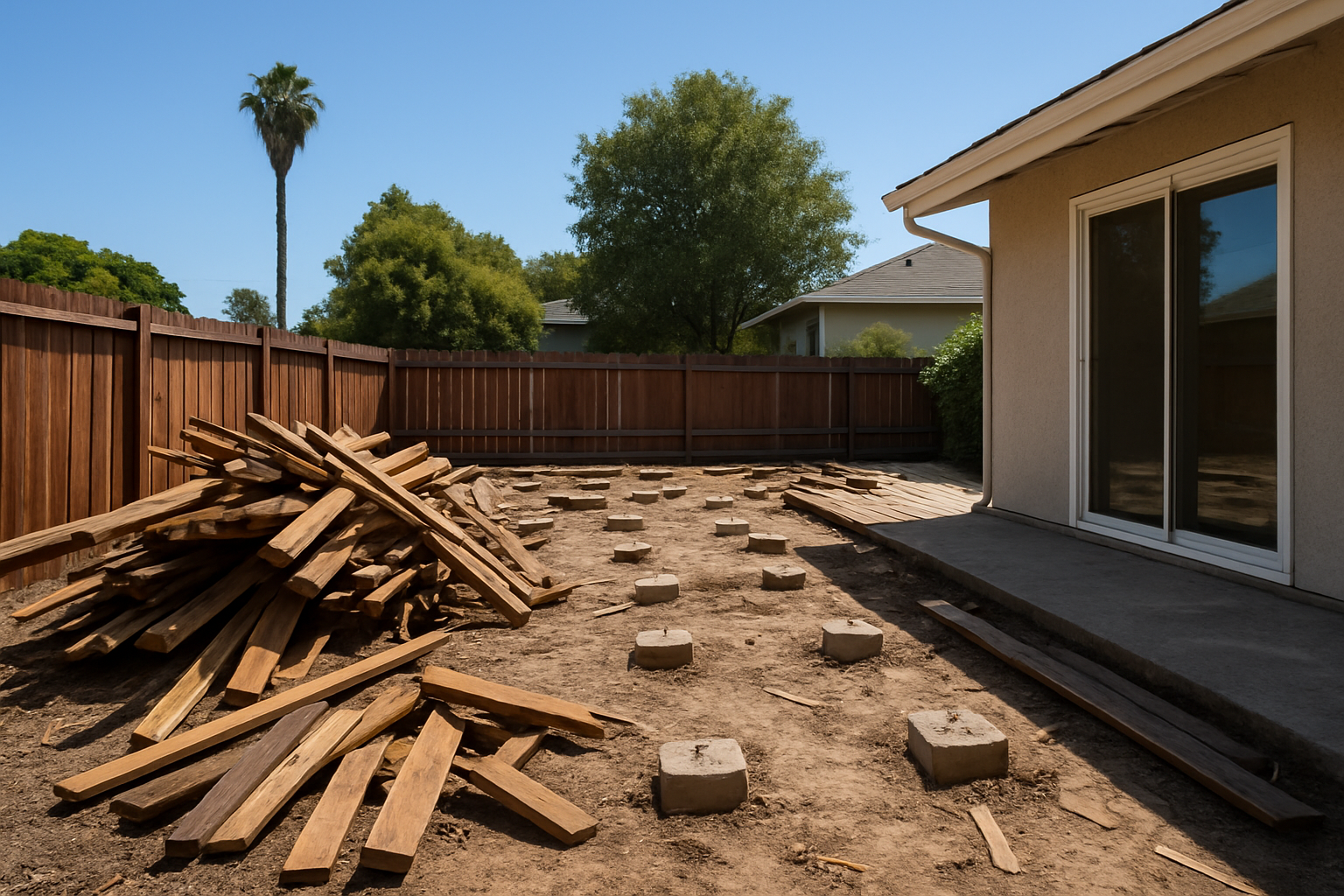
The simple rule: confirm permit requirements before any demo work begins. Your contractor should know this, but it doesn’t hurt to verify directly with the relevant building department. For Gilroy projects, that’s a call to the City of Gilroy Building Division. For San Benito County properties, check with the county directly.
How to Set Up Demo Debris Removal the Right Way
This infographic walks through the four steps that prevent the most common and expensive debris removal mistakes on demo projects.
Timing and Coordination on Active Job Sites
Contractors running a demo-to-build sequence — say, tearing down interior walls on day one and starting framing on day three — need debris cleared in that window. That’s not a lot of time, and the hauler has to be ready to move when the schedule says move.
The mistake I see contractors make is calling for debris removal after the demo is done. By then, you’re at the mercy of whoever can show up fastest, and that pressure usually means paying more or waiting longer than the job allows.
The better approach:
- Confirm hauler availability before the demo starts, not after — know the crew is scheduled and the equipment is right for the load
- Tell the hauler what the load will look like: material types, approximate volume, whether it’s mixed or sorted
- Stage debris in a location where a truck can get to it without obstacle — not buried in a corner behind other materials
- Communicate any access limitations upfront (narrow gates, low-hanging lines, tight driveways are common in older Hollister and Gilroy neighborhoods)
When we show up to a job site and the debris is already staged well, with a clear access path and a sorted pile, the job goes faster and the final cost is usually lower. That’s a real outcome, not a hypothetical.
For a broader look at what makes a hauler actually worth calling on a tight timeline, what separates a reliable hauling crew from a bad one is worth reading.
What You Can Do to Make Debris Removal Faster and Cheaper
Most homeowners don’t know these steps exist, but they make a real difference in both speed and cost:
Sort where you realistically can. Even rough separation — concrete in one area, wood in another — is better than a fully mixed pile. You don’t need to be precise. Just keep the dense heavy stuff separate from the light framing material.
Stage debris for truck access. This is probably the single most overlooked factor. If the pile is behind a locked gate, down a narrow path, or buried under other items, we spend time solving access problems instead of loading. A clear line from the pile to the street or driveway means a faster job.
Tell us the load composition when you call for a quote. Not a rough guess — the actual materials if you know them. “It’s mostly concrete footings and some lumber” is more useful than “just demo stuff.” That information helps us bring the right truck and give you an accurate number upfront. Jennifer Lamb, one of our customers, put it well in her review: “They disclosed all information upfront and there were no hidden fees. The billing process was easy and understandable.”
Those three things — sort, stage, communicate — won’t require any extra work on demo day. They’re just planning decisions you make before the pile exists. And they’re the difference between a debris removal job that goes smoothly and one that takes twice as long and costs more than it should.
If you’ve been on the wrong end of a quote that didn’t match the final bill, why your junk removal quote and your final bill don’t always match explains exactly why that happens and how to avoid it.
Frequently Asked Questions About Demolition Debris Removal
Does my demo contractor automatically remove the debris, or is that a separate job?
Almost always separate. Most demo contractors are scoped for the takedown work itself — what to do with the material after is a different line item that needs to be discussed explicitly. If it’s not in the written scope of work, assume it’s not included and plan for it separately.
How much does construction debris removal cost in Gilroy or Hollister?
It depends heavily on what you have and how much of it. Concrete-heavy loads cost more per ton than wood or drywall because of weight-based tipping fees at disposal facilities like John Smith Road Landfill. Mixed loads also tend to cost more than sorted ones. In general, hauling costs in this area can range from a few hundred dollars for a small sorted load to significantly more for a large mixed demo pile — but I’d rather give you an accurate number based on your actual job than a figure that doesn’t apply. Call us with the specifics and we’ll give you a real quote.
Do I need a permit to demo a shed or deck in Gilroy?
For most structures in Gilroy — including detached sheds, decks, and accessory buildings — you should check with the City of Gilroy Building Division before starting any demo work. Requirements depend on structure size and type. In unincorporated San Benito County areas, the county governs permitting. Getting this wrong before the demo starts creates problems that affect the whole timeline downstream, including when debris can be removed.
Can you haul concrete and heavy masonry, or just lighter materials?
We handle concrete, masonry, and mixed demo loads. The weight matters for pricing and equipment — concrete is the heaviest common demo material and we account for that when quoting and planning the job. Just be upfront about what you have when you call.
What’s the fastest way to get demo debris cleared on a tight contractor schedule?
Schedule the hauler before the demo starts, not after. Confirm availability, tell us what the load will look like, and stage the debris somewhere a truck can access it without working around obstacles. That combination is what keeps a two-day window actually workable.
Ready to Get the Debris Cleared and Move On?
If you’re in Hollister, Gilroy, or anywhere in San Benito or South Santa Clara County and you’ve got a demo pile that needs to go, MG Transportation & Hauling handles it. Call (831) 297-1972 or visit mgtransportationhauling.com/ — tell us what you have and we’ll give you a straight answer on cost and timing.
