
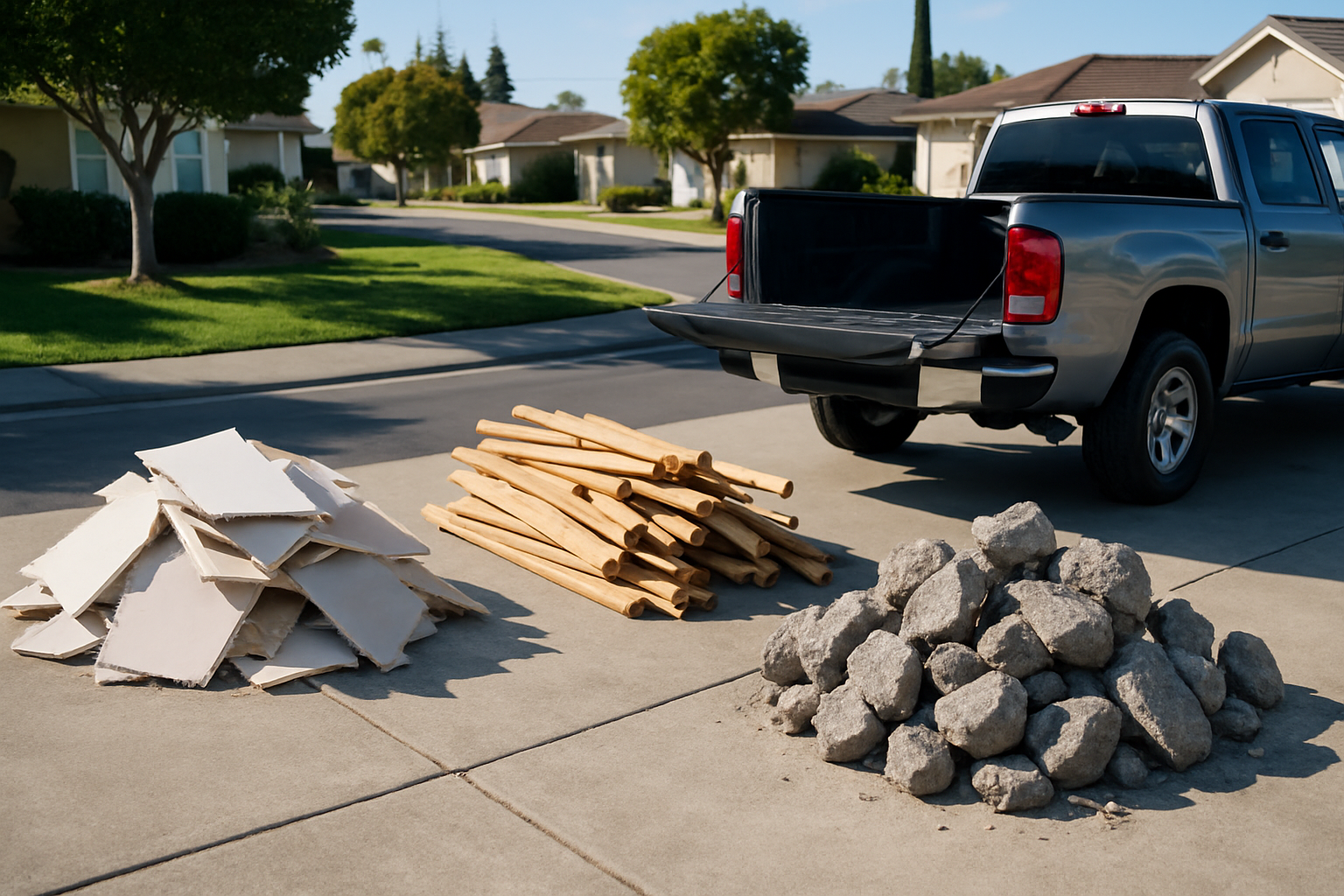
Direct Answer: No. Drywall, wood, and concrete are treated as separate waste streams. Each one has different disposal rules, weight considerations, and accepted facilities — mixing them can cost you extra or get a load rejected.
You just finished a bathroom remodel, knocked out part of a wall, or pulled up a concrete pad in the backyard. Now you’re standing in front of a mixed pile of drywall, lumber scraps, and busted concrete — and you’re wondering if it all just goes in the same load. It’s a reasonable assumption. But it’s wrong, and the difference matters before you call a hauler or try to self-haul.
Construction debris isn’t one category. Drywall, wood, and concrete each have different weights, different facility requirements, and different cost implications. If you live or work in Hollister or Gilroy, local facilities like the John Smith Road Landfill in San Benito County and the programs managed through San Benito County Integrated Waste Management have specific rules about what gets accepted, how it gets sorted, and what you’ll pay by the ton.
This article breaks down how each material is handled, why they’re treated differently, and what that means when you’re trying to plan a cleanout or renovation debris haul.
Why These Three Materials Are Handled Differently
The short answer is weight and contamination. Concrete is incredibly heavy — a single cubic yard can weigh over 4,000 pounds. Drywall is comparatively light but chemically problematic when it breaks down in a landfill. Wood sits in the middle, but it’s usually the most variable depending on whether it’s treated, painted, or mixed with hardware.
Facilities sort these materials because each one has a different disposal or diversion pathway:
- Concrete can often be crushed and recycled as aggregate for road base or fill — it has real salvage value when kept clean
- Drywall (gypsum) can be ground up and repurposed if it’s clean and unpainted, but it releases hydrogen sulfide gas in landfills when it gets wet, which is why many facilities restrict it
- Wood can be chipped for mulch or biomass fuel, but only if it’s clean — painted, treated, or composite wood typically ends up as landfill material
When you mix all three into one load, you eliminate the diversion options for any of them. A mixed C&D load usually goes straight to a landfill tipping floor, and you pay the full mixed debris rate. For reference, mixed construction and demolition debris at local facilities in San Benito County typically runs $80–$120 per ton depending on load composition. Keeping materials separated can reduce that cost — sometimes significantly.
If you want a deeper look at where this material actually ends up, What Happens to Construction Debris After Your Renovation covers the full chain from pickup to final disposal.
Drywall: The One That Surprises Most People
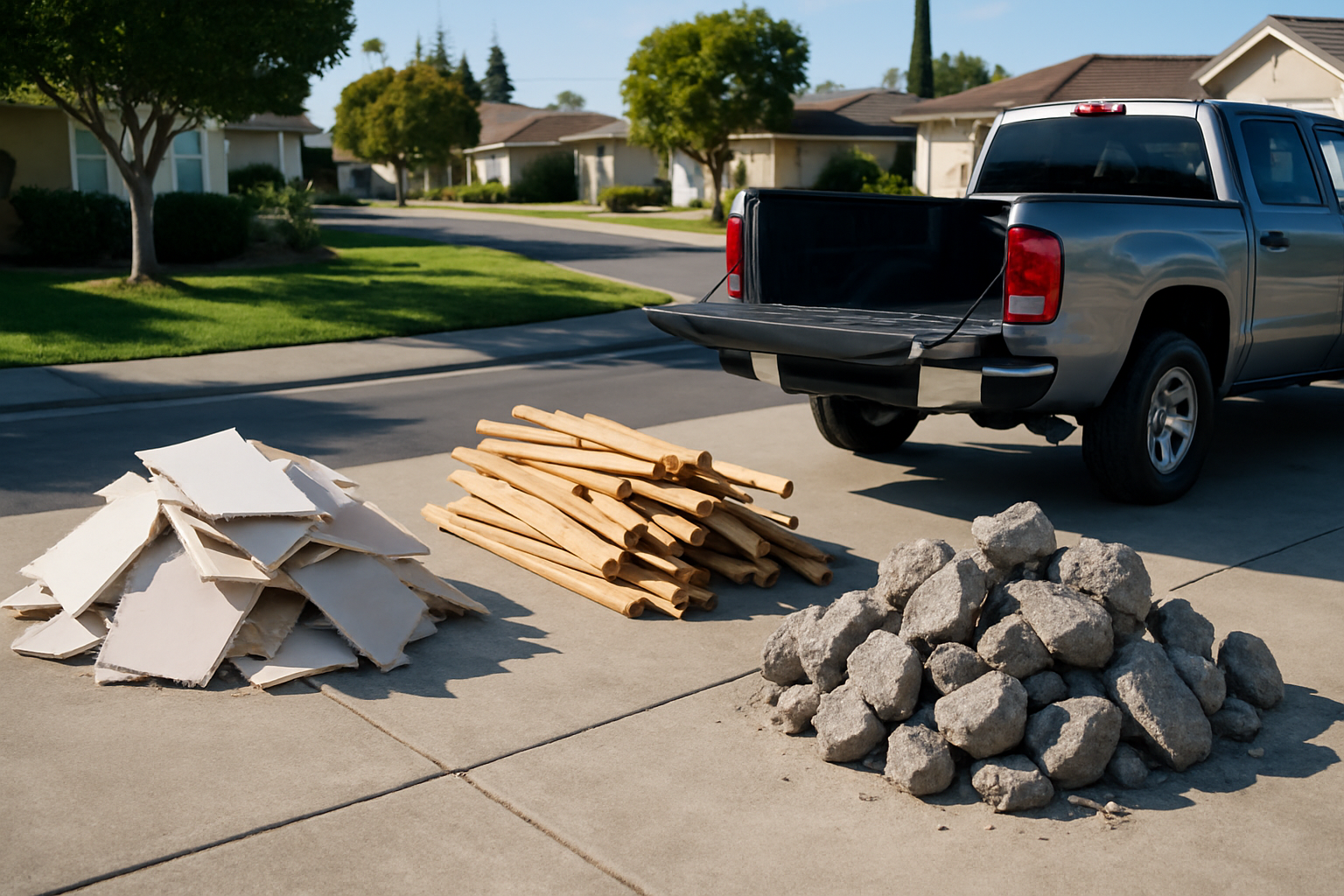
Drywall looks harmless — it’s just paper and gypsum. But it’s one of the more restricted materials at California disposal facilities, and mishandling it can get a load rejected.
Here’s what you need to know about drywall disposal:
- Clean, unpainted drywall from new construction can sometimes be diverted to gypsum recyclers — there are processors in the greater Bay Area that accept it
- Painted or textured drywall from a remodel is typically treated as C&D waste and goes to landfill
- Drywall with mold is a separate problem — it may be restricted at standard C&D facilities and should never go to a recycler
- Weight adds up fast — a full sheet of 5/8″ drywall weighs about 70 pounds; a full gut of one bathroom can easily produce 500–800 pounds of drywall alone
In California, it’s also worth knowing that CalRecycle has pushed to reduce drywall landfilling through diversion programs. San Benito County Integrated Waste Management tracks this — clean loads of gypsum board are treated differently than mixed debris at the point of disposal.
If you’re hiring someone to haul your drywall, ask them directly whether they separate it. A hauler who doesn’t know the answer probably isn’t routing it to a recycler. What Separates a Reliable Hauling Crew From a Bad One gets into exactly those kinds of questions worth asking before you book anyone.
Drywall, Wood, and Concrete — How They Compare at Disposal
This table shows how each material differs in weight, disposal pathway, and whether it qualifies for diversion or recycling under typical conditions.
| Material | Average Weight per Cubic Yard | Landfill Accepted? | Diversion/Recycling Option | Contamination Risk |
|---|---|---|---|---|
| Drywall (clean, unpainted) | ~500–700 lbs | Yes | Gypsum recyclers (Bay Area region) | Low — if kept dry and separated |
| Drywall (painted/textured) | ~500–700 lbs | Yes | Typically none | Moderate — landfill gas risk when wet |
| Wood (clean/unpainted) | ~300–500 lbs | Yes | Chipping/mulch programs | Low — if free of hardware and paint |
| Wood (treated/painted) | ~300–500 lbs | Yes | None standard | High — treated wood is restricted at some facilities |
| Concrete (clean) | ~3,500–4,500 lbs | Yes | Crush & recycle as aggregate | Low — high value when kept clean |
| Mixed C&D Debris | Varies | Yes | None | High — eliminates diversion for all materials |
How Each Material Gets Routed After a Demo or Remodel
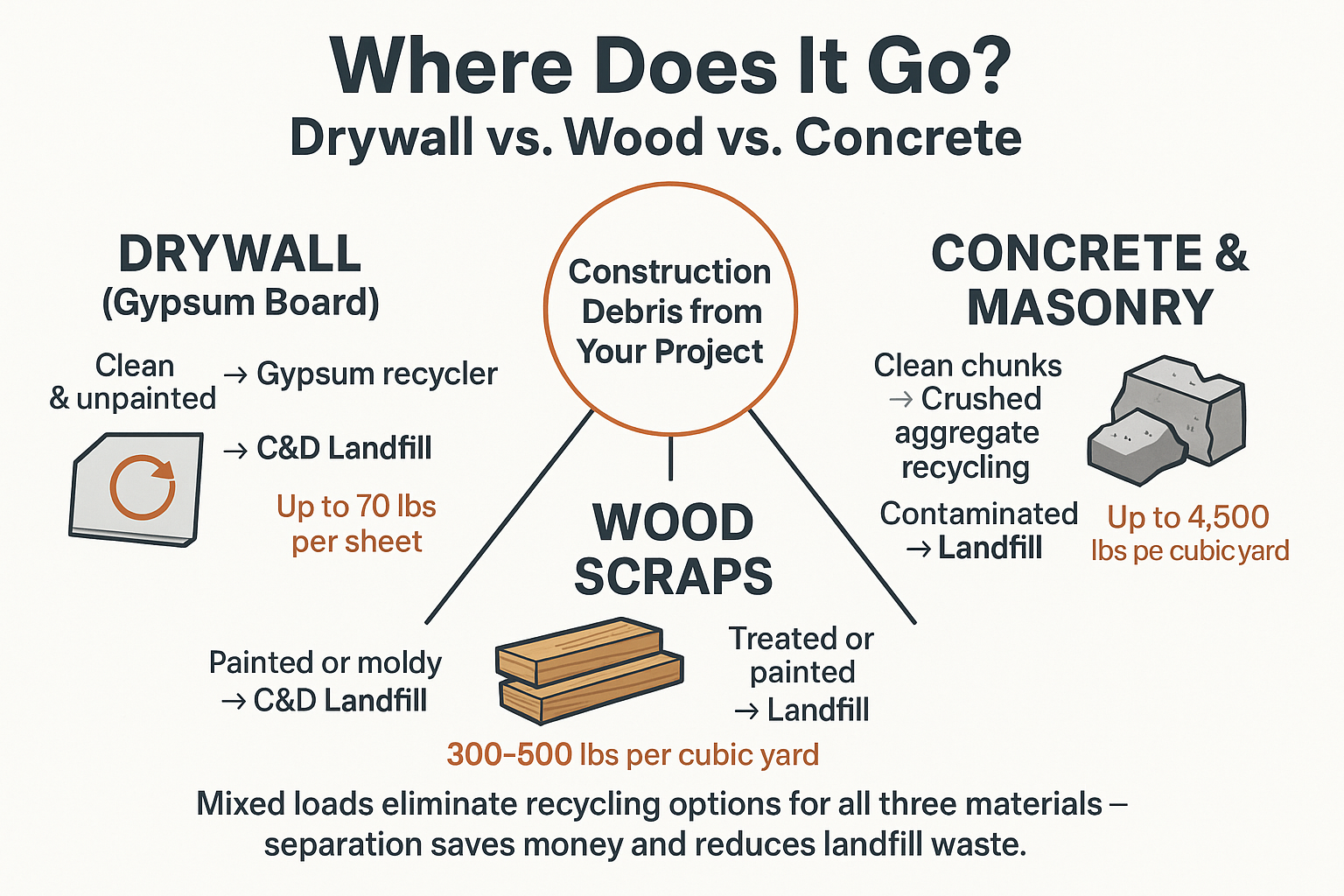
This infographic shows the disposal pathway for each of the three materials — from the job site to the final destination.
Concrete: The Heavy One That Changes Your Whole Load
Concrete is the material that catches the most people off guard — not because it’s complicated to dispose of, but because of what it does to the weight and cost of a haul.
A small concrete patio slab — say 10 feet by 10 feet at 4 inches thick — weighs roughly 5,000 pounds. That’s 2.5 tons before you’ve loaded a single piece of drywall or wood. Most standard junk removal trucks are rated for 3–5 tons of payload. Mix in a pile of demo wood and a stack of drywall, and you’ve potentially overloaded a truck or forced multiple trips where one was budgeted.
The good news: clean concrete has real recyclability. Concrete recyclers crush it into gravel-sized aggregate used for road base, drainage fill, and construction sub-base. In the Hollister and Gilroy area, haulers who work regularly with C&D debris have relationships with regional aggregate recyclers. But that only works if the concrete is clean — free of rebar that hasn’t been cut, tile adhesive, or embedded wood framing.
A few practical notes on concrete:
- Small amounts (a broken walkway, a single step) can sometimes be handled differently than a full slab removal
- Rebar-reinforced concrete adds weight and complexity — rebar may need to be cut and separated
- Asphalt is not the same as concrete and is handled differently — don’t assume they go to the same place
- Never mix concrete with drywall in the same load if you want the concrete to qualify for aggregate recycling
If you’re dealing with concrete as part of a larger demolition project, Where Does Construction Debris Actually Go After a Remodel walks through the full disposal chain in more detail.
What This Means When You’re Planning a Cleanout or Demo Haul
Knowing that these three materials are different isn’t just trivia — it affects how you stage debris, how you schedule pickups, and what you should ask when comparing hauling quotes.
If you’re working with a contractor in Gilroy who just demoed a kitchen, or you’re a property manager in Hollister turning over a unit after a renovation, the practical steps look like this:
- Separate materials on-site before the hauler arrives — even rough sorting into three piles makes a difference
- Flag concrete early — tell your hauler upfront if there’s concrete involved; it affects truck selection and possibly whether they send one truck or two
- Ask about disposal routing — a good hauler can tell you where each material is going; if they can’t, that’s worth knowing before you hire them
- Don’t let it sit — demo debris left outside in wet conditions mixes together, gets contaminated, and loses any recyclability it had
The weight issue is real and it directly affects pricing. Is One Truck Enough for a Large Cleanout? explains how crews assess load volume and weight before quoting a job — and why concrete almost always changes that calculation.
And if you’re looking at a job that’s already been sitting for a while, The Problem With Letting Renovation Junk Sit Too Long covers why delay makes debris harder and more expensive to dispose of, not easier.
Frequently Asked Questions About Construction Debris Disposal
Can I put drywall, wood, and concrete in a rented dumpster together?
You can, but you’ll pay for it. Mixed C&D loads go to the landfill tipping floor at the full mixed-debris rate — based on current San Benito County facility rates, that typically runs $80–$120 per ton. If you’re renting a dumpster and your load is mostly concrete, some dumpster companies will flag it as overweight or charge a surcharge, since concrete is far heavier than typical household debris. Ask upfront about weight limits and surcharges before you sign anything.
Is painted drywall treated any differently than new unpainted drywall?
Yes. Clean, unpainted drywall can potentially go to a gypsum recycler. Painted or textured drywall from a remodel typically can’t — it goes to the landfill. The distinction matters if you’re trying to reduce disposal costs or divert material from landfill.
How do I know if my concrete is clean enough to recycle?
Clean concrete means free of large embedded materials — no attached tile, excessive adhesive, or wood framing that hasn’t been separated. Rebar is okay as long as it’s been cut loose from the slab. Concrete that’s been mixed with soil, asphalt, or hazardous material generally won’t qualify. When in doubt, ask the hauler whether they’re routing it to an aggregate recycler or to the landfill — that answer tells you everything.
What’s the heaviest of the three for hauling purposes?
Concrete, by a wide margin. A cubic yard of concrete can weigh more than 4,000 pounds. A cubic yard of drywall scraps is roughly 500–700 pounds. Wood falls somewhere in between depending on species and moisture content. This is why even a small concrete job can fill a truck’s weight capacity before it’s visually full.
Do haulers in the Hollister and Gilroy area charge differently for each material?
Some do, some don’t. Full-service haulers who separate materials may price a load differently based on what’s in it — concrete-heavy loads cost more because of weight limits and disposal fees. The most important thing is to get an itemized or at least explained quote before the truck shows up. Hidden weight surcharges are one of the most common ways hauling costs balloon past the original estimate.
Have a Demo Load or Renovation Cleanup in Hollister or Gilroy?
If you’re dealing with leftover drywall, wood scraps, concrete, or a mix of all three after a project, MG Transportation & Hauling handles construction debris hauling throughout Hollister, Gilroy, and San Benito County — with upfront pricing and no hidden weight fees. Call (831) 297-1972 or visit mgtransportationhauling.com/ to describe your load and get a straight answer on what it’ll take to clear it.
