
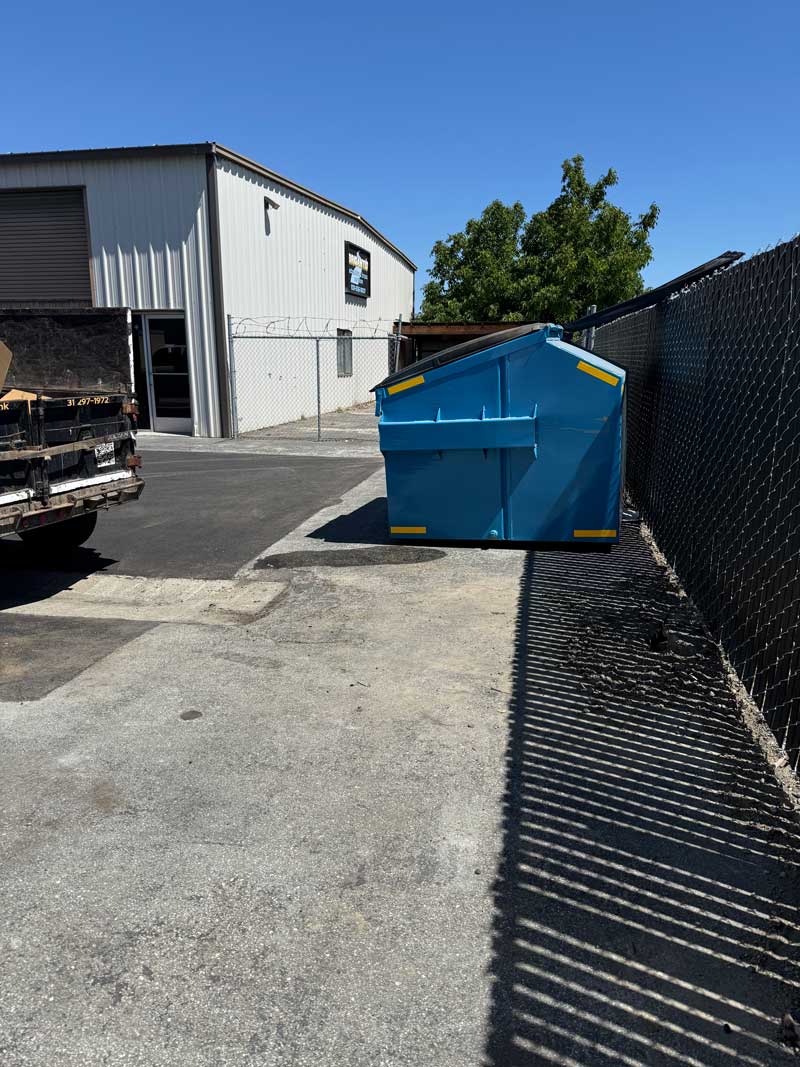
Direct Answer: MG Transportation & Hauling clears vacated commercial suites in Hollister and Gilroy. We haul shelving, carpet, and leftover fixtures, handle small demolition, and can often scope the job the same day you call.
The tenant handed back the keys and left you a suite full of their problems. Anchored shelving, carpet glued to the slab, a walk-in cooler nobody wants, and a stack of pallets in the back room. And the next lease starts in eleven days.
I get these calls from property managers and building owners all over Hollister and Gilroy, usually the morning after a walkthrough went badly. MG Transportation & Hauling handles the turnover work on suites like that, and the pattern is always the same: the hauling part is the easy part.
Here is the position I will defend for the rest of this article. Most commercial turnovers run late because the job got scoped as hauling when half of what is left behind is a small demolition job. Price it right on the first call and the schedule holds. Miss it and you lose three days waiting on a second crew.
Who can clear out a vacated commercial space in Hollister fast so you can turn it over to the next tenant?
We do. Our crews cover Hollister, Gilroy, and the rest of San Benito and South Santa Clara County, and commercial turnovers are the kind of large-scale cleanout this business was built around.
What the work covers on a vacated suite:
- Full-service removal of furniture, shelving, racking, cubicles, dead electronics, signage hardware, and leftover inventory. Our crew loads it. You do not lift anything.
- Roll-off dumpster drop in 10, 15, or 25 yard sizes when the tenant left a volume that makes more sense in a box than in truckloads.
- Small to large demolition, which is where the anchored and glued material goes.
- A broom-clean floor at the end so the space shows.
What moves the price and the calendar is volume, access, and how much of the load is attached to the building. A 1,200 square foot office with loose furniture is a different animal from a 4,000 square foot former restaurant with a hood system and a cooler.
On speed, I will be straight with you. Calling before noon is what makes a same-day attempt realistic, and that usually applies to a partial clear or a dumpster drop. A full commercial suite is normally a scheduled job, booked a day or several days out, because it takes a crew, a disposal plan, and sometimes a demolition window. Timing depends on current schedule and job size.
Four things set the pace on a commercial turnover
When I walk a suite, I am reading four things. Everything else is detail.
1. Square footage and how high it is stacked. Floor area matters less than vertical volume. A 2,000 square foot stockroom stacked to eight feet holds more than a 5,000 square foot showroom with a few display tables.
2. The loading route. A ground-floor unit with a roll-up door and parking out front might clear in a day. The same load on a second floor with one elevator and a shared loading zone can take twice as long. Tell me the floor level, the door widths, and whether there is a dock.
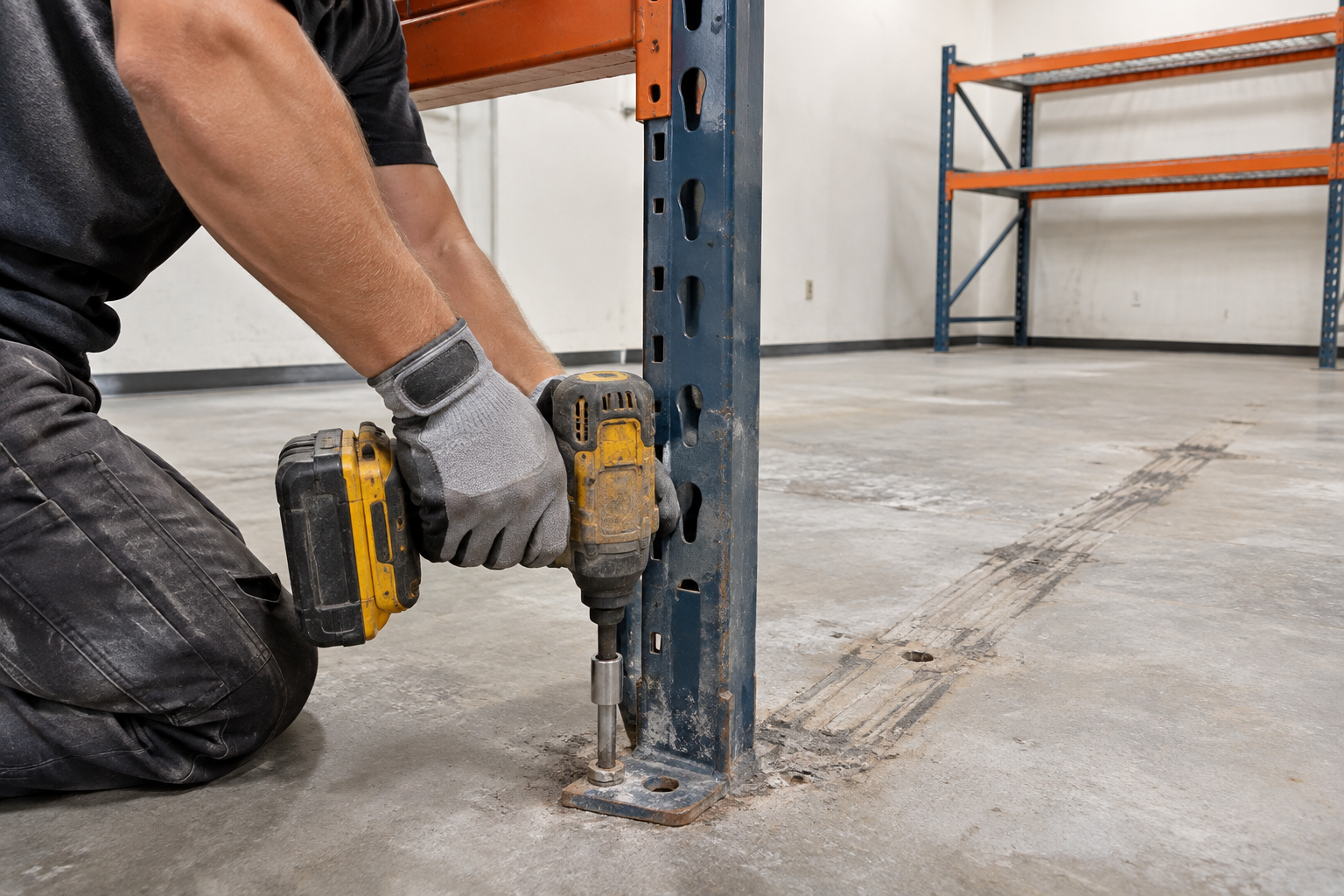
3. What is anchored. Bolted pallet racking, wall-mounted shelving, glued-down carpet, cooler panels, and built-in counters all have to come apart before they can ride out. That is labor, not hauling.
4. Whether we can work outside business hours. In multi-tenant buildings around downtown Hollister and along Gilroy’s commercial corridors, noise and a blocked loading zone during business hours will get you calls from neighboring tenants. Early mornings and weekends usually move faster because nobody is competing for the dock.
Where hauling stops and demolition starts
This is the line that catches people. A manager quotes the job as a haul, the crew shows up, and half the contents are attached to the building.
Commercial leftovers I see over and over in vacated suites:
- Bolted pallet racking and wall-anchored shelving
- Glued-down commercial carpet with tack strip and adhesive residue
- Cubicle systems that have to come apart panel by panel
- Walk-in cooler panels and the refrigeration unit
- Exhaust hoods and the ductwork above them
- Dead point of sale terminals, monitors, and cabling
- Pallets of inventory the tenant did not bother to sell off
We handle the unbolting, the cutting, and the hauling on that list. What stays with a licensed trade is the utility work: electrical disconnects and plumbing caps, plus any gas line serving a cooler, hood, or kitchen equipment. Get those released by the right trade first, then a demolition and haul crew can take the rest out in one pass.
Scope it that way and it is one call instead of three. If you are also dealing with property a departing tenant simply abandoned, our piece on when you can legally clear out what a tenant left behind covers the notice side so I will not re-argue it here.
What is a haul, what is a small demo, and what needs a licensed trade
Use this to sort a walkthrough list before you call anyone. It is the fastest way to avoid a surprise on job day.
| What is left in the suite | How it gets handled | Effect on the schedule |
|---|---|---|
| Loose furniture, boxes, pallets, dead electronics | Straight haul, crew loads it | Fastest line item on the job |
| Free-standing racking not bolted down | Haul, light breakdown | Adds an hour or two |
| Bolted pallet racking and wall shelving | Small demolition, then haul | Adds labor hours and anchor patching |
| Glued commercial carpet and tack strip | Demolition, scrape, haul as debris | Often a half day or more per large room |
| Walk-in cooler panels and refrigeration unit | Utilities released by a licensed trade first, then demo and haul | Plan a day ahead for the disconnect |
| Hood system and ductwork | Licensed trade for gas and power, then removal | The most common cause of a delayed start |
| Electrical disconnects, plumbing caps | Licensed electrician or plumber only | Book before the cleanout date |
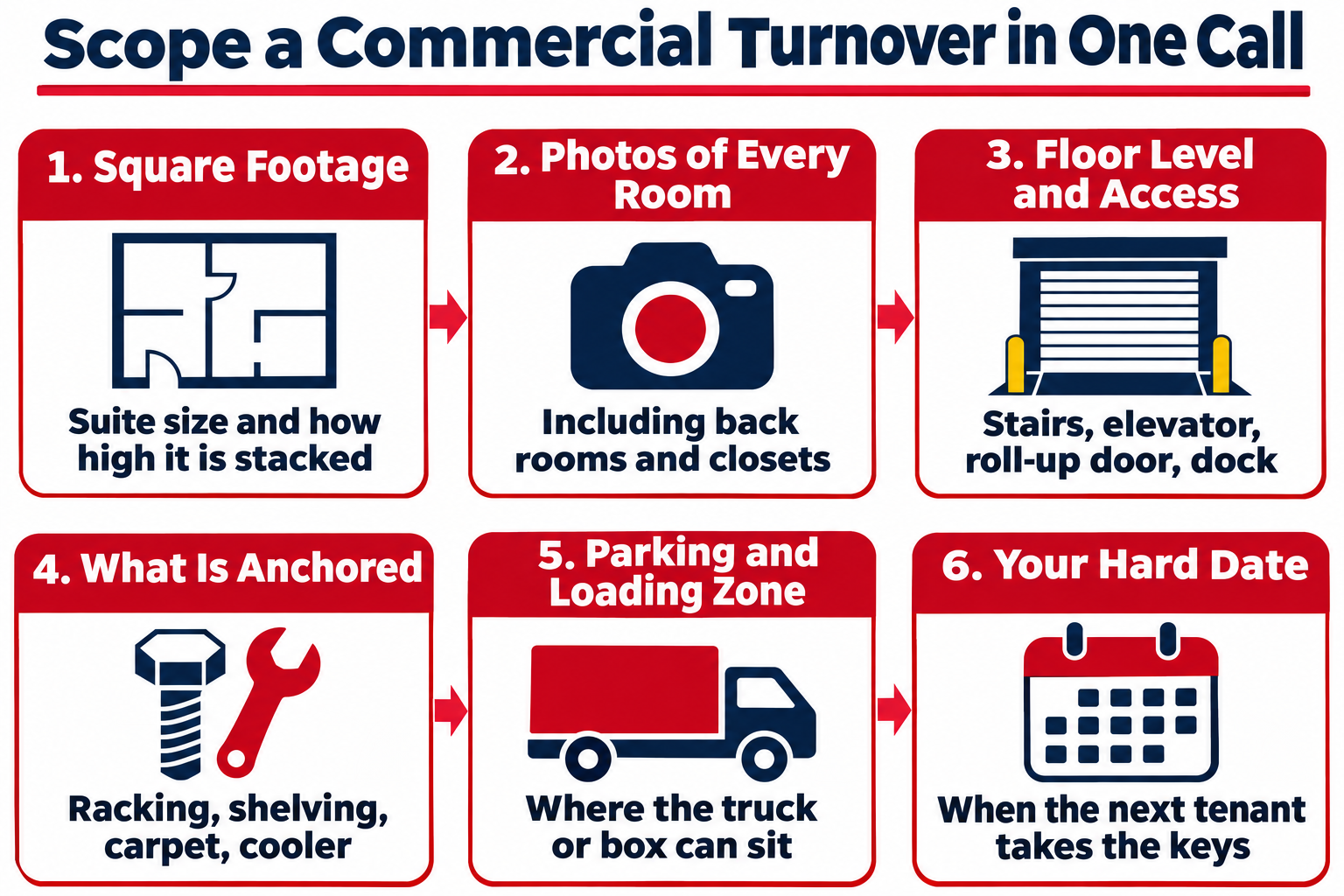
What I need from you to scope a suite in one call
Callers who have these six items ready get a firm number the same day. Callers who do not usually need a site visit first, which costs a day.
Commercial loads follow different disposal rules than household junk
Once a load stops looking like household quantities, the handling changes. San Benito County generally treats material past the household threshold as commercial waste, and construction or remodel debris cannot go into carts at all. It has to ride in a debris box or on a truck to the right facility.
Around here that usually means the John Smith Road Landfill outside Hollister, and for Gilroy jobs the transfer and bulky item programs run through Recology South Valley. Those bulky item programs are built for residential service, so a vacated suite is a separate conversation. California’s construction and demolition debris guidance from CalRecycle explains why mixed C and D loads get sorted and tracked differently.
The practical part for you is the paperwork. If the owner is going to ask where the material went, or you are documenting a deduction against a departing tenant’s deposit, ask for a disposal record before the truck leaves. A usable record shows:
- Facility name
- Date of disposal
- Origin address of the load
- Material type, such as mixed debris, metal, or green waste
- Quantity, by weight or by yard
That is a reasonable thing to ask any hauler for, and it takes about thirty seconds to answer if the crew is actually taking the load to a permitted facility.
What the day of the clearout actually looks like
We walk the suite with you first, room by room, and confirm the list. You get the price before anything moves, which is how we work on every job: upfront pricing and no hidden fees.
Then the crew works back to front so the loading route stays open. Demolition items come apart first, debris goes to the box or the truck, loose contents follow, and the floor gets swept at the end.
If the suite has a hard deadline tied to a lease, say so on the first call. We can usually stage a multi-day job around a date, and the honest answer on a last minute full suite is that scheduling depends on what is already booked. Customers tell us the same thing in reviews over and over, one put it simply: “Dropped off when he said he would and picked up when I needed it to be gone.” Showing up on the day we said is the whole job.
If you want a sense of how cleanout hours and dollars stack up on a large job, the breakdown in where the hours and the dollars go on a full property applies to commercial work too.
Frequently Asked Questions About Emptying a Vacated Commercial Suite
Who can clean out a vacated commercial space in Hollister fast so we can turn it over to the next tenant?
We handle it. Our crews clear vacated retail, office, and shop suites across Hollister, Gilroy, and San Benito County, including the shelving, carpet, fixtures, and leftover inventory. We bring a full-service crew, roll-off boxes in 10, 15, and 25 yard sizes, and small to large demolition for anything anchored to the building. Call before noon if you need a same-day attempt, though a full suite is usually scheduled a day or more out so the crew and disposal are lined up properly.
Can you work evenings or weekends so we don’t disturb the other tenants in the building?
Often, yes, and in multi-tenant buildings it usually makes the job go faster because the loading zone is free. Tell us on the first call so we can build the schedule around it.
Do you take out the bolted shelving and the glued-down carpet, or just the loose stuff?
Both. The unbolting, cutting, scraping, and hauling are all ours. What we do not touch is utility work, so electrical disconnects, plumbing caps, and gas lines need a licensed trade to release them first, usually a day before we start.
How much does it cost to empty a 2,000 square foot suite?
It varies more than most people expect, so I will not throw a number at you without seeing it. The drivers are volume, loading access, how much is anchored, and what kind of debris goes to the facility. Our dumpster rentals start around $500 for a two-day rental as a reference point, and we give free estimates on cleanouts so you get a firm figure before anything moves.
Can I get proof of where the material went for the building owner?
Yes, and you should ask for it. A disposal record naming the facility, date, origin, material type, and quantity is standard and useful if you are supporting a deduction against a departing tenant’s deposit.
Lining up a turnover date on a vacated suite?
Having one local operator cover the roll-off box, the loading crew, and the small demolition means there is no gap between the teardown and the pickup, and one person to call about the schedule. MG Transportation & Hauling covers Hollister, Gilroy, San Benito County, and down through South Santa Clara and Monterey County, CA. If you want a suite scoped, the number is (831) 297-1972 and photos of each room will get you an answer faster.
