
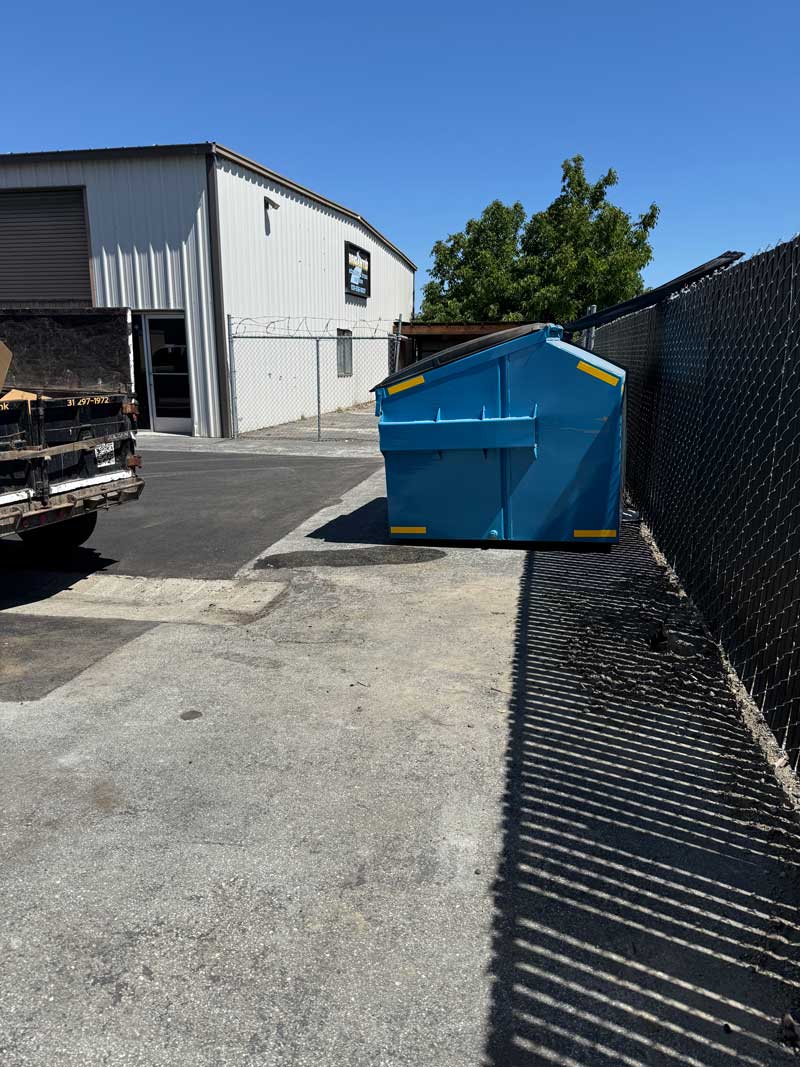
Direct Answer: No rented dumpster in California takes household hazardous waste, batteries, fluorescent tubes, electronics, appliances with refrigerant, or tires. Those go to county programs instead, so separate them before you load.
The box is in the driveway. The garage is halfway emptied and you have finally got some momentum. Then somebody walks a can of paint thinner, a car battery and an old CRT monitor over and sets them right on top of the pile.
Most people find out those items are a problem after the load is already stacked around them. That means digging them back out, or having the pickup flagged and delayed. I have watched a good cleanout stall over four items that would have taken ten minutes to set aside at the start.
So this is not a lecture about rules. It is the short sorting pass that keeps pickup day boring, plus the actual local drop-off routes for the stuff that cannot ride in the box. If you are in Hollister, Gilroy or anywhere in the Monterey County, CA area, the answers change a little by county line, and I will point that out as we go.
What you can’t put in a rented dumpster, grouped so you can spot it
Forget memorizing a list. Almost everything that gets rejected falls into a handful of categories you can recognize by looking at the container.
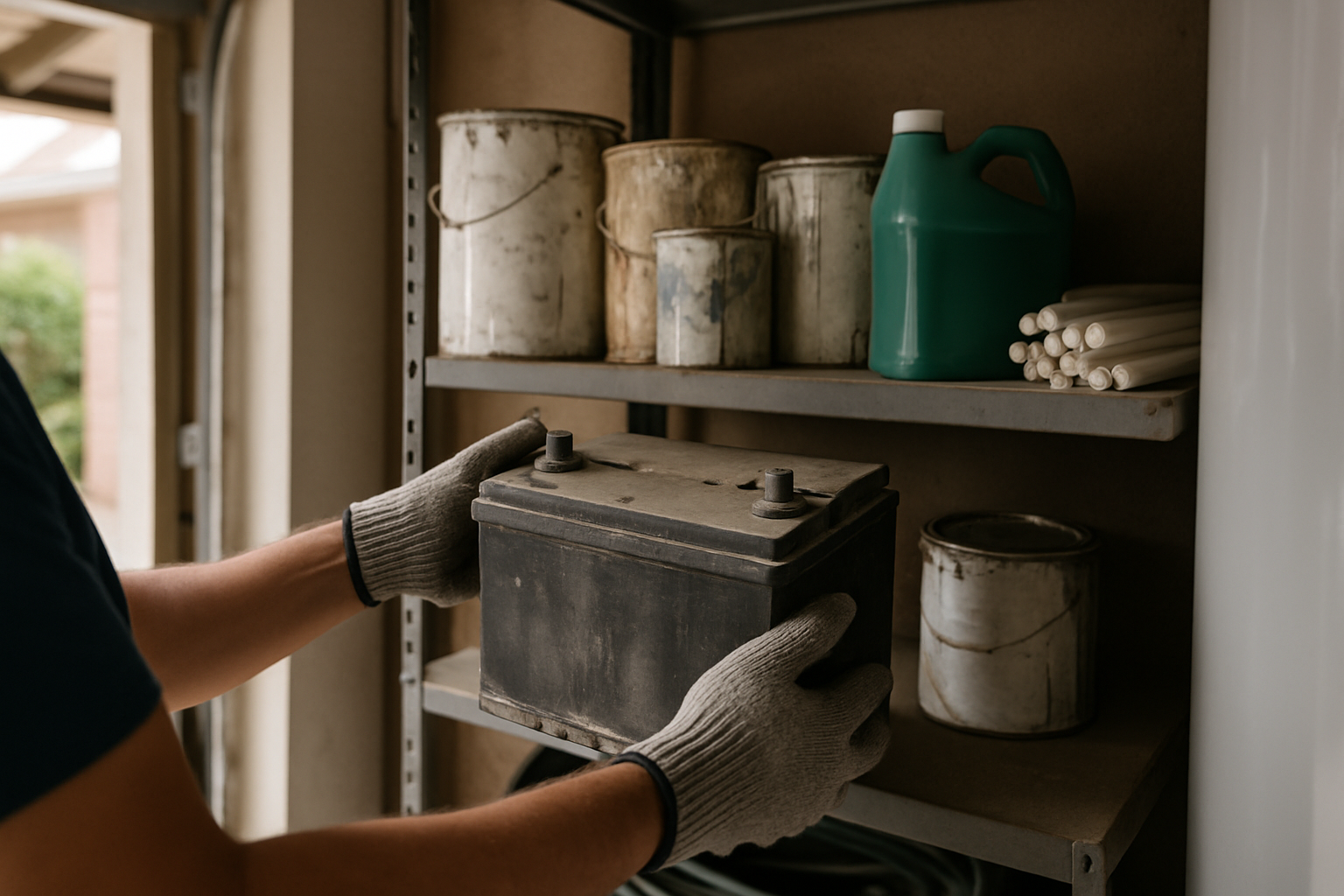
- Anything with a poison, danger, caution or warning label. Paint, primers, thinners, solvents, pesticides, motor oil, antifreeze, pool chemicals.
- Batteries of any kind. Car batteries, power tool packs, button cells, the drawer full of old AAs.
- Fluorescent tubes and mercury devices. Shop light tubes, CFL bulbs, old thermostats and thermometers.
- Electronics. TVs, monitors, computers, printers, stereo gear.
- Appliances holding refrigerant. Fridges, freezers, window AC units, dehumidifiers.
- Tires. On or off the rim, they get handled separately.
Here is the part worth being blunt about: no hauler or rental box in California takes these. Not us, not anyone. It is not a company policy, it is state and local law.
San Benito County spells out the legal side plainly. Putting household hazardous waste in the garbage, down a storm drain or on the ground is illegal, and the county runs an abatement and reporting program for illegal dumping. So the question is never whether to separate this material. It is only where it goes.
Where this stuff actually goes around here
This is where a local answer beats a generic one, because the drop-off routes are specific and most of them are free.
For household hazardous waste, San Benito County holds a free collection event every third Saturday, 9am to noon, at the John Smith Road Landfill on John Smith Road outside Hollister. You need proof of residency, and there is a limit of 15 gallons or 125 pounds per trip. That monthly window is the only time the landfill takes items like fluorescent tubes, batteries and mercury devices, so it is worth putting on the calendar before you start a big cleanout. You can confirm the current schedule on the county’s own household hazardous waste program page.
E-waste is easier. County residents can drop acceptable electronics during the landfill’s normal operating hours at no extra charge, again with proof of residency. No waiting for the third Saturday.
Leftover paint has its own shortcut. Hollister Paint Company on East Street accepts interior and exterior paint, primers, thinners and solvents, up to 15 gallons per visit, during regular business hours.
One caveat: the county line changes the answer. Gilroy readers work through Recology South Valley’s programs instead, and folks farther down the Central Coast in the Monterey County, CA area go through their own county collection sites. Same categories, different addresses and hours.
Quick reference: the items that trip people up
This is the short version I end up repeating on the phone most weeks. Always confirm hours and limits before you drive somewhere with a truckload.
| Item | Goes in the rented box? | Where it goes instead |
|---|---|---|
| Paint, primers, thinners, solvents | No | Paint retailer take-back or the monthly county HHW event |
| Motor oil, antifreeze, pesticides | No | Monthly county HHW collection, third Saturday |
| Car and tool batteries | No | Monthly county HHW collection only |
| Fluorescent tubes, CFLs, mercury devices | No | Monthly county HHW collection only |
| TVs, monitors, computers | No | Landfill e-waste drop during normal hours, proof of residency |
| Fridges, freezers, window AC units | No | Handled separately; refrigerant must be removed by a qualified tech |
| Tires | No | Usually accepted separately, often with a per-tire fee; call ahead |
| Dirt, concrete, roofing tear-off | Sometimes | Allowed in many cases, but weight rules change, so ask first |
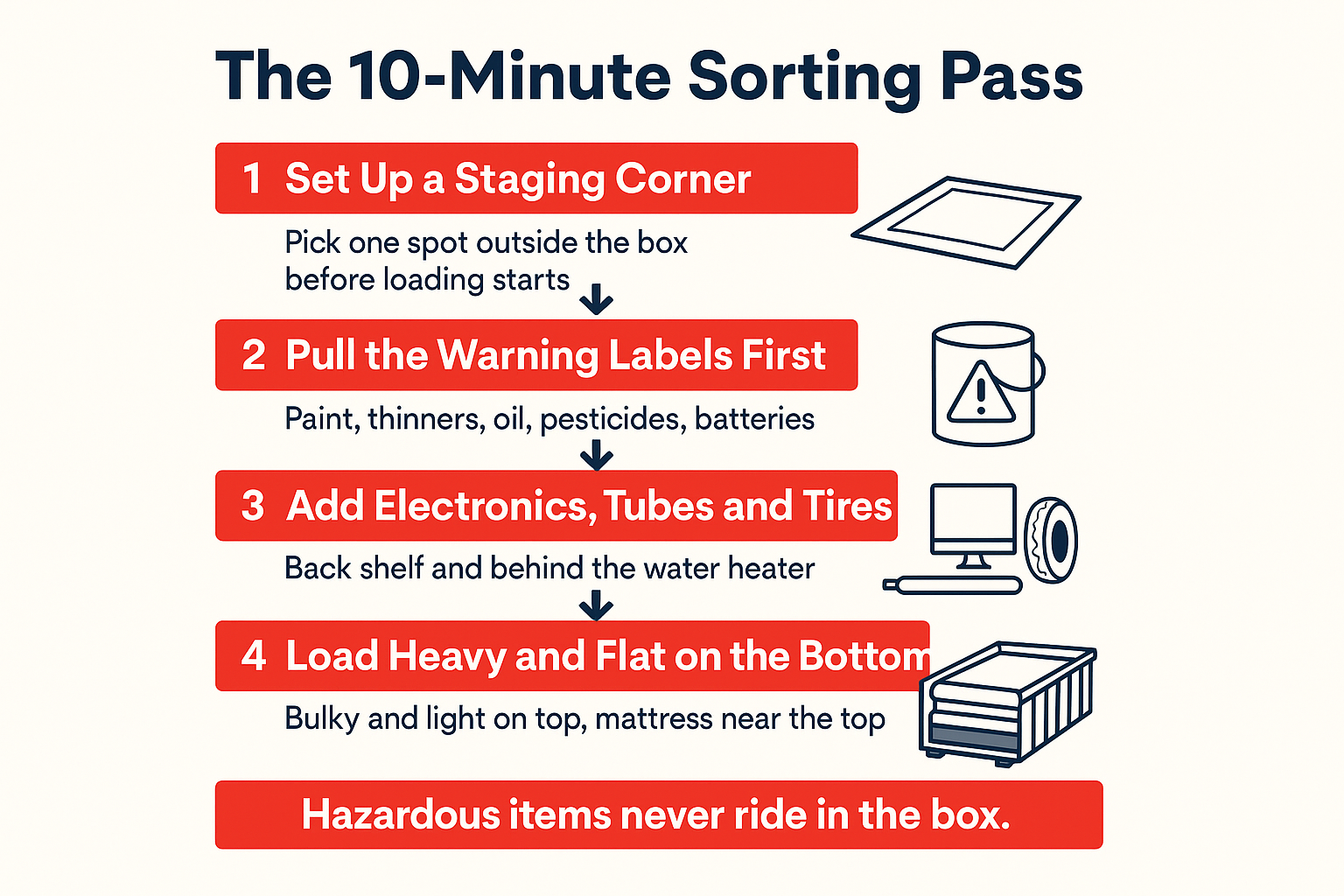
The ten-minute sorting pass, in order
This is the sequence I recommend before a single item gets loaded. It keeps a cleanout from stalling on pickup day.
The second list nobody warns you about: allowed, but heavy
Getting the banned items out is half the job. The other half is material that is perfectly legal to load but changes what your load weighs and how it has to be handled.
The usual culprits:
- Dirt and sod
- Concrete, brick and block
- Roofing tear-off
- Tile, plaster and stucco
- Anything soaked with water
A box that looks half full can already be at its weight limit with any of those in the bottom. I have seen a 10-yard container hit its ceiling with nothing but a patio’s worth of broken concrete in it.
Rain makes this worse locally between December and February. Cardboard, upholstered furniture and untreated lumber sitting in a side yard soak up water for a week and get noticeably heavier before they ever reach the truck. If a storm is coming and your box is open, tarp what you can.
I am not going to throw dollar figures at you here, because the honest answer is that weight, material type and disposal category are what drive the final number. Overweight and special-handling charges exist across this industry, and mixed loads get priced differently than clean loads of one material. The smart move is telling your rental company what you are actually putting in the box before you start filling it. If you want the longer version of how that plays out on a remodel, I wrote about where construction debris actually goes after a remodel separately.
Mattresses are their own category
Mattresses come up on almost every estate and rental turnover job, and the rules are genuinely different from other bulky items.
California funds mattress recycling through a fee collected when you buy one, which rose to $18 per piece as of April 1, 2026. That money supports a statewide collection and recycling network, which is why mattresses are routed for recycling rather than just buried.
The practical takeaway for someone filling a box is simple. A mattress crushed under a ton of drywall and furniture is hard to pull out for recycling, so it belongs near the top where the driver can see it. And it is worth asking your provider how they handle mattresses before delivery day, because the answer affects how you load.
How I’d sequence a real garage or estate cleanout
Order matters more than speed on these jobs. Here is what works in a real garage, not a theoretical one.
1. Set up a staging corner first. Before anything gets loaded, pick a spot outside the box. Tarp, cardboard, corner of the driveway, whatever.
2. Walk the back shelves and behind the water heater. That is exactly where the warning-label containers, batteries, old electronics and tires live. Put them in the staging corner before you touch anything else.
3. Then load heavy and flat on the bottom. Lumber, drywall, flat furniture panels.
4. Bulky and light on top. Couches, tables, boxes, with the mattress near the surface.
One more judgment call worth making early. If the house is packed, the driveway is short, or there is nobody able to lift, a box may not be the right tool at all. I have laid out when a junk removal crew makes more sense than a dumpster and also how long you should realistically keep a rental, because paying for a box that sits half full for two weeks is a common and avoidable mistake. Where the box legally sits matters too, especially on the narrower streets in older parts of Hollister.
Frequently Asked Questions About Restricted Items in a Rented Dumpster
What happens if I already buried a can of paint in the load?
Call the rental company before pickup day and say so. It is a five minute conversation. If the driver finds it during loading, the pickup can get flagged, and then you are digging through a full box in the driveway instead of handling it on your own schedule.
Can I drop hazardous stuff at the John Smith Road Landfill any day?
No. For household hazardous waste, the free county collection runs the third Saturday of the month, 9am to noon, with proof of residency and a limit of 15 gallons or 125 pounds per trip. E-waste is the exception, since county residents can drop acceptable electronics during the landfill’s normal hours.
Is it different in Gilroy?
Yes. Gilroy sits in Santa Clara County, so residents there go through Recology South Valley’s programs rather than the San Benito County events. Same categories of restricted material, different drop-off locations and schedules.
Will a crew take the hazardous items away for me if I pay extra?
No, and you should be suspicious of anyone who says yes. Hazardous materials are not something a hauler here can legally carry. What we can do is sort what rides in the box, take the rest of the load, and point you to the right county program for the remainder.
Do I need to separate anything if I’m having a crew load everything for me?
It helps a lot, but it is not on you to figure out every item. If you set the warning-label containers, batteries, electronics and tires aside in one spot, the crew can work faster and you get a cleaner answer on what is going where.
Sorting a cleanout and not sure what can ride in the box?
The thing customers bring up most often in reviews is that everything gets disclosed before the work starts and the bill matches the conversation. As one Hollister customer put it: “The service provided was excellent! They disclosed all information upfront and there were no hidden fees.” That includes being straight about what a box can and cannot take, and pointing you to the right county program for the rest. If you are working through a garage, estate or rental turnover anywhere from Hollister and Gilroy down through the Monterey County, CA area, MG Transportation & Hauling is reachable at (831) 297-1972 or mgtransportationhauling.com when you want a second set of eyes on the load.
