
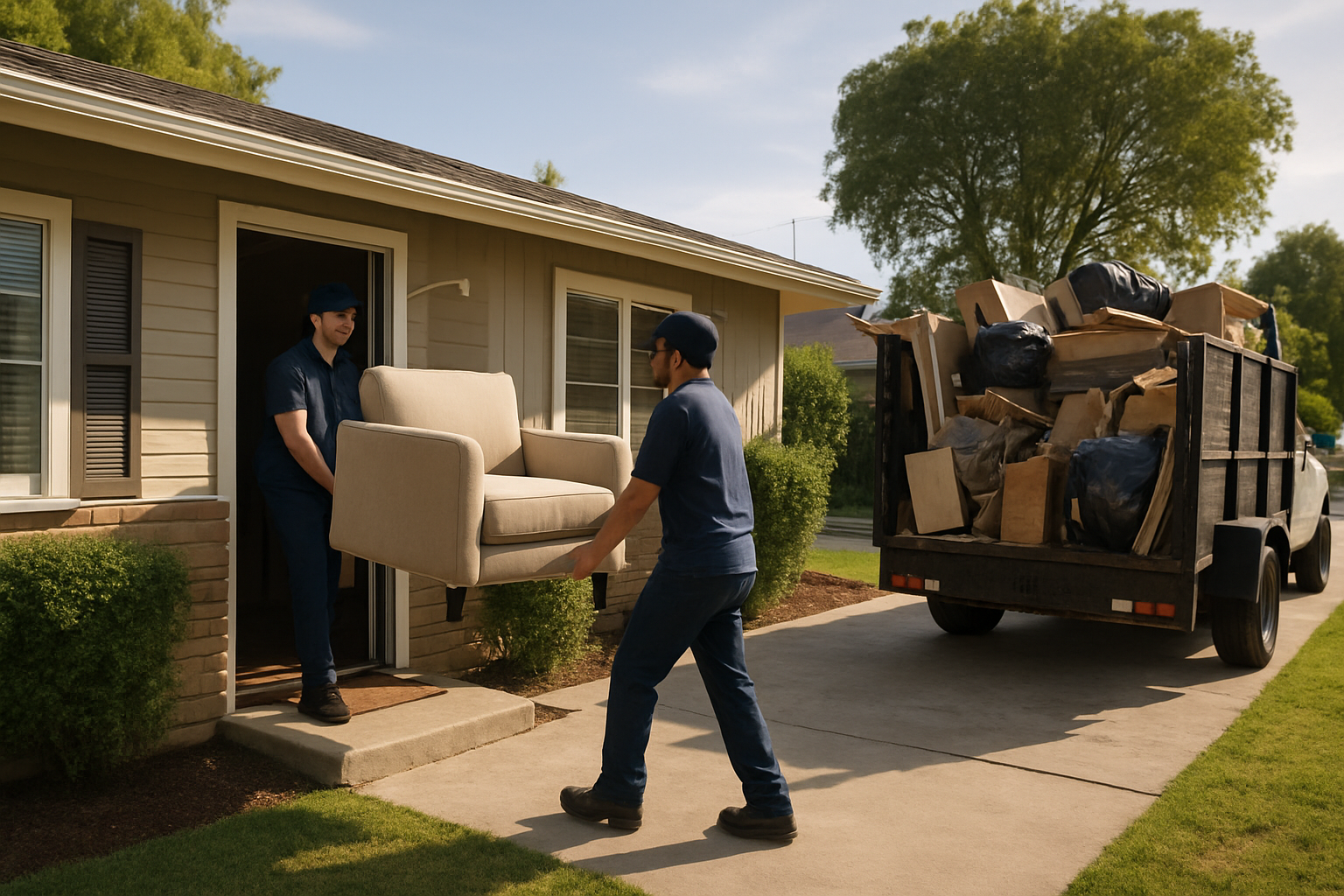
Direct Answer: Most house cleanouts take anywhere from a few hours to three full days, depending on how much is inside, how accessible the property is, and how many crew members are working.
Most people asking this question are already under some kind of pressure — a lease ending, a property going to market, an estate that needs to be wrapped up before family flies home. The timeline matters a lot when you’re working against a deadline.
The honest answer is that a single-car garage might take two to three hours, while a fully loaded four-bedroom home can stretch across two or three full days. What sits between those two extremes is mostly determined by volume, access, and how prepared the crew is before they show up.
This guide breaks down what actually drives a cleanout timeline in practical terms — not vague estimates, but the real factors that Hollister and Gilroy homeowners deal with every time a job like this gets scheduled.
The Biggest Factor: How Much Is Actually in the House
Volume is the number one variable. A lightly furnished home where someone already moved most of their belongings might clear out in a single morning. A house where nothing has moved in fifteen years is a completely different situation.
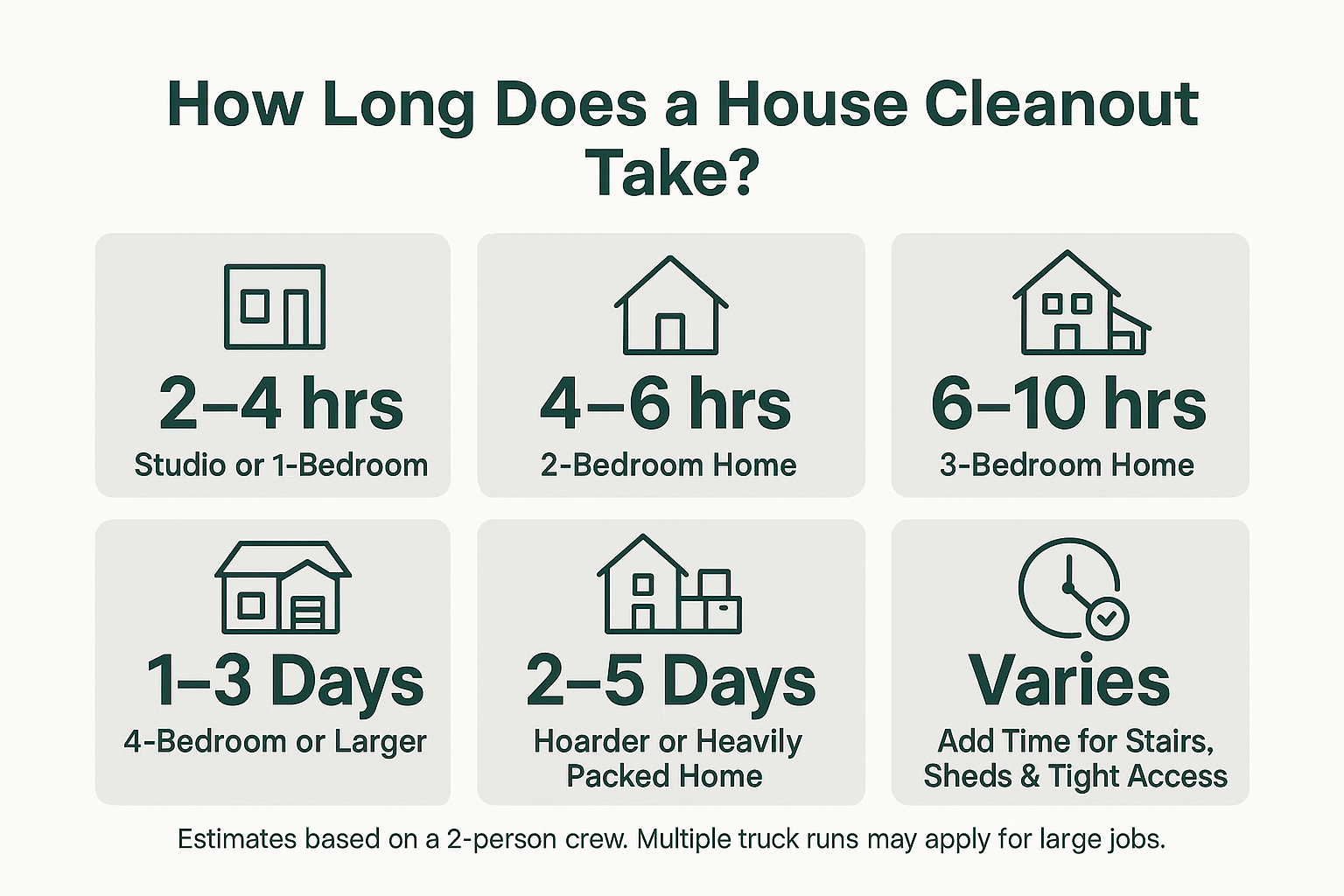
Here’s a rough breakdown by property type:
- Studio or one-bedroom apartment: 2–4 hours with a two-person crew
- Two-bedroom home, moderate contents: 4–6 hours
- Three-bedroom home, full contents: 6–10 hours, often split across two days
- Four-bedroom or larger home: 1–3 full days depending on density
- Hoarder house or heavily accumulated property: 2–5 days, sometimes more
These aren’t padding — they reflect how long it actually takes to carry items out, load a truck, make a disposal run to the John Smith Road Landfill, and come back for another load. A large job might require multiple truck runs in a single day.
If you want a sharper estimate before booking, check out what actually determines the price of junk removal — the same variables that affect cost also drive how long the job takes.
Access and Layout Add More Time Than Most People Expect
A ground-floor home with a wide driveway and no stairs clears fast. Anything else adds time — and it adds more than people expect before they’ve actually done one of these jobs.
Here’s what slows a crew down in the field:
- Narrow hallways or doorways that require items to be tipped, disassembled, or carried sideways
- Stairs — every heavy item going down a staircase takes longer and requires more people
- No direct driveway access, forcing the crew to carry items a longer distance to the truck
- Detached garage or storage shed that adds a separate work zone to the job
- Packed garages where items have to be unstacked before anything can come out
A two-story home with a tight staircase and a detached garage full of tools might take twice as long as a single-story home with the same total volume. That’s not an exaggeration — it’s just physics and labor.
If a property has items that are heavier or more awkward than they look, like appliances pushed against walls or furniture that was built in place, that’s worth knowing before the crew arrives.
House Cleanout Timeline at a Glance
This reference breaks down expected cleanout timeframes by property size and condition, so you can set a realistic schedule before the crew arrives.
How Crew Size Changes the Math
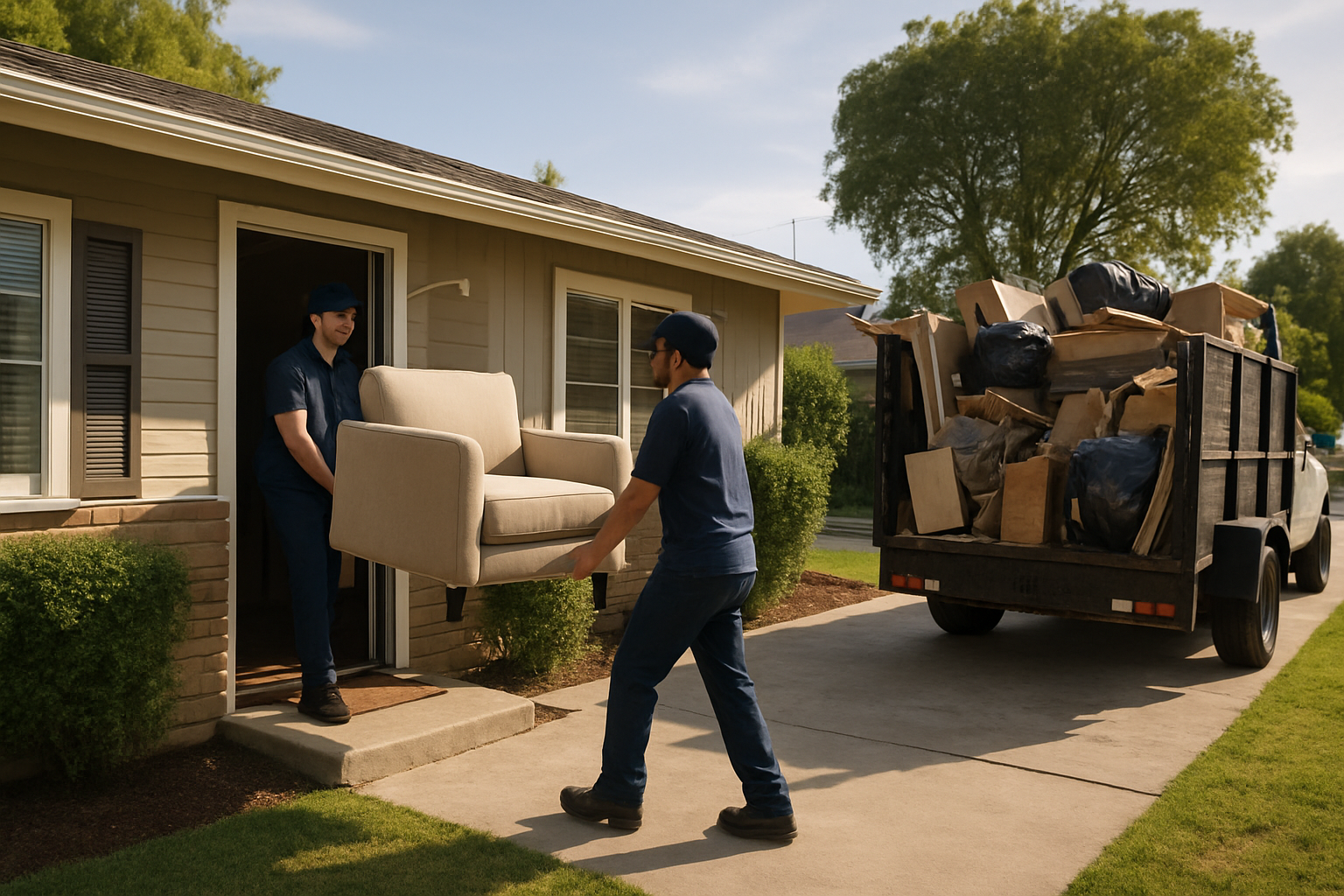
A two-person crew is the standard for most residential cleanouts. It works well for smaller jobs, but on a large property it’s the difference between finishing in one day versus two.
For a heavily loaded four-bedroom home, a three- or four-person crew can cut the total time by 30–40 percent. More hands means more items moving in parallel — one person loading while another carries, instead of both stopping to load together.
If you’re working against a hard deadline — a landlord handoff in Gilroy, a listing going live Thursday, a family flying back to San Jose Sunday night — it’s worth asking specifically about crew size when you call. Some jobs genuinely need the larger crew to hit the timeline, and a good operator will tell you that upfront rather than show up with two people for a five-day job.
Also worth knowing: if you’re weighing whether to rent a dumpster and do it yourself versus hiring a full crew, this breakdown of when a crew makes more sense than a dumpster is worth reading before you decide.
Cleanout Timeline by Property Size and Condition
Use this as a planning reference. Actual times vary based on access, crew size, and total volume — but these ranges reflect real-world jobs in the Hollister and Gilroy area.
| Property Size | Lightly Furnished | Fully Loaded | Hoarder/Packed |
|---|---|---|---|
| Studio / 1-Bed | 2–3 hours | 3–5 hours | 5–8 hours |
| 2-Bedroom Home | 3–5 hours | 5–7 hours | 1–1.5 days |
| 3-Bedroom Home | 5–7 hours | 1–1.5 days | 2–3 days |
| 4-Bedroom Home | 1 day | 1.5–2.5 days | 3–5 days |
| Commercial/Large Property | 1–2 days | 2–4 days | 4–7+ days |
What Actually Happens During the Job — and Why It Takes as Long as It Does
People sometimes wonder why a cleanout takes longer than expected even with a full crew. The answer usually comes down to what happens between the house and the final disposal run.
A typical cleanout day includes:
- Walk-through and load planning at the start — the crew identifies the heaviest items, maps the exit route, and figures out what needs to be broken down first
- Active loading — carrying, lifting, disassembling furniture, and stacking the truck efficiently so it holds more per run
- Disposal runs — driving to the landfill or transfer station, unloading, and returning. In San Benito County, that often means a trip to the John Smith Road Landfill off Union Road, which adds real drive time to the job
- Secondary passes — sweeping rooms for small items left behind, clearing corners and closets that weren’t visible on the first pass
For a detailed look at how this plays out from start to finish, this walkthrough of a full property cleanout explains each phase in plain terms.
One thing that adds unexpected time: appliances and large furniture that require partial disassembly before they’ll fit through a door. A washer and dryer, a sectional sofa, or a built-in bookcase can each add 20–45 minutes to a job.
How to Help the Job Go Faster Before the Crew Arrives
You can shave hours off the total cleanout time — sometimes half a day — with a little prep work the day before.
The most useful things you can do:
- Walk each room and pull out anything you’re keeping. Move it to a staging area — a car, a corner, a room that’s off-limits. A crew can’t move fast if they’re constantly asking what stays and what goes.
- Clear a path from the main rooms to the front door. If the hallway is blocked, so is the whole job.
- Identify the heavy or awkward items ahead of time — appliances, safes, built-in furniture — and let the crew know when they arrive. This helps with load planning before anyone lifts anything.
- Let the crew know about any items going to donation. If you want usable furniture dropped at a Goodwill in Gilroy instead of landfilled, say so at the start — not mid-job.
The less decision-making that happens during the cleanout, the faster it goes. Every time someone has to stop and ask “does this go?” the momentum slows down. If you’ve already made those calls, the crew can move.
Frequently Asked Questions About House Cleanout Timelines
Can a full house cleanout really be done in one day?
Yes, for a lot of homes — but not all. A two- or three-bedroom home with a full crew and good access can absolutely finish in a single day. A larger property or a heavily accumulated one usually can’t. When you call to schedule, be honest about what’s inside and the crew size can be matched to the job.
Does it take longer if items need to be sorted for donation versus trash?
It adds some time, but not as much as people worry about. The bigger time cost is when the sorting decisions haven’t been made yet. If you already know what’s going to donation and what’s going to the landfill before the crew arrives, they can execute that plan without stopping to ask.
What’s the slowest part of a cleanout job?
Honestly? Appliances and furniture that have to come apart before they’ll fit through the door. A refrigerator in a tight kitchen, a sectional in a narrow living room, or a dresser that won’t clear a hallway turn — those items eat time fast. Heavy items on upper floors are the second-biggest slowdown.
How far out do I need to book a cleanout in Hollister or Gilroy?
Scheduling availability changes with the season. Summer months — especially June through August — tend to book up faster because of move-outs and real estate activity. If you have a hard deadline, calling at least a week out gives you more options. Last-minute scheduling is sometimes possible but not always.
Does the cost go up if the job takes longer than expected?
Pricing is typically based on volume and job scope, not hourly time — so a job that takes longer because of difficult access doesn’t automatically mean a higher bill. That said, it’s worth asking specifically how pricing works before you book, and reading up on hidden fees in hauling and how to avoid them so you know what questions to ask.
What if the house turns out to have more in it than I thought?
It happens more often than you’d think — especially with garages, attics, or sheds that weren’t fully accounted for in the original estimate. A good crew will communicate before they proceed on anything outside the original scope. The job can be adjusted, scheduled across an additional day, or re-scoped on site. The key is that nothing should happen without your awareness and sign-off.
Ready to Get a Timeline for Your Cleanout?
If you’re in Hollister, Gilroy, or anywhere in San Benito County and you need a realistic picture of how long your cleanout will take — and what it will cost — MG Transportation & Hauling can walk you through it before you book anything. Call (831) 297-1972 or visit mgtransportationhauling.com/ to request a quote and get straight answers.
