

Quick Answer
Property cleanout services Hollister means clearing out an entire home, unit, office, garage, or lot, not just picking up a few junk items. The work usually includes labor, lifting, loading, hauling, and responsible disposal. Final cost depends mostly on volume, access, material type, and whether the job includes sensitive cleanup or light demolition.
If you're standing in a house full of furniture, bags, appliances, paperwork, and things nobody wants to sort through alone, you're not looking for a simple pickup. You're looking for a full cleanout.
That happens all the time with inherited homes, rental turnovers, business move-outs, and properties that have been sitting too long. If you're searching for property cleanout services Hollister, you usually need a clear plan, a realistic timeline, and a crew that can handle the work without making the situation harder. Families dealing with estate transitions often run into these same issues, which is why this estate cleanout trends guide for families can be useful before the work even starts.
What a Property Cleanout Actually Involves
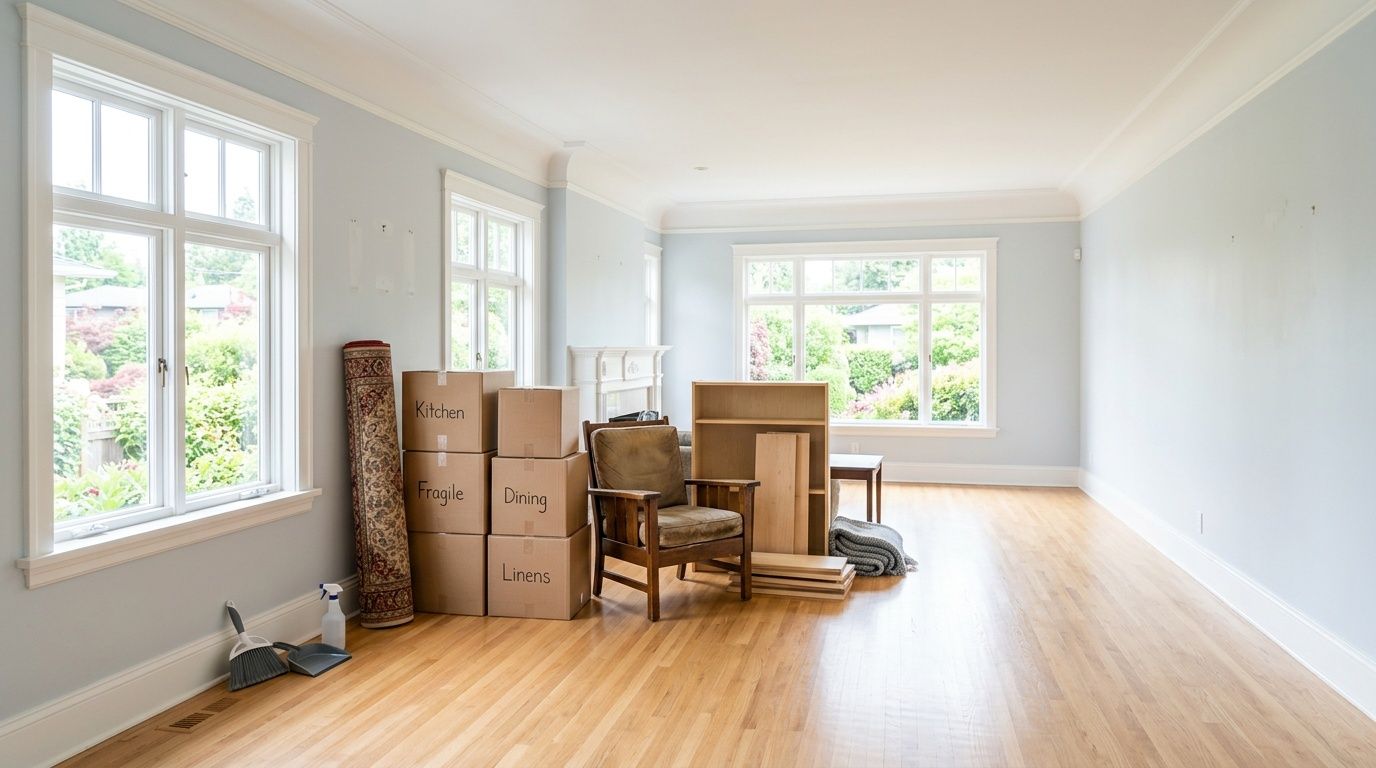
A cleanout is a project, not a single-item stop. The goal is to empty a space enough that the owner, landlord, contractor, or agent can move on to the next step.
That can mean removing couches, mattresses, bagged trash, broken furniture, appliances, garage clutter, yard debris, shelving, and general household contents from every room. In bigger jobs, it also means attics, sheds, crawlspaces, side yards, and outbuildings.
How it differs from basic junk removal
Regular junk removal is usually straightforward. You point to a few items, the crew loads them, and that's it.
A property cleanout is broader. The crew may need to move room by room, separate what stays from what goes, clear tight access points, and deal with mixed material loads that can't all be handled the same way. If the property also needs a container on site, a guide to what a roll-off dumpster is used for can help you decide whether full-service hauling or a dumpster rental fits better.
Practical rule: If the property owner says, "I just need this whole place emptied," that's a cleanout.
What full-service usually means on site
Full-service means the customer doesn't need to drag everything to the curb first. The crew does the lifting, carrying, loading, and haul-away.
For some jobs, that also means pulling loose debris from corners, removing abandoned items from closets, and consolidating scattered material so the property is usable when the job is done. If the space has damage from leaks, smoke, or contamination, cleanout may only be one part of the job. In those cases, a separate water, fire, and mold cleanup guide can help you understand where restoration work starts and hauling work ends.
What usually doesn't work
DIY cleanouts fall apart when people underestimate the labor. A room that looks manageable can turn into a full-day loading job once you start moving dressers, soaked carpet, old fencing, or boxed-up storage that hasn't been touched in years.
The other problem is disposal. Not everything can be tossed the same way, and mixed loads slow a job down fast if nobody has a plan for sorting.
Common Types of Property Cleanouts We Handle
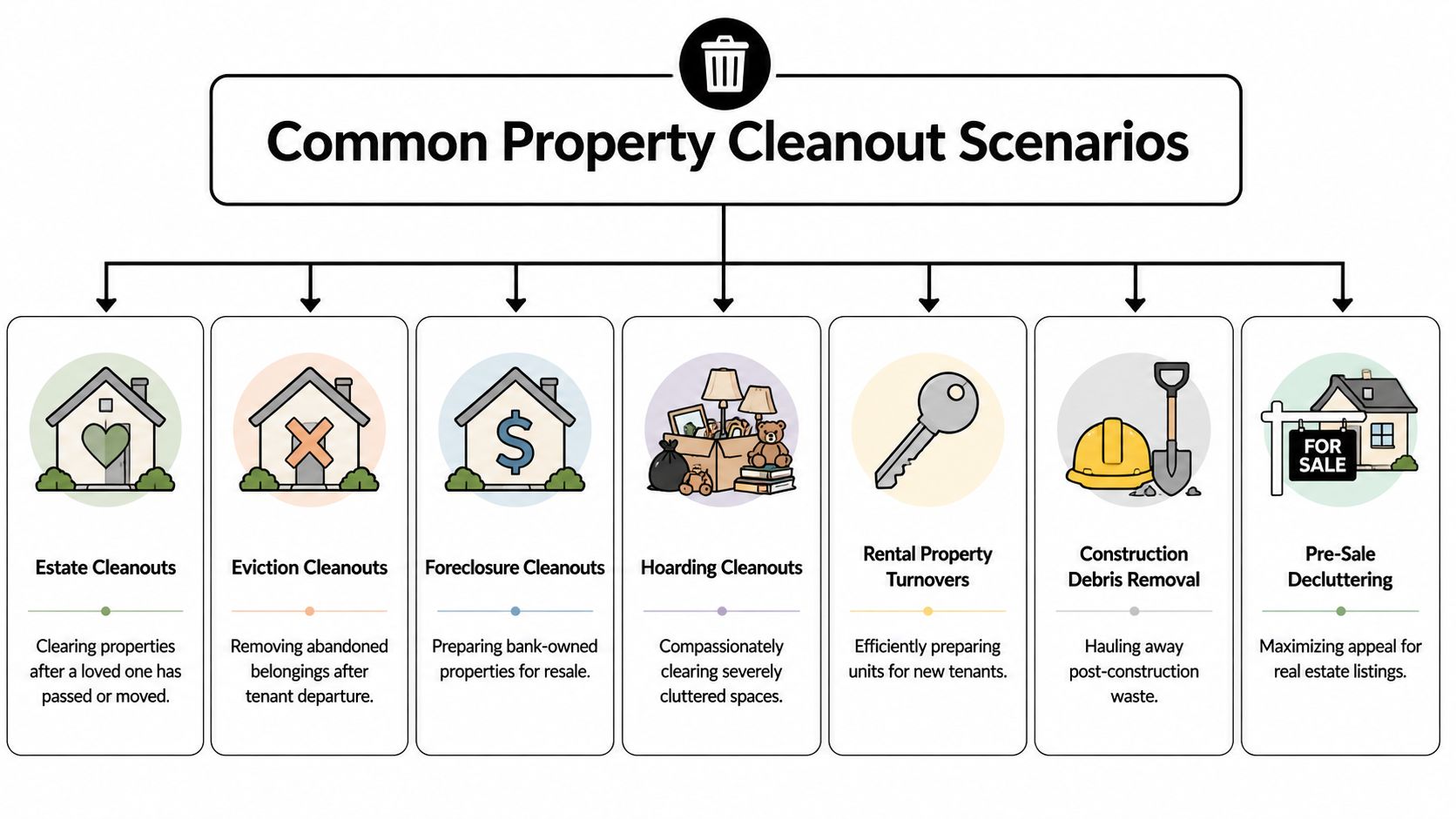
In Hollister, the type of cleanout changes the plan, the labor, and the disposal setup. A house packed with family belongings needs a different pace than a rental that has to be turned over quickly for repairs and leasing.
Residential and estate cleanouts
Estate cleanouts usually take more coordination than people expect. Before any loading starts, families often need to pull out photos, paperwork, jewelry, heirlooms, medications, and anything tied to the sale of the property.
The jobs run better when keep items are grouped in one room and removal items are clearly marked. If that sorting has not happened yet, the crew has to slow down and ask more questions room by room. That protects the family from mistakes, but it also affects how long the job takes.
Rental turnovers and abandoned property
Rental cleanouts are usually driven by deadlines. Owners, property managers, and maintenance crews want the unit emptied so cleaning, paint, flooring, and inspections can start.
What adds time on these jobs is mixed material. Bagged trash, broken furniture, food waste, patio debris, and leftover personal property all create extra sorting on site. In Hollister, access can be part of the issue too, especially with tight parking areas, upstairs units, or long walks from the unit to the truck.
Hoarder house cleanouts
Hoarder cleanouts need a slower and more controlled approach. Safe walking paths, blocked exits, pests, odors, sharp objects, and hidden moisture damage are common problems, and the first priority is making the space safe enough to work in.
We usually break these jobs into sections instead of trying to clear the whole house in one sweep. That keeps the work organized and helps the customer make decisions without getting overwhelmed. If you're dealing with that situation, this guide on the best way to handle a hoarder house cleanout gives a good starting point before anyone starts filling bags.
Commercial cleanouts and renovation debris
Commercial cleanouts are more schedule-sensitive than sentimental. Offices, retail spaces, and small warehouses often need to be emptied before keys are handed back or contractors start build-out work.
These jobs can include desks, shelving, displays, pallet debris, old inventory, and fixtures that are no longer staying with the space. Renovation debris is its own category inside that work. Carpet, cabinets, tile, fencing, sheds, and other non-structural materials get heavy fast, so the removal plan has to match the weight and the loading conditions.
Pre-sale and move-out cleanouts
Pre-sale cleanouts are common in Hollister when a house needs to show better without stripping it bare. The goal is to remove what makes the property feel crowded, dated, or harder to photograph, while leaving behind anything the owner still needs for staging or daily use.
Move-out cleanouts are more straightforward, but they still need a plan. Garages, side yards, storage rooms, and backyard piles are where extra volume usually shows up.
| Cleanout Type | Common Scenario | Key Considerations |
|---|---|---|
| Estate cleanout | Family clearing a home after a death or move | Keep items need to be separated before loading |
| Rental turnover | Tenant leaves belongings behind | Access, timing, and legal handling matter |
| Hoarder cleanout | Severe accumulation inside the property | Safety, discretion, and contamination concerns |
| Commercial cleanout | Office or retail move-out | Deadline pressure and fixture removal |
| Renovation debris cleanup | Tear-out before remodel work | Material weight and disposal method |
| Pre-sale decluttering | Owner preparing to list a home | Removing excess without clearing needed staging items |
Sensitive cleanouts usually go wrong when the crew loads too fast and the customer has not finished sorting what stays.
The Cleanout Process from Start to Finish
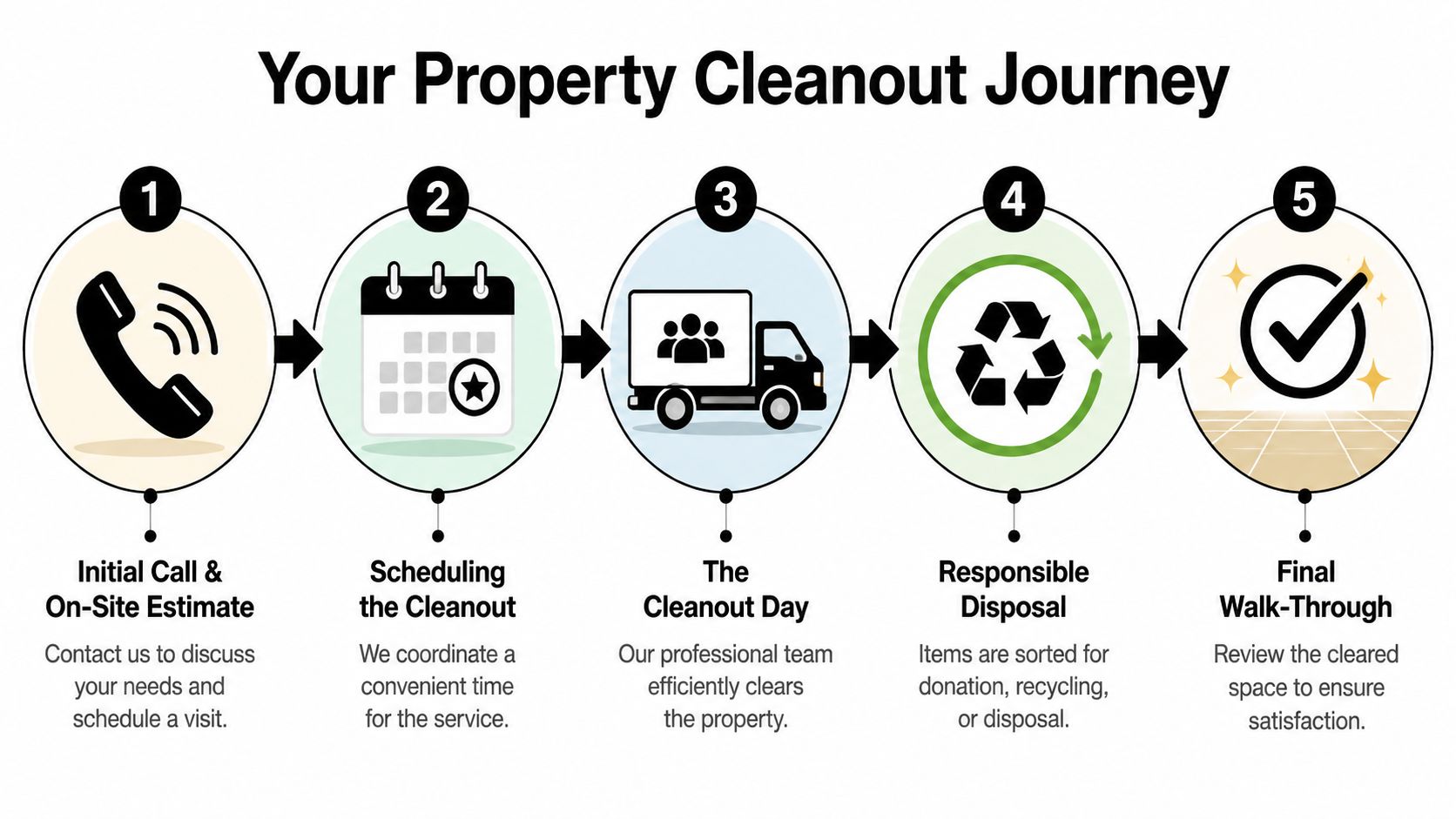
A typical Hollister cleanout starts the same way. You open the garage, the side yard, or the back bedroom, and the job looks bigger in person than it did in your head. Good process matters because once loading starts, mistakes get expensive. The wrong items leave, access gets blocked, or the crew burns time rehandling material.
Initial call and on-site estimate
The first call is about scope, access, and timing. We need to know what type of property it is, roughly how much material is on site, whether there are items that must stay, and what could slow the crew down, such as stairs, tenant-occupied areas, narrow gates, soft ground, or a long walk from the truck to the load.
Photos help with simple jobs.
For whole-house, estate, hoarder, or mixed-debris cleanouts, an on-site estimate is usually the better call. It shows actual working conditions. Packed sheds, damp furniture, broken fencing behind the garage, and piles hidden along a side yard can change the labor plan fast.
Scheduling and prep
Once the scope is clear, the next step is choosing how the job gets done. Some Hollister customers want a crew to handle everything in one visit. Others want time to sort family items, paperwork, tools, or sellable pieces before hauling starts.
For jobs with a lot of volume or multiple work areas, this guide to full-service junk removal for large cleanouts gives a useful breakdown of how full-service hauling differs from other setups.
Preparation on the customer side is simple but important. Mark off anything that stays. Clear a parking spot if possible. Make sure gates, lockboxes, or tenant access are handled before arrival. In Hollister, that matters more than people expect, especially on rural properties where the truck may have only one practical place to park and turn around.
Cleanout day
The day should start with a walkthrough, not with loading. We confirm the keep items, the first load path, and any areas that need extra care, such as hardwood floors, low patio covers, or a garage packed wall to wall.
Then the crew works in a deliberate order. Large furniture and bulky obstacles usually come out first so the team can open safe walking lanes. Loose debris, bagged trash, shelving contents, and smaller items get consolidated after that. On heavier jobs, the loading order also matters for truck balance and dump efficiency, which is one reason experienced crews do not just grab the nearest pile and start throwing.
Sorting, hauling, and final walk-through
A proper cleanout usually involves decisions on the fly. One room may be straight disposal, while another needs careful sorting for documents, photos, tools, or donation items. That is common on estate and move-out jobs in Hollister, where families often want speed but still need a last review before everything leaves the property.
At the end, there should be a final walkthrough of the cleared areas. That is where you confirm the agreed scope, check that no keep items were taken, and make sure the property is left in the expected condition. MG Transportation & Hauling LLC handles this type of work in the Hollister area with services that include full-service junk removal, property cleanouts, hoarder house cleanouts, dumpster rental, and demolition.
The cleanouts that go smoothly are the ones where the crew, the customer, and the load plan are clear before the first item gets carried out.
Understanding the Cost of Property Cleanout Services Hollister

A Hollister cleanout can look simple from the curb and turn into a half-day job once the crew gets inside. A garage with a few visible piles may also have packed side walls, broken shelving, paint cans, old fencing, or appliances buried in the back. That is why cleanout pricing usually starts with volume, then gets adjusted by labor, access, and what the material is.
Volume drives a large share of the price because truck space, loading time, disposal fees, and the chance of needing a second trip all follow the size of the job. Two properties on the same street can price very differently if one is a straightforward furniture haul-out and the other needs hand-sorting, stair carries, or debris removal from multiple structures.
What changes the estimate
Several job conditions move the estimate up or down, and they are usually easy to spot during an on-site look or from clear photos:
- Amount of material: More volume means more truck space, more labor hours, or more dump runs.
- Access to the load: Upstairs units, narrow side yards, long carries, locked gates, and limited parking add time.
- Material type: Old household contents, yard debris, concrete, tile, and wet trash do not handle the same way.
- Sorting required: Mixed keep, donate, recycle, and discard piles slow the job compared with a straight clean sweep.
- Special handling: Safes, pianos, built-ins, sheds, and items that need two or three movers change both labor and risk.
In Hollister, access matters more than people expect. Some properties have plenty of open driveway space. Others have tight approach angles, detached backyard storage, or fencing that forces the crew to hand-carry everything farther than the customer realized.
Questions worth asking before you book
A good estimate starts with direct questions. The more specific you are about the property, the more accurate the number will be.
- Ask how pricing is measured: Is it based on truck volume, individual items, labor time, or the full scope of the cleanout?
- Ask what is included: Loading, haul-away, dump fees, basic sweep-up, and light sorting should be clarified before the crew arrives.
- Ask what needs special approval: Appliances, e-waste, paint, chemicals, tires, and construction debris may be priced or handled differently.
- Ask what you should do before the appointment: Mark keep items, provide entry access, and move vehicles if they block the load path.
For a closer look at the moving parts, this article on what determines the price of junk removal explains how cleanout estimates are built in plain terms.
Safety, Insurance, and Responsible Disposal
Walk into a packed garage, an inherited home, or a rental left in rough shape, and safety becomes part of the job right away. Crews have to watch for weak flooring, broken glass, exposed nails, unstable stacks, pests, and heavy pieces that do not come out cleanly on the first try.
That is the difference between basic hauling and a real property cleanout.
On Hollister jobs, the risk usually shows up in ordinary places. A narrow side yard. A back bedroom filled wall to wall. A refrigerator that has to come down three porch steps. If the crew rushes, someone gets hurt or the property gets damaged. If the crew plans the path, stages the load, and clears hazards as they go, the job stays under control.
What responsible handling looks like
Responsible disposal starts on-site, not at the dump. Items need to be separated by type while the cleanout is happening, especially on larger jobs with mixed household goods, scrap metal, cardboard, appliances, yard debris, and plain trash.
That sorting matters for two reasons. First, some materials can be recycled or donated instead of buried in a landfill. Second, certain items need different handling altogether, including paint, chemicals, batteries, electronics, and anything that local facilities will not accept in a general load.
A good crew should be able to explain where the material is going and what cannot be taken under standard junk removal rules.
Why insurance matters
Insurance is not just a box to check. It matters when a worker is carrying a dresser down a tight hallway, removing debris from an unstable shed, or loading heavy material off uneven ground.
Ask direct questions. Is the company insured for this kind of labor? What happens if a wall gets scraped, a gate gets damaged, or someone gets injured on the property? Clear answers tell you a lot about how seriously they run the job.
The process matters too. A careful contractor does not just load fast. They protect corners when needed, keep walk paths open, avoid overstacking, and leave the site in a condition that is safe for the owner, realtor, tenant, or contractor coming in next.
A cleanout is done correctly when the property is cleared, the load is handled legally, and nobody has to guess what happened to the material after it left.
How to Choose the Right Cleanout Contractor
A cleanout contractor should be judged on the hardest part of your job, not the easiest. If the property has a garage packed to the ceiling, an upstairs unit with narrow stairs, or a rental full of abandoned furniture and loose debris, ask whether the company has handled that exact kind of work before.
That one question saves people a lot of trouble in Hollister.
Some crews are set up for basic junk pickup. A full property cleanout is different. It can involve multiple rooms, outside areas, access limits, coordination with a realtor or property manager, and decisions that have to be made on site without slowing the whole job down. The right contractor should be able to walk the property, point out likely problem areas, and explain how they would staff and stage the job.
What to verify before saying yes
Keep the checklist short and practical:
- Clear scope: Make sure the estimate says what is being removed, what areas are included, and what is excluded.
- On-site pricing: For full cleanouts, an in-person quote is usually more reliable than a number given from a few photos.
- Relevant experience: Estate cleanouts, eviction cleanouts, foreclosure jobs, and heavy debris removal all have different demands.
- Crew capacity: Ask how many workers are coming and whether they have the truck space and tools for the volume involved.
- Scheduling reliability: If you need the place cleared before listing, repairs, or turnover, confirm the actual timeline, not just availability.
- Communication: You want a contractor who answers direct questions directly.
A good estimate should not feel vague. It should tell you what happens if the job runs larger than expected, if hidden debris is found, or if certain items cannot go in the standard load.
Ask situational questions too. How do they handle items you may want to keep? What happens if a family member is sorting while the crew is loading? Can they work in phases if only part of the property is ready? Those answers tell you whether the company has real field experience or is just trying to win the job.
For commercial properties or multi-step turnovers, these essential facility director tips for 2025 are useful for planning access, vendor timing, and site handoff.
Price matters, but cleanup problems cost money too. The right contractor is the one who shows up prepared, sticks to the scope, and leaves you with a property that is cleared and ready for the next step.
Frequently Asked Questions About Property Cleanouts
How long does a property cleanout usually take?
That depends on the volume, access, and how much sorting has to happen before loading. A small cleanout may move quickly, while an estate, hoarder situation, or mixed indoor-outdoor property can take much longer.
Do I need to have everything boxed up before the crew arrives?
No. For full-service cleanouts, customers usually don't need to box or move items first. It helps to separate anything you want to keep so it doesn't get mixed into the removal pile.
Can you clear garages, sheds, and side yards too?
Yes, a property cleanout often includes more than the main rooms of the house. Garages, storage areas, patios, and detached structures are common parts of the job.
What if I'm dealing with a hoarder house or an unsafe room?
That should be treated differently from a standard junk pickup. Jobs involving heavy accumulation, possible biohazards, blocked walkways, or sharp debris need a crew that understands safety, discretion, and controlled removal.
Do you take appliances, furniture, and debris in the same job?
In many cases, yes. Mixed loads are common in property cleanouts, but the exact handling depends on what the material is and whether any items need separate disposal.
Should I choose full-service hauling or rent a dumpster?
Choose full-service hauling if you want the labor handled for you. A dumpster can make sense if you want to sort gradually on your own schedule and load material yourself.
Get Your Hollister Property Cleared the Right Way
A typical call in Hollister starts with a property owner opening a garage, side yard, or back bedroom and realizing the job is bigger than one pickup truck and a free Saturday. At that point, the main question is not whether the material can be hauled away. It is how to clear it without wasting time, blocking access, or creating more repair work afterward.
A good cleanout sets up everything that comes next. If you are getting a home ready for sale, turning over a rental, or trying to bring an inherited property under control, clearing the space gives contractors, cleaners, and real estate agents room to work. Once the clutter and debris are out, this guide on how to increase your home's worth can help with the next decisions.
MG Transportation & Hauling LLC is located at 1550 South St, Suite 102, Hollister, CA 95023. You can call (831) 297-1972 to describe the property, ask what can be removed, and get a clearer sense of whether the job calls for a basic haul-out or a full cleanout.
That first conversation usually answers the practical questions fast. Customers want to know about access, labor, loading, sorting, and what might affect the final price. Clear answers early make the job go smoother on site.
