
Quick Answer
Residential junk removal means a crew comes to your home, lifts and loads unwanted items, hauls them away, and cleans up the area when the job is done. It's the practical option when you have bulky furniture, appliances, clutter, or a full cleanout and don't want to handle the labor yourself.
If you're standing in a garage that got out of hand, looking at a spare room full of old furniture, or dealing with a house after a move, you're not the only one. Residential junk removal is built for exactly those situations, especially when the job is too heavy, too time-consuming, or too overwhelming to do alone.
For homeowners in Hollister and Gilroy, the main thing to know is that a good hauling service should be simple. You point out what needs to go, the crew does the lifting, and the space gets cleared without you dragging everything to the curb first.
Your Guide to Residential Junk Removal in Hollister and Gilroy
A lot of people call when the clutter has stopped being an annoyance and started getting in the way. Maybe the garage can't hold a car anymore, a relative left behind a full house of belongings, or a remodel left piles of debris that aren't going anywhere on their own.
Residential junk removal is the straightforward answer when you need items removed from a home without taking on the lifting, sorting, loading, and dump runs yourself. In practical terms, that means someone comes out, looks at the job, gives you a clear quote based on what is there, and removes the material from the property.
In Hollister and Gilroy, jobs vary quite a bit. Some are simple single-item pickups. Others are whole-property cleanouts where furniture, appliances, bagged trash, yard debris, and leftover household items all need to be handled in one visit. If you want a local overview of what that kind of hauling can include, this page on junk hauling services in Gilroy gives a good sense of the kinds of jobs crews are asked to take on.
Practical rule: If the job involves stairs, bulky items, multiple rooms, or anything you can't safely move by yourself, it's worth treating it as a hauling job rather than a weekend project.
The biggest mistake homeowners make is waiting until the job gets harder. Junk tends to spread. One room becomes two, then the garage, then side yard storage, then the shed. Getting a plan in place early usually saves stress, and it keeps a manageable cleanup from turning into a full cleanout later.
What Full-Service Residential Junk Removal Includes
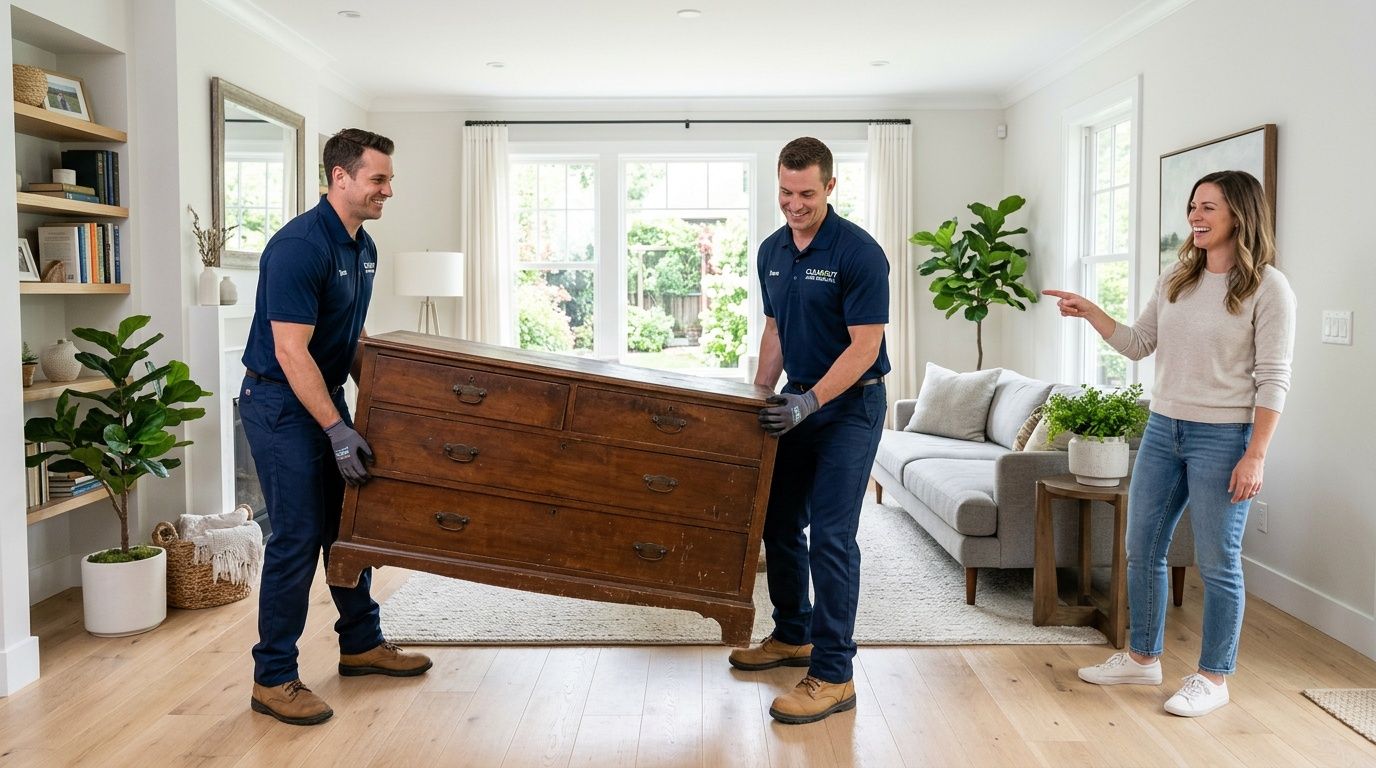
Full-service means you don't have to stage the pile, rent a truck, or recruit friends to help move a dresser down a hallway. You show the crew what stays and what goes. They handle the rest.
What people usually need removed
Most residential jobs fall into a few common categories:
- Furniture like couches, dressers, tables, recliners, bed frames, and mattresses
- Appliances such as refrigerators, washers, dryers, and old freezers
- General household clutter from garages, spare rooms, attics, and storage areas
- Yard debris including branches, bagged green waste, and outdoor cleanup material
- Remodel debris from smaller home projects, tear-outs, and similar cleanup work
The service is useful because homes collect mixed loads. It's rarely just one type of material. A real cleanout often includes bulky furniture, loose clutter, broken items, and things that need to be carried carefully through the house without damaging walls or floors.
What full-service changes for the customer
The main difference is labor. You don't need to bag everything, drag it outside, or stack it neatly at the curb. A full-service crew goes into the garage, backyard, upstairs room, or side yard and removes the items from where they sit.
That matters more than people think. A refrigerator in the kitchen, an old sleeper sofa upstairs, and a pile of renovation debris behind the fence are all part of the same job if the crew is equipped to handle them.
The demand for that kind of help is real. In 2023, the U.S. residential junk removal segment generated $6.8 billion in revenue, representing the largest portion of the overall junk removal industry, according to Gitnux junk removal industry statistics. That lines up with what homeowners already know from experience. Clutter removal is common, and many jobs need more than a pickup truck and spare afternoon.
A full-service crew should leave you making decisions, not doing the lifting.
If you want a closer look at what homeowners usually expect from this type of appointment, full-service junk removal for homeowners is worth reviewing before you book.
The Junk Removal Process From First Call to Final Sweep
A lot of the stress around hiring junk removal comes from not knowing what happens after you call. The process should be predictable. You should know when pricing is set, when the lifting starts, and what the area will look like when the truck leaves.
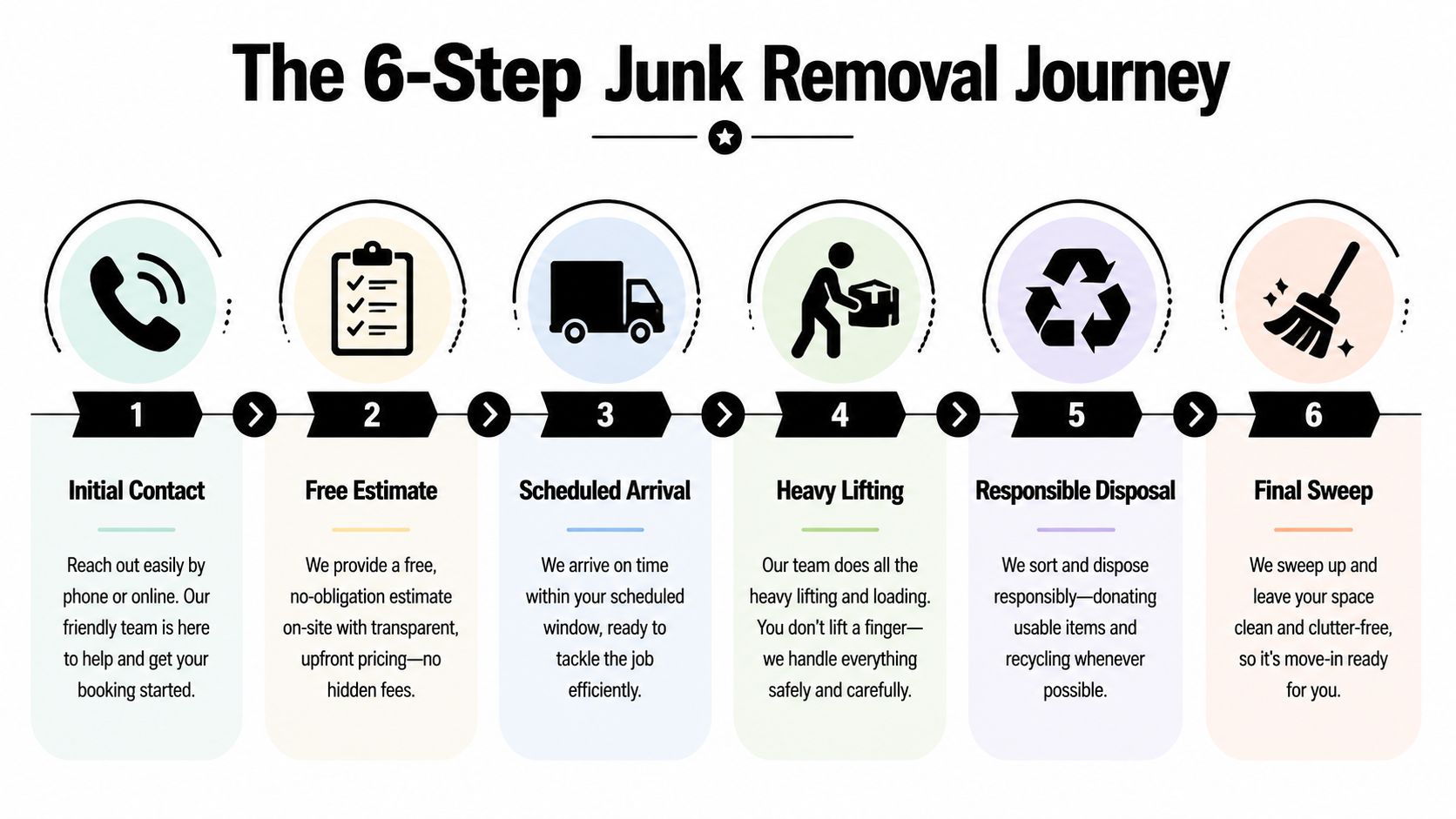
This visual lays out the basic flow.
Step by step on a typical job
Professional junk removal commonly follows a six-step workflow: initial quote, on-site assessment, heavy lifting and loading, hauling, disposal, and final cleanup. The same source notes that professional handling reduces client injury rates by 90% compared to DIY efforts, which is one reason customers call when items are heavy, awkward, or stacked in tight spaces. You can see that explained in Offload Moving's guide to hiring professional junk removal services.
That process typically unfolds like this on the ground:
- You make contact by phone or online and describe the job.
- The crew assesses the load on site so pricing matches the actual volume and material.
- Heavy lifting starts once the quote is approved.
- Items are loaded and hauled away without the homeowner needing to move them first.
- The load is sorted for disposal based on what can be recycled, donated, or trashed.
- The crew does a final sweep so the cleared area is left tidy.
What makes the process go smoothly
Access matters. If a crew can get to the items clearly, the job moves faster and with less risk of damage. Narrow hallways, locked gates, steep driveways, and second-floor removals don't make a job impossible, but they do change how it needs to be handled.
It also helps to mark out what stays. On bigger cleanouts, especially estate or foreclosure work, homeowners and family members should separate anything important before loading begins. Once a mixed pile starts moving, decisions need to be settled.
Keep, donate, and haul-away items should be clearly separated before the truck is loaded.
If you're still deciding whether to bring in a crew or handle it another way, who to call for junk hauling services near me can help you think through the kind of job you have.
Understanding the Factors That Determine Junk Removal Cost
The biggest pricing factor in residential junk removal is volume. In plain language, that means how much space your items take up in the truck, not just how many pieces you have.
Volume matters more than item count
Industry pricing is typically based on cubic yardage volume, and 1 cubic yard equals 27 cubic feet, as explained in this video overview of junk removal pricing by cubic yard. That same explanation gives useful real-world examples. A household washer or dryer is about 1 cubic yard, while a standard refrigerator is about 2 cubic yards.
That matters because two jobs can both involve "a few items" and still take up very different amounts of truck space.
| Item type | Approximate volume |
|---|---|
| Washer or dryer | About 1 cubic yard |
| Standard refrigerator | About 2 cubic yards |
| Mixed loose clutter | Varies based on how it stacks |
Other things that affect a fair estimate
Volume isn't the whole story. Material type matters too. Light household junk is different from dense debris, and a pile of broken concrete or renovation material isn't handled the same way as old chairs and cardboard boxes.
Access also affects the job. A couch on the curb is easier than the same couch wedged in an upstairs loft with a tight stair turn. Demolition can also change the scope if a structure or built-in item has to be taken apart before it can be hauled off.
A good estimate should account for things like:
- Where the items are located inside or outside the property
- How heavy or dense the material is
- Whether disassembly is needed
- How mixed the load is, especially on larger cleanouts
If you're comparing service costs in general, not just hauling, it can help to compare home cleaning quotes so you can see how labor, access, and job complexity affect pricing across home services. The same basic rule applies here. Clear scope leads to clearer pricing.
The most accurate junk removal quote comes from seeing the material in person, not guessing from a short description.
Dumpster Rental vs Full-Service Hauling Which Is Right for You
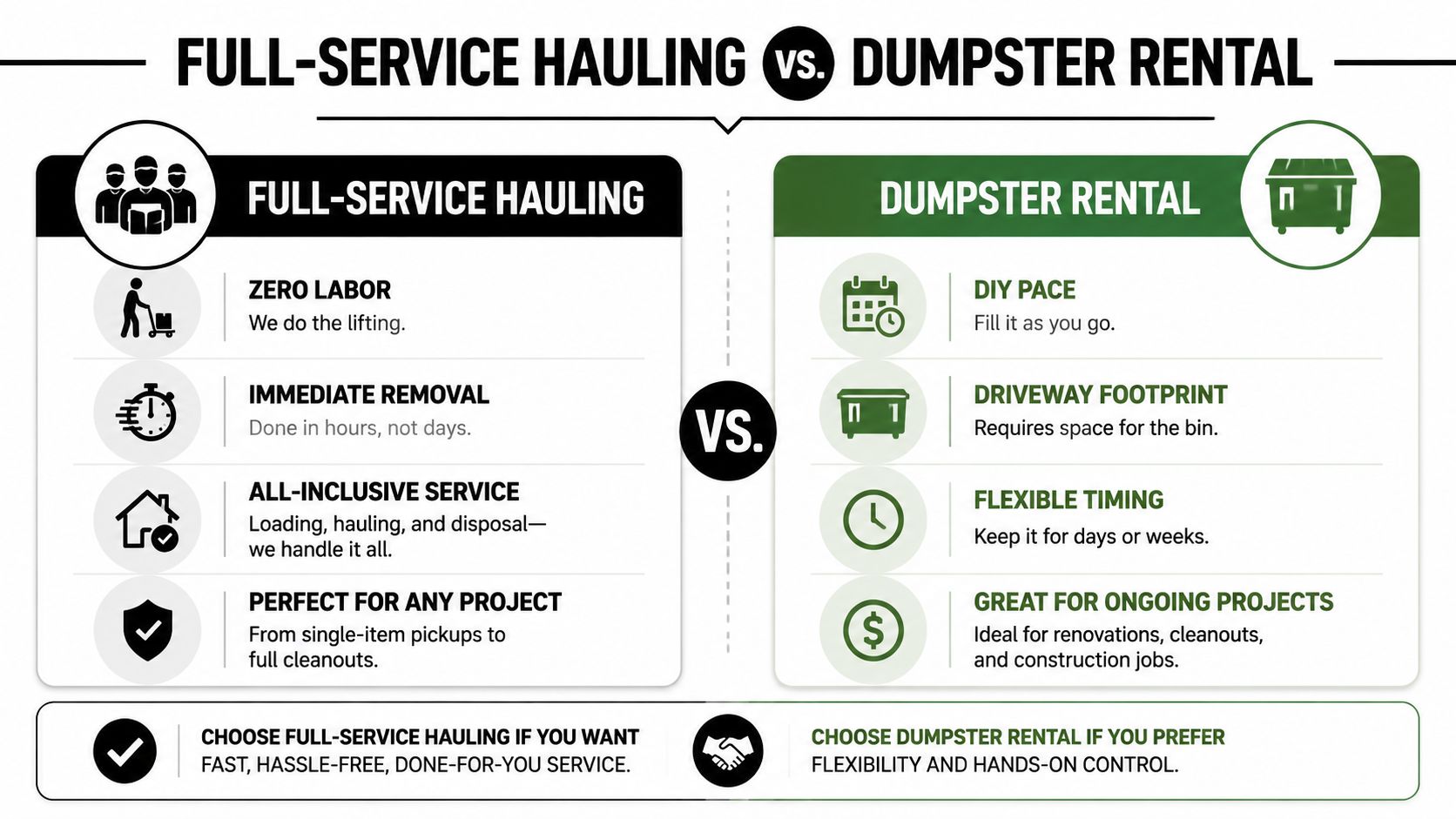
Some jobs need a crew. Some jobs need time. That is usually the primary difference between full-service hauling and dumpster rental.
When full-service hauling makes more sense
Choose full-service hauling when the main problem is labor. If the items are bulky, dirty, awkward, or spread across different parts of the property, having a crew remove everything in one appointment is usually the cleaner solution.
This option fits well when you're dealing with:
- Furniture and appliance removal that needs lifting and carrying
- Fast property turnover for a sale, move-out, or tenant change
- Estate or family cleanouts where time and energy are limited
- Situations with stairs or tight access where moving items is the hard part
For these jobs, speed matters. The work gets done in a single visit, and you don't have to spend your own weekend loading debris piece by piece.
When dumpster rental is the better fit
Dumpster rental works better when the project unfolds over several days and you're comfortable doing the loading yourself. That's common with home renovations, garage cleanups done in stages, landscaping projects, or decluttering where you're still deciding what to keep.
A dumpster can be the right call if you want:
- More time on site for a gradual cleanup
- A place to toss debris as you work
- Control over the pace of the project
- A DIY approach without scheduling a crew for each load
The trade-off is physical work and space. You need room for the bin, and someone still has to carry the material out and load it safely.
A simple way to decide
If you want the junk gone fast and don't want to lift it, full-service hauling is usually the right answer. If you're doing a project over time and don't mind the labor, dumpster rental can be more practical.
There are also jobs that start one way and end another. A homeowner might rent a dumpster for renovation debris, then call for full-service hauling once the leftover furniture and bulky items are all that's left. If you're trying to sort out which option fits your property, this overview of what a roll-off dumpster is helps clarify the dumpster side of the decision.
Specialized Support for Estate, Hoarder, and Foreclosure Cleanouts
Some cleanouts aren't just about unwanted junk. They're tied to grief, family conflict, tenant damage, safety hazards, or years of accumulation. Those jobs need a different approach.

Estate cleanouts need a slower decision process
With estate work, the hardest part usually isn't hauling. It's deciding what stays with the family, what can be donated, and what can finally leave the property.
The cleanest way to handle these jobs is in passes. First separate documents, valuables, photos, jewelry, heirlooms, and anything the family wants reviewed. After that, the actual removal goes much smoother because the crew isn't waiting while every box gets reopened.
Hoarder cleanouts require discretion and safety
Hoarding situations are more common than many families realize. A 2023 National Study on Hoarding found that 2% to 6% of U.S. households are affected by hoarding disorder, and 75% require professional intervention for cleanouts due to health and safety risks. The same source notes that only 12% of junk removal websites mention hoarder-specific services, which helps explain why families often struggle to find the right kind of help. Those figures are summarized at Over the Edge Junk's hoarder cleanout page.
That kind of job calls for a non-judgmental approach. People may be attached to items others see as trash. The property may also have blocked walkways, damaged flooring, pests, spoiled food, or unsafe stacking that changes how the crew can move through the house.
These cleanouts go better when everyone agrees on decision-makers before the work starts.
Foreclosure cleanouts are usually about readiness
Foreclosure and abandoned property cleanouts are more direct, but they still need organization. The goal is usually to get the house back to a usable condition so repairs, inspections, listing work, or occupancy can move forward.
Typical foreclosure jobs involve mixed debris, abandoned furniture, bagged trash, garage contents, and outdoor buildup. In those situations, one option local residents use is MG Transportation & Hauling LLC, which handles full-service junk removal and larger property cleanouts in the area. The key is choosing a crew prepared for whole-property volume, not just a few curbside items.
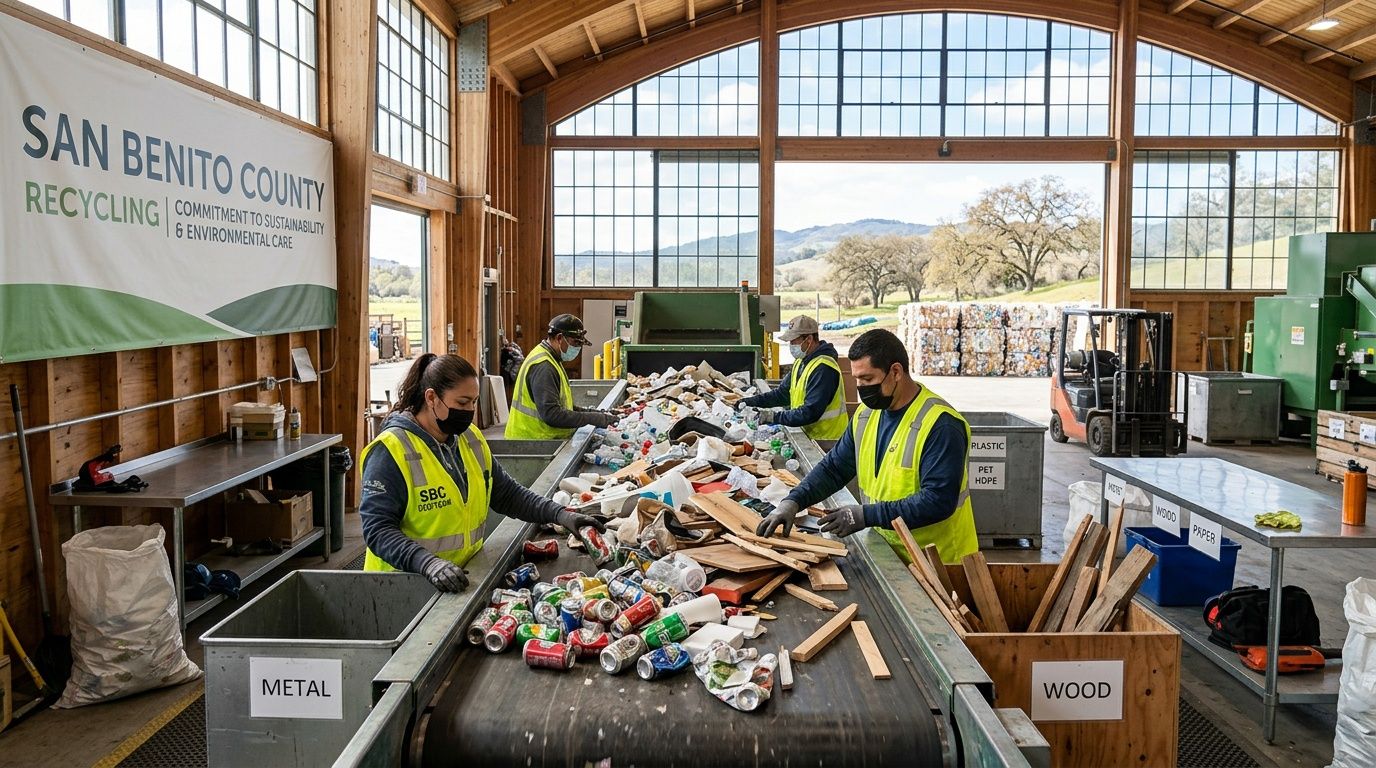
How We Handle Junk Responsibly in San Benito County
People ask all the time whether their items are just going straight to the landfill. Fair question. Responsible hauling means sorting the load and handling different materials the right way after pickup, not tossing everything together and calling it done.
What responsible disposal looks like
After removal, loads are typically separated into categories. Recyclable material, reusable items, and actual trash shouldn't all be treated the same. That takes more effort, but it's the right way to handle a residential cleanout.
Items are usually sorted along lines like these:
- Metal and recyclable material that can be processed separately
- Usable household goods that may be appropriate for donation
- Electronics and restricted items that need special handling
- True waste that has to go to disposal
That last category is only one part of the load on many jobs.
Why California rules matter
California disposal rules affect what can go where, especially on larger cleanouts and renovation-related debris. One reason homeowners ask more detailed questions now is that broad claims about being "eco-friendly" don't tell them much.
A summary from Angel's Junk Removal on eco-friendly disposal and California diversion requirements notes that many companies stay vague, while California's SB 54 mandates high debris diversion rates, and a 2025 report noted 41% growth in zero-waste hauling demand. For homeowners, the practical takeaway is simple. Ask how items are sorted, what can't go in a mixed junk load, and how electronics or similar material are handled.
If you have bedding or bedroom furniture in the load, this page on box spring recycling is a useful example of the kind of item-specific disposal question worth asking before pickup.
Your Questions Answered and How to Get Started
Do I need to move everything outside before the crew arrives
No. With full-service residential junk removal, the point is that the crew removes items from where they are sitting. That can be inside the house, in the garage, in the backyard, or in a storage area on the property.
Do I need to be home for the whole appointment
For many jobs, it's best to be there at the start so you can confirm exactly what goes and what stays. On larger cleanouts, especially when there are mixed belongings, having someone available to answer questions prevents mistakes.
How quickly can a junk removal job be done
That depends on the size of the load, where the material is located, and whether anything has to be sorted before removal. A single-room pickup moves very differently than a packed garage, an estate cleanout, or a foreclosure property with multiple structures.
What items usually can't go in a standard junk load
Hazardous materials, certain chemicals, and other restricted items often require separate handling. If you're not sure about something, ask before the appointment so the crew can tell you whether it can be removed as part of the job or needs another disposal route.
What's the difference between an estimate and a final quote
An estimate is a preliminary price based on what you've described or shown in photos. A final quote is usually given after the crew sees the material in person and confirms the volume, access, and type of debris involved.
Can you remove old cars or RVs too
Some hauling companies only handle household junk. Others also provide towing-related services. If you have a non-running vehicle, junk car, or need transport for a fifth-wheel RV, ask specifically so you know you're calling a company that offers those services.
What should I do before an estate or hoarder cleanout starts
Separate anything personal, legal, sentimental, or valuable before the hauling begins. If multiple family members are involved, decide ahead of time who has authority to make keep-or-go decisions on site.
Will the area be cleaned up after the junk is removed
A professional crew should do a final sweep of the area after loading is done. That doesn't replace deep cleaning, but it should leave the cleared space free of leftover loose debris from the removal itself.
Getting rid of junk doesn't have to turn into a bigger project than it already is. If the items are heavy, the job is sensitive, or you just want a clear answer on what it will take, a quick estimate is the easiest place to start.
If you need residential junk removal in Hollister, Gilroy, San Benito County, or South Santa Clara County, you can contact MG Transportation & Hauling LLC for a straightforward estimate and a practical conversation about the job. Call (831) 297-1972, visit 1550 South St, Suite 102, Hollister, CA 95023, or go to mgtransportationhauling.com/.
