
Direct Answer: Between tenants, landlords need a full cleanout of left-behind items before repairs or repainting begin. Skipping that step costs more time than it saves.
The call I hear most often from landlords in Hollister and Gilroy goes something like this: ‘The tenant is out, the next one moves in two weeks, and there’s more stuff left here than I expected.’ That two-week window has to cover the cleanout, any repairs, a paint job, and maybe a carpet cleaning. Every day the unit sits loaded with someone else’s furniture is a day of rental income that doesn’t come back.
What I want to lay out here are the two decisions that actually determine whether a tenant turnover cleanout goes smoothly or sideways. The first is understanding what’s really left behind, because landlords almost always underestimate it. The second is knowing which items genuinely cannot go in a standard dumpster or get dropped at the landfill as regular trash, because those surprises are the ones that blow up your timeline.
If you’re managing property cleanout services in Hollister right now, or you’ve got a unit in Gilroy that needs to turn fast, this is the practical side of what that actually looks like.
How Much Is Actually Left Behind After a Tenant Moves Out
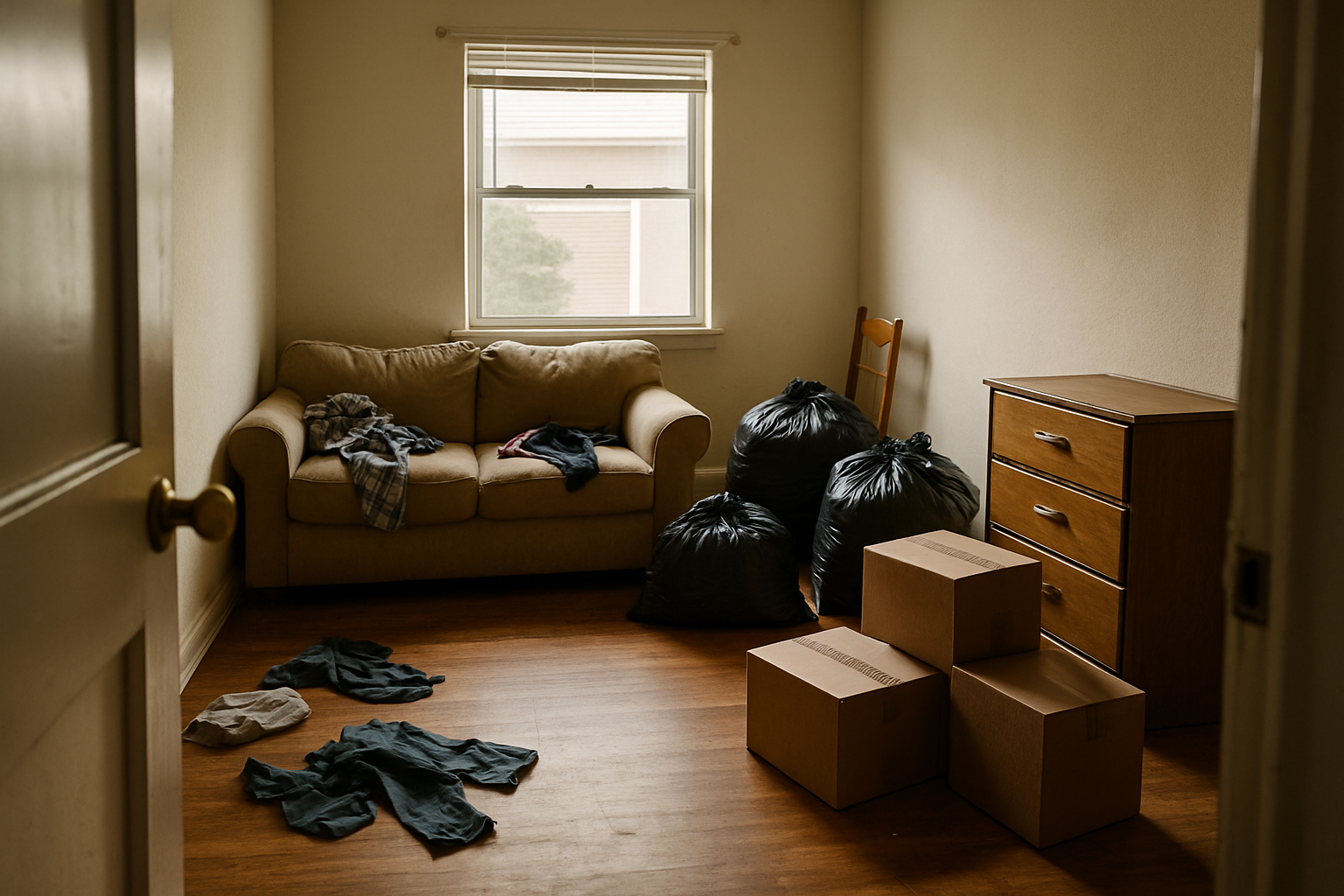
Most landlords walk through a vacated unit and think: a couch, some trash bags, maybe an old appliance. Then the crew shows up and the real picture comes into focus.
I’ve seen two-bedroom apartments in Hollister produce enough material to fill a full truck, sometimes more. That’s not unusual. Tenants leave furniture they can’t move, food in cabinets they forgot about, clothing in closets, broken appliances, and bags of trash they meant to take out. None of it is organized. All of it has to be sorted, carried out, and disposed of properly.
The reason this matters so much is that underestimating the volume is what breaks timelines. A hauler who quotes you fast and cheap might do one trip, leave the rest for you to figure out, and move on to the next job. That leaves you doing cleanup runs to the John Smith Road Landfill in Hollister yourself, or scrambling to find someone else on short notice. If you want to understand how volume affects cost, what junk hauling actually costs in Hollister breaks that down well.
Commonly left-behind items we find in unit cleanouts include:
– Upholstered furniture (sofas, mattresses, recliners)
– Small and large appliances (microwaves, mini-fridges, washers)
– Bagged trash and loose debris
– Clothing, shoes, and personal items
– Food, pantry items, and cleaning products
– Cardboard boxes and packing material
A crew that does a full walk-through before touching anything, loads efficiently without damaging walls or door frames, and sweeps the unit before they leave, that’s the version that gets your unit ready for a painter or inspector the same day. And that’s the difference between a two-week turn and a four-week one.
What You Can’t Just Toss: Items That Need Special Handling
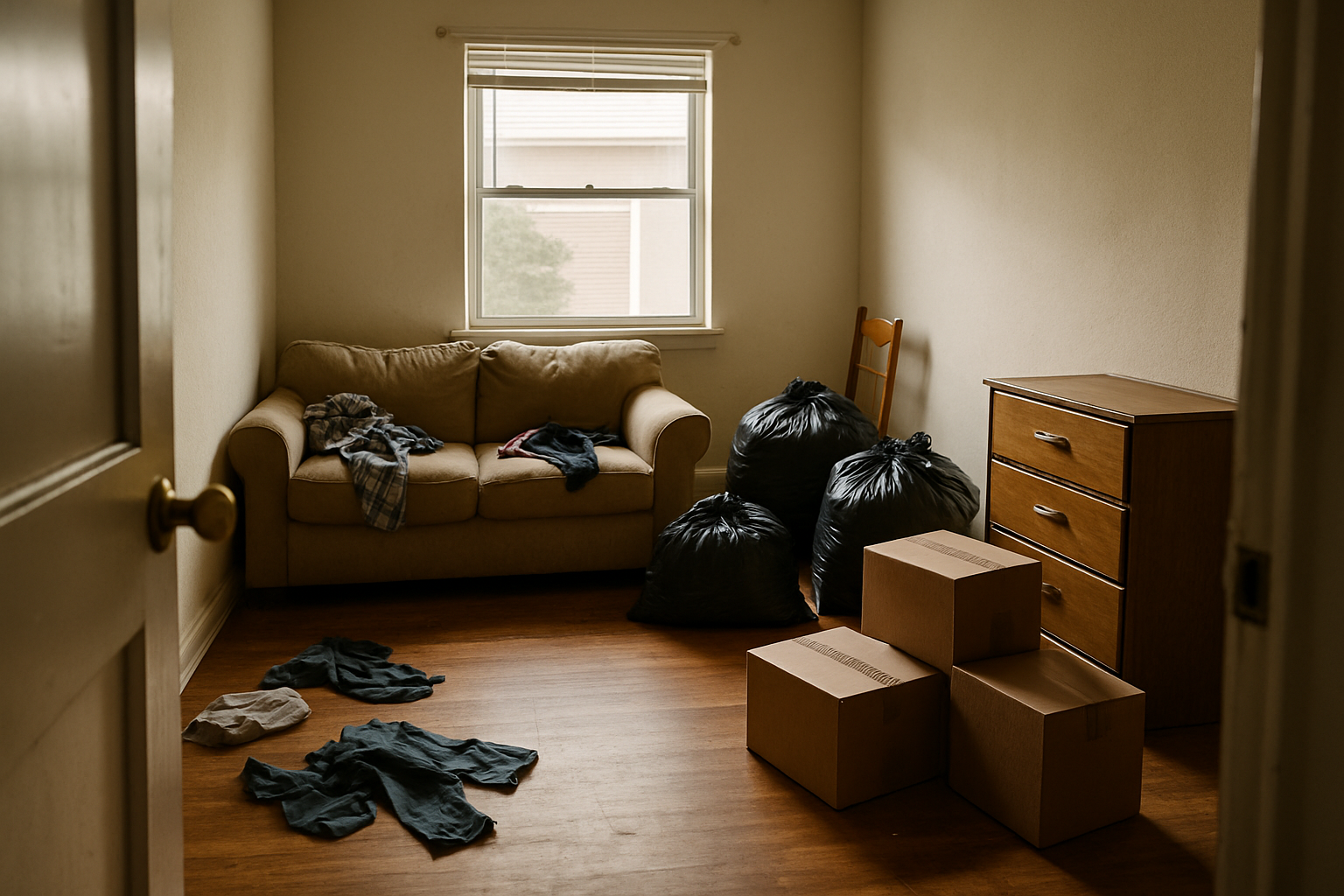
This is the part that catches landlords off guard more than anything else. Not everything a tenant leaves behind can go in a dumpster or get dropped at the landfill as standard household trash.
The John Smith Road Landfill in Hollister accepts a wide range of residential waste, and for most of what gets left in a vacated unit, it’s a straightforward haul. But certain items get rejected, and a rejected load means extra time, extra trips, and extra cost that nobody budgeted for.
Items that require separate handling or disposal channels include:
– Electronics (TVs, computers, monitors), these are e-waste and most landfills won’t accept them as general trash
– Certain appliances that contain refrigerants, like window AC units and old refrigerators
– Paint cans, whether full or partially used
– Batteries, especially car batteries and lithium-ion packs
– Household hazardous waste, this includes certain cleaners, pesticides, and solvents
San Benito County Integrated Waste Management runs periodic HHW drop-off events where residents can properly dispose of paint, chemicals, and other regulated items. If you’re not sure whether something qualifies, the California Department of Resources Recycling and Recovery (CalRecycle) has a clear breakdown of what counts as household hazardous waste and how to dispose of it.
A professional crew that knows this ahead of time doesn’t slow down when they hit a box of old paint or a CRT television. They sort it, handle it correctly, and keep the job moving. A crew that doesn’t know the rules figures it out after they’ve already loaded everything, and that’s when your timeline slips.
The Tenant Cleanout Timeline: What Happens and When
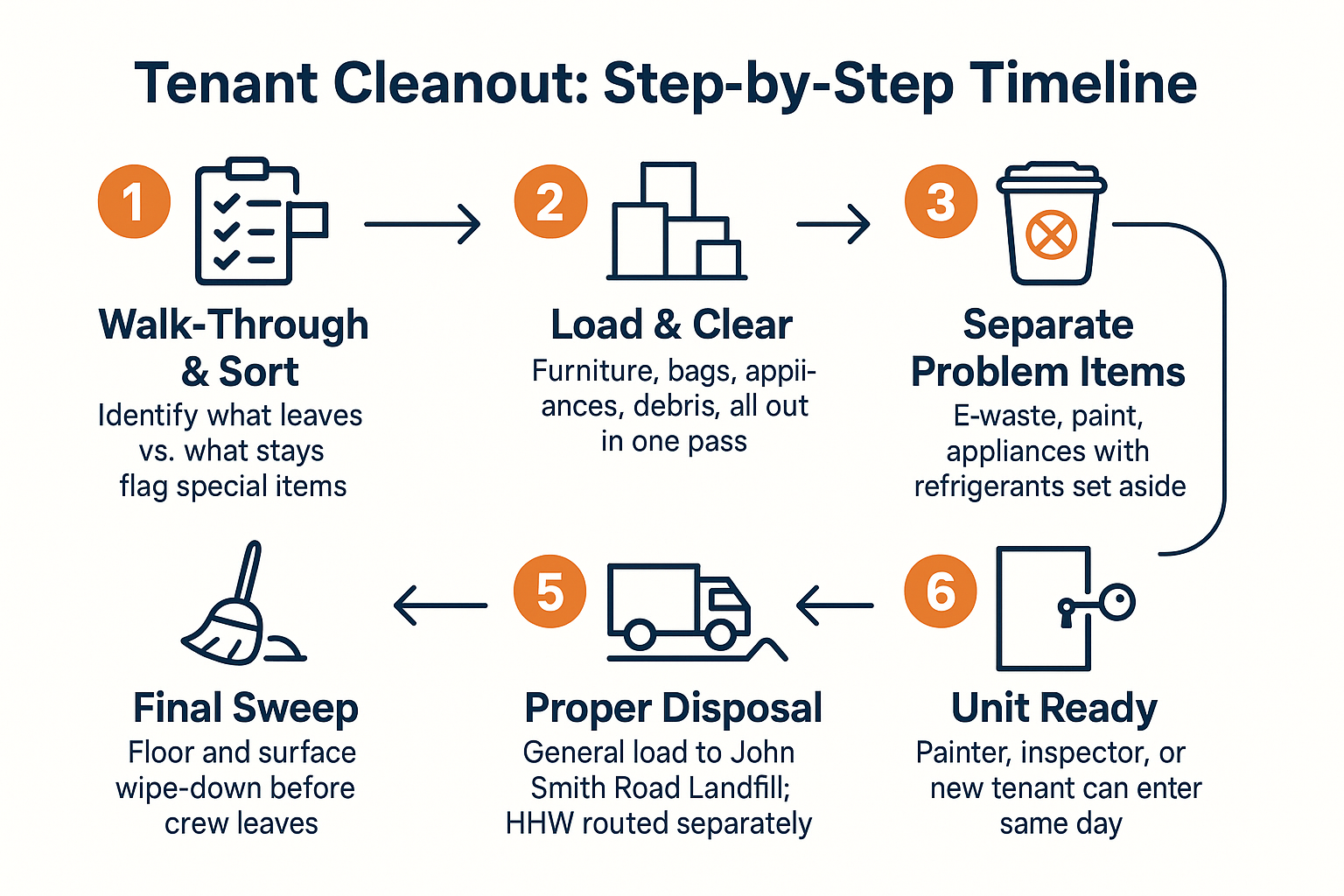
A well-run unit cleanout follows a predictable sequence. This shows how each step connects so the unit is ready for the next phase.
Why Recurring Landlords Think About This Differently
A landlord with one rental property in Gilroy thinks about a cleanout as a one-time problem to solve. A property manager overseeing five or ten units in South Santa Clara County thinks about it as a system that either works or doesn’t.
The difference I’ve noticed working with both is that property managers aren’t shopping for the lowest per-job price. They’re looking for a hauler who answers calls quickly, shows up on time, and doesn’t need to be walked through the job from scratch every time. If I have to spend twenty minutes explaining what you’re doing before you start, that’s twenty minutes I’m not managing my other properties.
Responsiveness matters more than most people say out loud. One customer mentioned in a review that they called back for another job less than 24 hours later, not because we were the cheapest option, but because we showed up when we said we would and got the job done without drama. That’s what a repeat relationship with a landlord looks like in practice.
If you manage multiple units and you’re deciding between full-service removal and dropping a dumpster on-site, dumpster rental vs. full-service junk removal lays out the real tradeoffs. For a unit turn with a hard move-in deadline, full-service usually wins, especially when there’s furniture involved that nobody can toss alone.
For landlords dealing with a more extreme situation, units where a tenant left conditions closer to a hoarder scenario, what a hoarder house cleanout actually looks like gives you a realistic picture of that process.
What You Can and Can’t Skip in a Tenant Cleanout
This is a quick reference for landlords deciding what actually needs to happen before a unit can turn. Some steps can be deferred; others create bigger problems if you skip them.
| Cleanout Task | Can You Skip It? | Why It Matters |
|---|---|---|
| Full furniture and debris removal | No | Painters and inspectors can’t work around it; delays everything downstream |
| Sorting electronics and appliances separately | No | E-waste and refrigerant items get rejected at the landfill, creates return trips |
| Bagging and removing loose trash | No | Loose debris left behind becomes a health and pest issue quickly |
| Final floor sweep and surface wipe | Maybe, if contractor follows immediately | Skipping it shifts labor cost to your next vendor, it doesn’t disappear |
| Donating or selling items left behind | Yes, usually | Adds time; only worth it if there are genuinely sellable items and your deadline allows it |
| Handling hazardous materials like paint yourself | Yes, leave it to the crew | HHW requires proper disposal channels; improper disposal can mean fines |
What a Professional Cleanout Actually Looks Like on the Day
I want to describe what we actually do on a tenant cleanout, because I think a lot of landlords have had experiences where a hauler showed up, threw things in a truck without looking at anything, and left the owner cleaning up afterward.
We start with a walk-through. Every job. That walk-through is where we figure out what’s leaving, what’s staying, and whether there’s anything that needs separate handling, paint, electronics, an old appliance. That conversation takes five minutes and it prevents every problem that comes up later.
Loading is done carefully. We’re in someone’s rental unit, not a demolition site. Walls, door frames, and floors matter because the landlord is going to be patching and painting within days. A crew that throws a mattress sideways through a narrow hallway and takes out a chunk of drywall just added to your repair list.
The job ends with a final sweep of every room. Not a deep clean, that’s not what we’re there for, but a genuine sweep and surface wipe so the space is clear and ready. When we pull out of the driveway, the unit should be ready for a painter to walk in.
If you want a broader picture of what full property cleanouts involve, what happens during a full property cleanout goes deeper on the process from start to finish.
Frequently Asked Questions About Tenant Cleanouts
How long does a tenant cleanout take for a two-bedroom unit?
For a standard two-bedroom apartment in Hollister or Gilroy, a well-equipped crew can usually complete the removal and final sweep in a half day or less, sometimes in three to four hours. The variable is how much was left behind and whether there are large items that need extra handling, like a fridge or a sofa in a tight stairwell. A walk-through at the start gives you the clearest estimate.
Can a tenant’s leftover items just go in a dumpster on-site?
Most of it, yes. But electronics, certain appliances, paint, and household hazardous waste can’t go in a standard dumpster, those require separate disposal. If you load those items into a dumpster and it gets flagged at the landfill, you’re paying for a rejected load and a second trip.
What if I’m not sure whether the tenant is really done moving out?
That’s a legal question as much as a logistics one. California has specific rules about abandoned property and the notice requirements before a landlord can dispose of a former tenant’s belongings. It’s worth checking California Civil Code Section 1983-1990 before starting any removal if there’s any question about whether the tenant has truly vacated.
Is full-service junk removal or a dumpster rental better for a unit turn?
For a unit turn with a hard deadline and furniture involved, full-service usually makes more sense. A dumpster works well when you or your crew are doing the loading yourselves over several days. If time is short and you need one team to handle everything in a single visit, full-service removal is typically faster.
What does a tenant cleanout cost in Hollister or Gilroy?
Cost depends on volume, access, and whether any special-handling items are involved. Based on general market context for the Hollister and Gilroy area, a typical unit cleanout can range from a few hundred dollars for light loads up to significantly more for multiple truckloads with appliances. The most reliable way to get a real number is a quick walk-through quote, that’s how pricing gets accurate, not from a phone estimate.
Need a Tenant Cleanout Handled Fast in Hollister or Gilroy?
If you're working against a move-in date or an inspection deadline, MG Transportation & Hauling handles tenant cleanouts across Hollister, Gilroy, and the broader San Benito and South Santa Clara County areas, including the sorting, loading, and disposal details that keep the job on schedule. Call us at (831) 297-1972 or request a quote at mgtransportationhauling.com/ and we'll give you a straight answer on timing and cost.
