
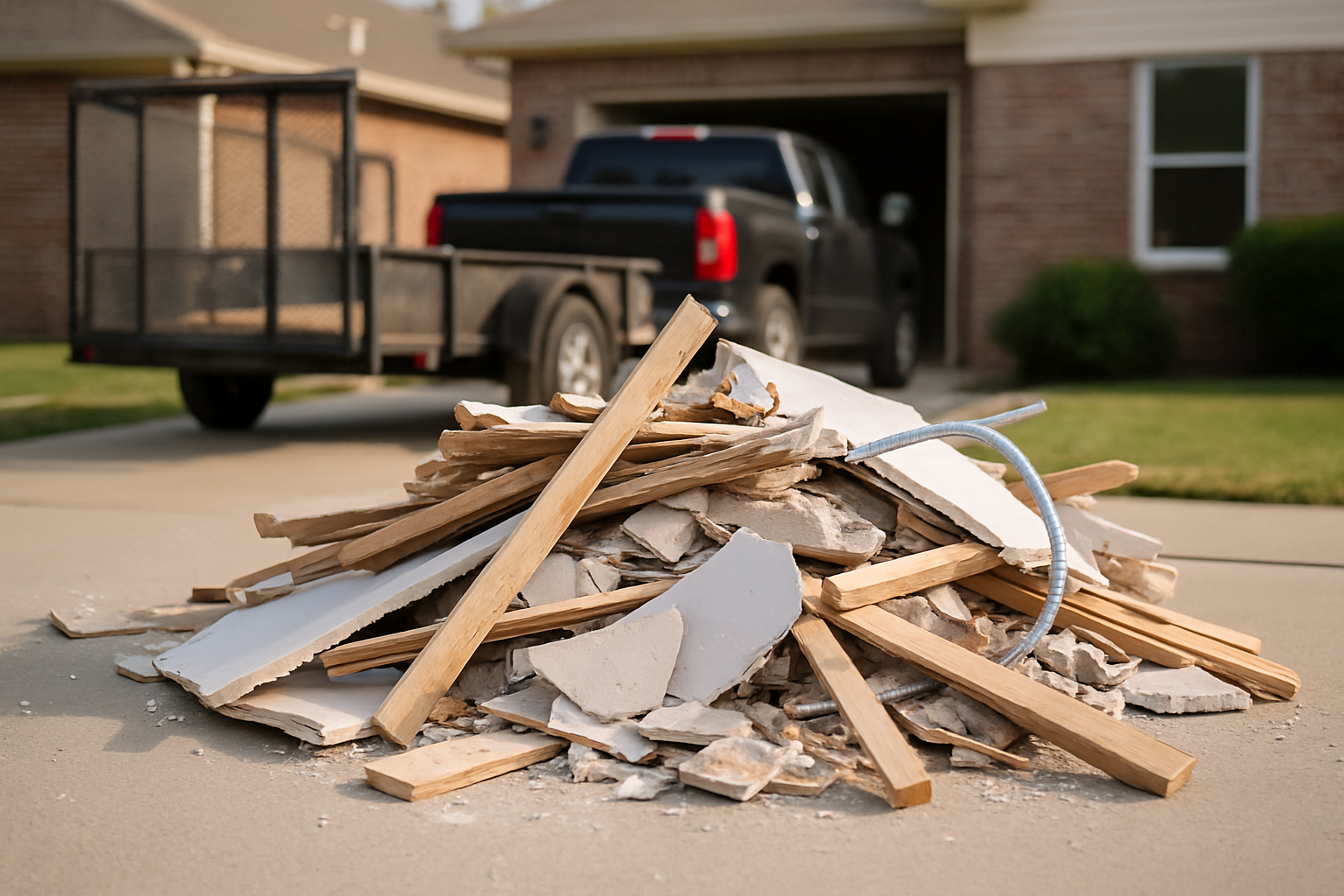
Direct Answer: Construction debris goes to a licensed landfill, a materials recovery facility, or a recycling center — depending on what it is and who’s hauling it.
You just finished a kitchen gut job or a bathroom remodel, and now there’s a mountain of broken tile, old drywall, and scrap lumber sitting in your driveway. You hired someone to haul it — or you’re about to — but you have no idea where any of it actually ends up. That question matters more than most people realize.
In San Benito County and South Santa Clara County, there are specific rules about how construction debris gets handled, and not every hauler follows them. Some dump illegally. Some mix materials that could have been recycled. And a few pass along disposal surcharges that show up on your invoice long after the truck leaves.
This article breaks down exactly what happens to drywall, concrete, lumber, metal, and mixed debris after a remodel — and what you should ask before you hand over the job.
The Three Places Construction Debris Actually Ends Up
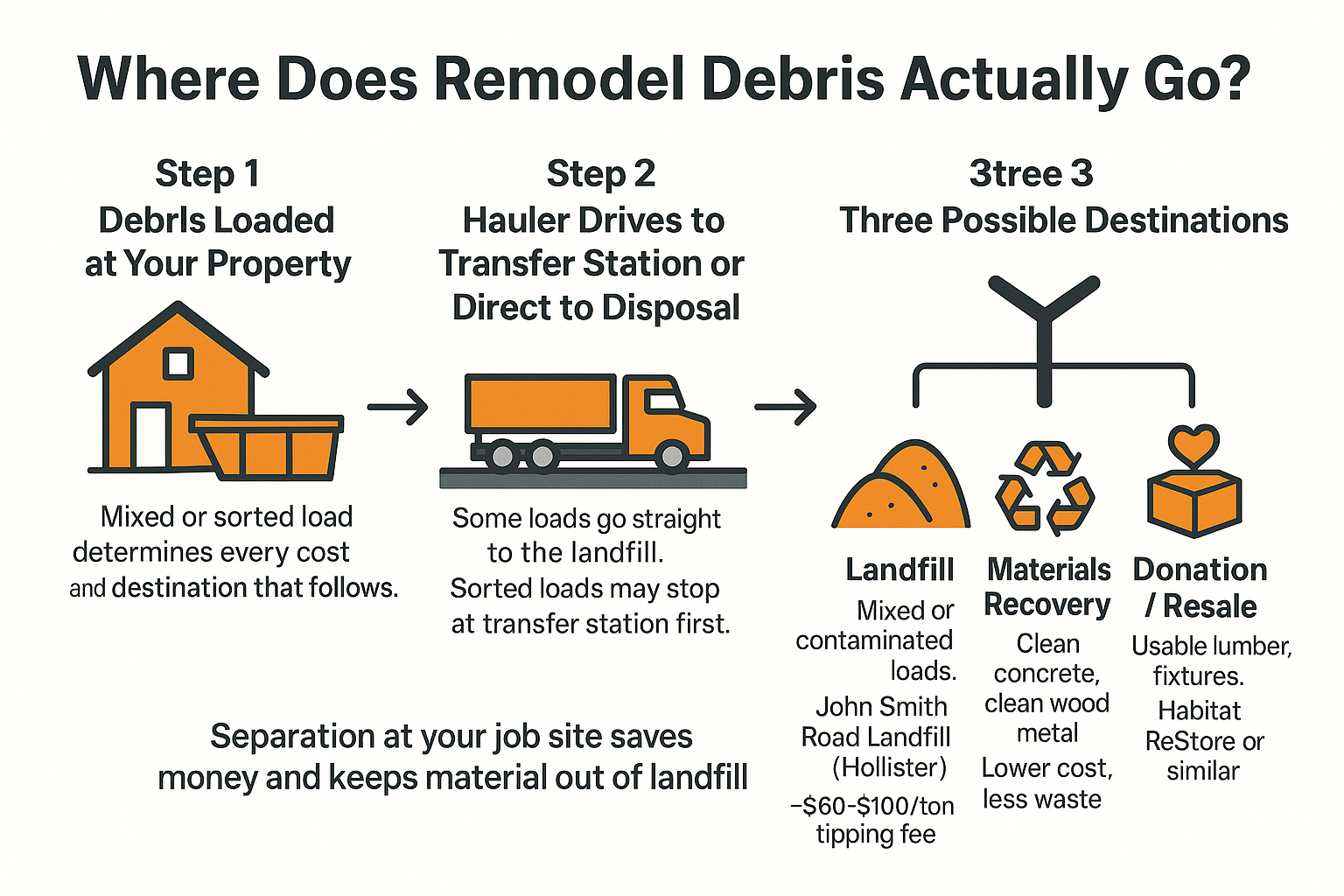
When a hauler loads your remodel debris and drives away, it’s heading to one of three destinations — and the difference between them affects cost, legality, and environmental impact.
1. The landfill. For mixed loads — meaning drywall mixed with tile mixed with random wood scraps — the landfill is usually the final stop. In this area, that means facilities like the John Smith Road Landfill in Hollister, which accepts construction and demolition debris under specific guidelines set by San Benito County Integrated Waste Management. Tipping fees here run roughly $60–$100 per ton for C&D material, and those fees are a real line item in what you pay a hauler.
2. A materials recovery facility (MRF). If a hauler separates materials — pulling out clean concrete, clean wood, or clean metal — those sorted loads can go to a recovery facility instead of a landfill. This costs less per ton and keeps usable material out of the waste stream. But it requires effort. A crew has to actually sort on-site or at a transfer station, which is why many low-cost haulers skip it.
3. Specialty recyclers. Clean concrete can go to a concrete crusher and come back as road base. Scrap metal gets sold to a recycler. Dimensional lumber in decent shape sometimes gets donated or resold. These outcomes are real, but they only happen when someone on the job takes the time to separate materials before they get mixed together.
Most remodel jobs end up with some combination of all three — which is why what actually determines the price of junk removal isn’t always obvious from the quote alone.
Why the Material Type Changes Everything
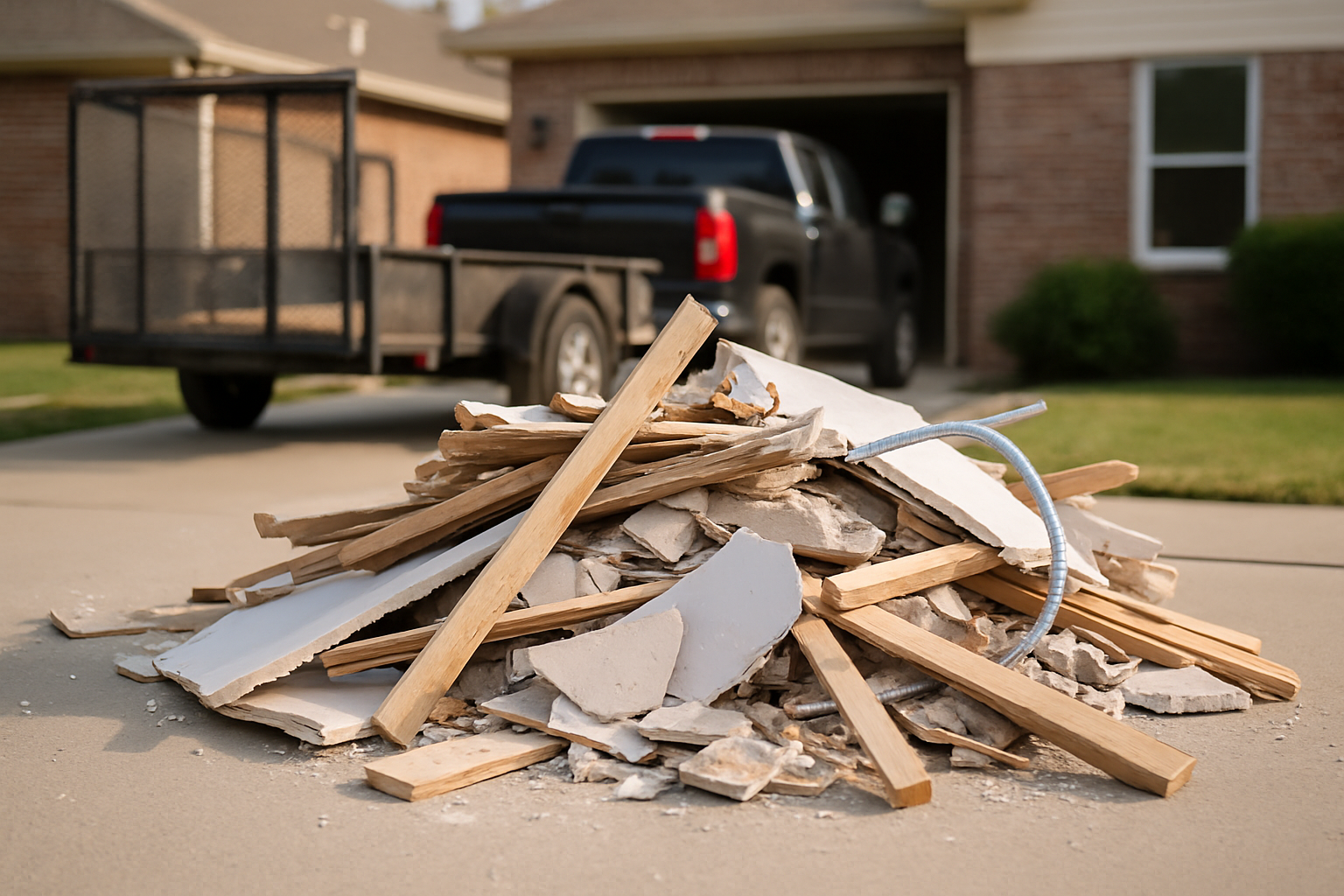
Not all construction debris is the same, and the type of material dictates where it goes and what it costs to get rid of it.
Drywall (gypsum) is one of the trickier materials. Clean, unpainted drywall can actually be recycled — gypsum gets reprocessed into new wallboard or used as a soil amendment. But once it’s painted, has texture coating, or gets mixed with other debris, it usually goes straight to the landfill. Drywall is also heavy, which drives up disposal costs fast.
Concrete and masonry are among the easiest materials to recycle if they’re kept clean and separate. Crushed concrete gets reused as base material for roads and driveways. A full truck of clean concrete can be disposed of for significantly less than a mixed load. But if that concrete gets tossed in with drywall dust and insulation, you lose that option.
Lumber follows similar logic. Clean dimensional lumber — 2x4s, plywood sheets — can sometimes be donated to places like Habitat for Humanity ReStores if it’s in good shape. Once it’s cut up, nailed together, or mixed into a debris pile, it’s landfill material.
Metal (conduit, old fixtures, ductwork) almost always gets pulled out by experienced crews because it has real scrap value. A good hauler separates this automatically. A careless one buries it in the load.
For a closer look at how material type affects the full scope of a debris removal job, this construction trash removal guide for Hollister and Gilroy breaks it down by project type.
Common Remodel Materials — Where They Go and Why
Here’s a quick reference for the most common debris types from a remodel job and their likely disposal destinations.
| Material | Where It Goes | Notes |
|---|---|---|
| Clean drywall (unpainted) | Gypsum recycler or landfill | Must be clean and separated to recycle |
| Painted/textured drywall | Landfill | No recycling option once coated |
| Clean concrete/masonry | Concrete crusher or recycler | Significant cost savings if kept separate |
| Mixed concrete + debris | Landfill | Contamination kills the recycling option |
| Dimensional lumber (clean) | Donation, resale, or landfill | Habitat ReStore accepts some material |
| Scrap metal | Metal recycler | Haulers often separate this — it has value |
| Tile and flooring | Landfill (usually) | Few recycling options; heavy and dense |
| Insulation | Landfill | Fiberglass insulation is generally not recyclable |
The Path Your Remodel Debris Takes After Pickup
This flow shows what happens between the moment a hauler loads your debris and when it reaches its final destination.
What It Costs to Dispose of Remodel Debris Around Hollister and Gilroy
Disposal costs in this area are real and they vary by material, load size, and where the truck ends up.
At the John Smith Road Landfill, construction and demolition debris typically runs $60–$100 per ton in tipping fees. A standard kitchen remodel debris load — drywall, old cabinets, tile, miscellaneous wood — can easily weigh 1.5 to 3 tons, putting disposal fees alone at $90 to $300 before labor and transport.
For context, Recology South Valley in Gilroy offers bulky item programs for residential waste, but construction debris from a remodel doesn’t qualify for those residential pickup programs. That material has to go through a licensed disposal facility.
Here’s where it gets important: a hauler who charges you $200 flat for a full truck of remodel debris either has extremely low overhead or is cutting corners somewhere. Legally disposing of a heavy mixed load costs real money. If the quote seems too good, it’s worth asking exactly where the material is going — and whether they’re licensed to haul it.
For a deeper breakdown of what drives pricing on jobs like this, hidden fees in hauling and how to avoid them is worth reading before you get a quote.
How to Know If Your Hauler Is Doing This Right
Most homeowners and contractors don’t audit their hauler. But a few simple questions will tell you a lot about whether the person loading your debris is operating above board.
Ask these before you book:
- Where does your debris go? A legitimate hauler should name a facility — not give a vague answer like “we take care of it.”
- Are you licensed to haul C&D debris in California? Commercial haulers handling construction and demolition material are required to operate under proper licensing.
- Do you separate recyclable materials? If the answer is no, and your load has clean concrete or metal, you may be paying more than necessary.
- Is the disposal fee included in your quote? Some haulers quote low and add tipping fees after the fact. Ask whether the number they give you is all-in.
A crew that does this work honestly won’t be bothered by any of those questions. They’ll answer them without hesitation because they already know the answers.
If you’re weighing a dumpster rental against hiring a crew, this comparison breaks down which option makes more sense depending on your job type and timeline.
Frequently Asked Questions About Construction Debris Disposal
Can I throw remodel debris in my regular trash bin?
No — and you’ll hear about it quickly if you try. In Hollister and Gilroy, residential curbside bins are for household waste only. Construction and demolition debris requires separate disposal through a licensed facility. Mixing it into your regular trash can result in your bin being rejected by the collection service and potential fines from your municipality.
Is drywall recyclable after a remodel?
Clean, unpainted drywall can be recycled — the gypsum gets reprocessed. But most remodel drywall is painted, textured, or mixed with other debris by the time it’s removed, which typically sends it to the landfill. If you’re doing a large demo and want to maximize recycling, separating drywall before anything else gets piled on top is the move.
What happens to concrete from a demolition job?
Clean concrete is one of the most recyclable materials on a job site. It gets crushed into aggregate and reused as road base or fill material. The catch is that it needs to be kept separate from other debris. Once concrete is mixed into a general load with drywall dust and wood scraps, it usually ends up in a landfill instead.
Why do some haulers charge so much more than others?
Tipping fees are a big part of it. Haulers who are legally disposing of debris through a licensed facility like John Smith Road Landfill in Hollister have real disposal costs built into their pricing. A hauler charging significantly less may be skipping licensed disposal — which is illegal and puts you at risk if the debris gets traced back to your property. It’s worth paying a little more for a hauler who can tell you exactly where your load is going.
Does my contractor handle debris removal, or do I hire separately?
It depends on your contract. Some general contractors include haul-away in their scope of work. Many don’t — especially smaller local contractors in San Benito County and South Santa Clara County who subcontract debris removal separately. Always confirm in writing before the job starts. If debris removal isn’t included, you’ll want to book a hauler in advance so the material doesn’t sit at your property for weeks.
Can I mix renovation debris with regular junk in one load?
Technically you can, but it often costs more. Mixed loads — construction debris plus old furniture, appliances, or household junk — go to the landfill as general waste, which sometimes carries a higher tipping fee than a clean C&D load. If you have a large amount of each, a hauler may recommend separate trips or a sorted load to keep costs down.
Need Remodel Debris Hauled in Hollister or Gilroy?
MG Transportation & Hauling handles construction debris removal throughout Hollister, Gilroy, and the surrounding San Benito County and South Santa Clara County areas — with upfront pricing, licensed disposal, and no hidden fees added after the truck is loaded. If you want to know where your material is going before you book, that’s exactly the kind of question we’re happy to answer. Call (831) 297-1972 or visit mgtransportationhauling.com/ to get a quote.
